Justitia, Old Bridge of Heidelberg

Justitia, Old Bridge of Heidelberg
Justitia, Old Bridge of Heidelberg © Gernot Keller, 2007
Blinkered Justice articles also appear on CrimeTalk and Government In The Lab
Showing posts with label justice. Show all posts

Wednesday, 9 May 2012

Bad person


(c) Criminonymous

In this latest piece, Criminonymous posits that any definition of 'crime' is contingent upon time and place. None of us are wholly innocent. Does imprisonment, and its associated sanctions, work?

There are people who break into other people’s homes
People who trespass on private land because they want to roam
A drunken person might steal a phone and a garden gnome
And then there’s couples whose love is a crime and a sin
People whose political views are deemed worthy of prison
People who transgress to achieve an end they were taught was legitimate
What you consider deviant depends on what you see as normal
What you see as bad depends on your experience of sorrow
The norms we adhere to shift like the continents
Our priorities change, but no one keeps on top of it
We all want safety, irrespective of our stance
But the people in the jails are mostly there by chance
We don’t fight crime; we define crime
We respond when we can, but for the majority of offences
There’s no such thing as a plan
That can effectively stem all the illicit demand
We blame cops too for the culture in which they live
Like with any gang culture, recruits may be of a certain creed
But to reintegrate, our forgiveness is what they need
Police are as manipulated as everyone else
All mental health is suspect in and of itself
People are fragile
Liable to influence by their surroundings, like the hopeless in prison
The futile stockpiling of our brothers and sisters
And when they’re out, these erstwhile exiles
No longer fit the profile of a worthwhile punt
They must be imbeciles; their values must be totally different
Can’t reconcile employment with debilitating criminal illness
Forgetting that crimes are committed by almost all of us
What if everyone was charged the first time they tried drugs?
Everyone who shoplifted, downloaded a song, sped or littered?
Caught or not, it’s the overwhelming majority
That’s the sheer insanity of the us-and-them mentality
Our primal hostility masked as higher morality
Assumptions of purity are no more than an illusion
We prescribe division like our laws were the words of a god
And to break them is to trash our religion
But if you put everyone corrupt in jail, who will be left to lock us all in?
It’s a war of attrition that we’re never going to win

(c) Criminonymous

Monday, 30 April 2012

Charles Taylor: justice done or justice seen to be done?


Wallace Johnson Statue, Freetown, Sierra Leone (c) Mark Gee
As we celebrate the guilty verdict handed down to Charles Taylor for the crimes that he helped perpetuate, we appear to have gotten carried away with the man and what it means for human rights. We seem to have lost focus of his victims whether justice has been served to those who were most affected by his crimes.

I have checked the online versions of mainstream papers based in Sierra Leone (Awareness Times, Awoko, Exclusive Press and Sierra Leone Daily Mail), and in Liberia (The 1847 Post, In Profile Daily, The Inquirer and Daily Observer). Although far from a perfect means of gathering evidence - basic internet coverage that only a small percentage of population have access to/can afford – I was hoping to understand whether local Sierra Leoneans and Liberians feel that justice has been served.

Other than stating, “Thousands of survivors of Sierra Leone’s brutal civil war celebrated after learning of the conviction”, the Sierra Leone Daily Mail only covers the reactions of Special Court of Sierra Leone (SCSL) officials, the US government, and non-government organisations (NGOs). None of the other online resources in Sierra Leone have any news on the Taylor verdict. I also understand that there has been little coverage of the Taylor verdict in the printed press in Sierra Leone.

In Liberia, all of the news outlets mentioned above have covered the verdict in some way. As well as publishing articles in the lead up to the Taylor verdict, the Liberian press have covered official and NGOs responses in more detail. The Inquirer has dedicated most coverage to public reaction. Of a local BBC phone-in, they report:
Reverend Jasper Nd'ganblor said, “...our concern is the peace that has been so far attained in the region whether it will hold and if it will help us sustain the peace it will be in the right direction...Liberia has gone through so much and that of Sierra Leone and we want the diplomatic tie to continue to abide instead of seeing each other as enemies.”
Julliet, women's advocate in Sierra Leone added her feelings by saying, “This verdict is with mixed feelings...Impunity needs to be addressed; justice needs to be given to whom it is due. This man pronounced war on Sierra Leone. He said we will taste the bitterness of war and we tasted it; the women tasted it. The women died; the women suffered and I am not happy at all.”
A local vox pops found:
Mr. Varney Konneh of Monrovia said, “I hope Sierra Leoneans are happy; they wanted justice and now they have justice. I just hope they will be at peace; Liberians will remember this day, because of Sierra Leoneans; Liberians are grieving over the situation.”
“Justice has been done; there is nothing we can do about it and Sierra Leoneans are rejoicing because they think it is the right thing to do but let them know that what comes around goes around,” one Mr. Jallah said.
“I am so happy that Taylor will not be set free, I suffered in this country when Taylor was in power. My daughter was raped by Taylor's so-called ATU soldiers; today he has been punished for all the wrongs he did to us,” Madam Yvonnie Smith said.

Wheelchair merchant, Monrovia, Liberia (c) whiteafrican
Other regional media outlets, such as Africa Review note:
Motorists honked in the streets of Freetown, in apparent jubilation for the verdict, but next door in Liberia, tension was high....The ruling has also reportedly heightened tension between Sierra Leone and Liberia.
Whilst the Global Post states that reactions in Liberia were mixed:
Taylor's war-crimes conviction is a watershed moment, said Aaron Weah, program associate at the International Center for Transitional Justice. "The verdict signals hope for Liberians who were victims of the civil war here that, five to six years from now, they too will get justice," said Weah.
So why might reaction in Sierra Leone be so muted?

There may well be a number of reasons for this, but it is noteworthy that their own (show) trials of Foday Sankoh, commander of the RUF, Sam Bockarie, leader of the RUF, Johnny Paul Koroma, leader of the AFRC, and Sam Hinga Norman, head of the CDF, have never taken place. Sankoh, Bockarie and Norman have all died, whilst Koroma has eluded capture and may be dead.

Eight other indictees, representing the armed forces of the rebels (RUF, AFRC) and government of Sierra Leone (CDF), have since been found guilty of war crimes atrocities. These verdicts gathered a lot less attention in the West, despite the fact that the AFRC case made legal history by ruling on the recruitment of child soldiers and forced marriage in an armed conflict for the first time.

Perhaps the most pertinent of the UK articles on the Taylor verdict and its implications for justice, is this one written by Mwangi Kimenyi and John Mbaku. In “Why wasn't it Africa that found Charles Taylor guilty?, Kimenyi and Mbaku lament the lack of institutional capacities within African justice systems to deal with human rights abuses.

In her blog post for the Overseas Development Initiative, Lisa Denney writes:
The Special Court will undoubtedly have an impact on the post-conflict landscape in Sierra Leone and, of course, sets important precedents in international law and holding political leaders to account. But its short-term nature, limited scope and overwhelming ‘foreignness’ means its will have less effect on most Sierra Leoneans than reform of the country’s legal systems (both formal and informal) – which will remain long after the white four wheel drives and international staff have departed...Indeed, most Sierra Leoneans have had to resolve grievances with community members from the civil war through informal mechanisms, without the judges, robes and new court rooms that international formal legal processes have attracted.

The future of Sierra Leone? (c) Mark Gee
So has justice been done or been seen to be done?

As of today, it is extremely difficult to assess whether Sierra Leoneans and Liberians feel that justice has been done. Whilst some may see justice as having been done, others are unhappy that Taylor has not been tried for the crimes that he committed in Liberia. More worryingly, the verdict appears to have heightened tensions between Liberia and Sierra Leone.

What is more apparent is that justice has been seen to be done, in terms of the Western media's ready acceptance of governments' and NGOs' views of the Taylor trial. Taylor himself has become the sole focus of the international community's war crimes narrative, and more important than other judicial advances (e.g. forced marriage in armed conflict).

Additionally, the SCSL cost a lot of money. As such, donor countries would want to see some form of return to justify the money spent on their international legal project.

Headlines of an historic verdict may well secure future funding for future localised, international justice projects, but it masks an important issue; international justice should reflect local victims' sense of retribution and redress. 

Wednesday, 14 March 2012

The fallacy of international criminal justice


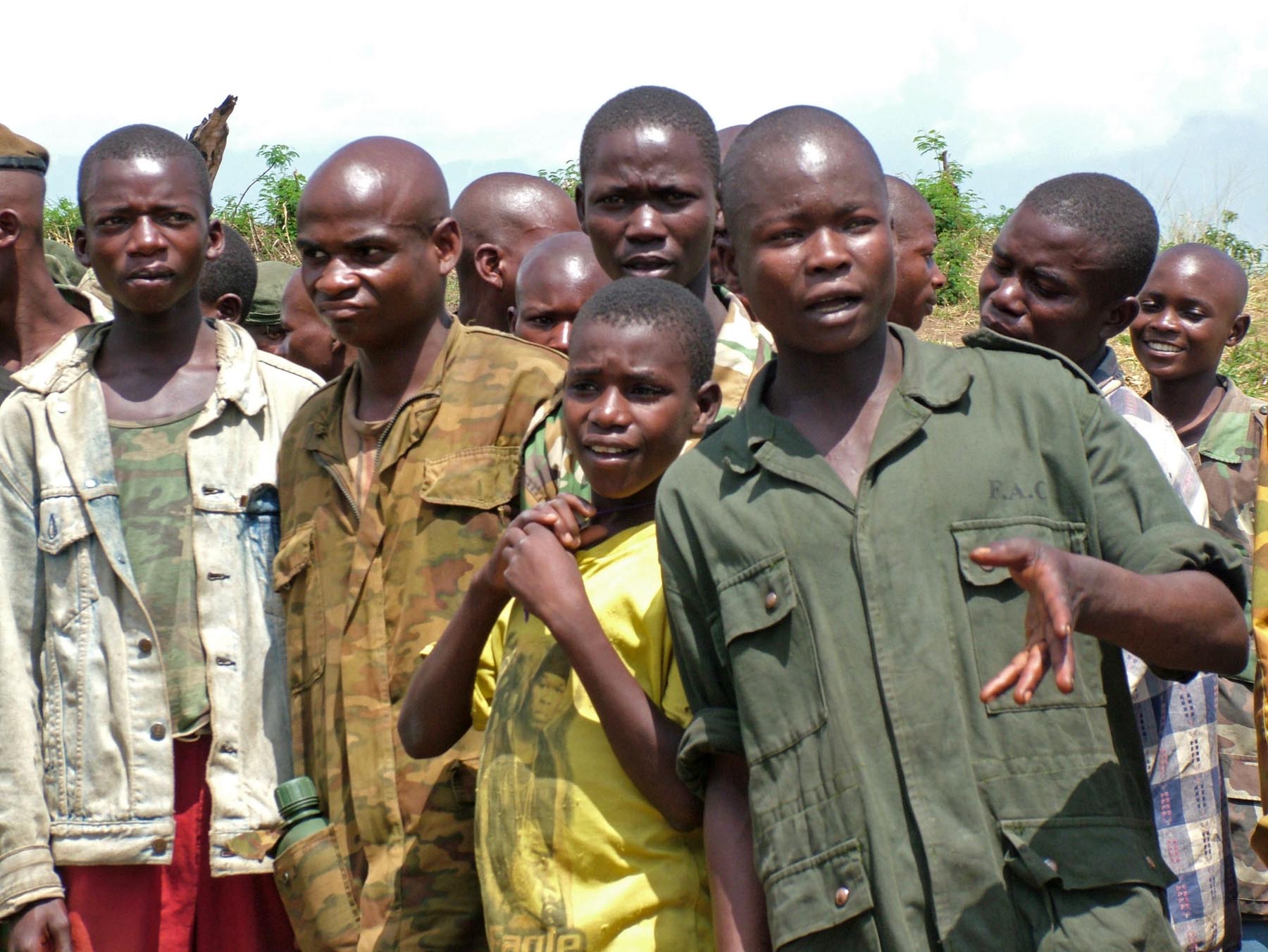
Former child soldiers in DRC (c) L Rose

Next month, Charles Taylor is due to find out whether he is guilty of the charges brought against him. Taylor's case has been heard at the Special Court for Sierra Leone (SCSL) in The Hague. Like cases held at the ICC, this case has taken place in a geographical space far removed from the sphere where crimes were carried out, and where the victims continue to live.

I was in Sierra Leone when Taylor was first arrested and transferred to Freetown. I have also attended and reported on one of the trials (Sam Hinga Norman) held at SCSL. My own perspective is that at the local level, justice meted out in this way does not work.

Many in Freetown expressed their public support for Norman. Despite the fact that there is a strong relationship, and a lot of goodwill, between Sierra Leone and the UK, even though the UK was instrumental in pursuing charges against all accused of war crimes, people argued that Norman was a hero.

For them, still shell-shocked at the brutalities waged during the previous decade, he had helped save (the soul of) Sierra Leone. In other words, they believed that Norman was a bringer of justice. That Western powers prosecuted him only divided the notions of Western and African justice.

The Foundation for Law, Justice and Society produced a series of essays on international justice and Africa written between 2008-2010. In his essay, 'International Criminal Justice and Non-Western Cultures', Tim Kelsall alerts us to the following anthropological quirks:
...It is difficult for most of us to imagine how unnerving international trials must be for many African witnesses, who find themselves miles from home, in a courtroom of extraordinary grandeur, confronted with robed judges and lawyers who speak a foreign language, and who subject them to highly unusual communicative practices including frequently hostile cross-examination. It is no wonder that getting clear testimony in such circumstances has often proved difficult (Cryer 2007), a problem compounded in contexts, not uncommon in Africa, where secrecy is prized as a high social ideal...

A project of the Open Society Justice Initiative, The Trial of Charles Taylor defendant offers further evidence of the problems that the international justice system faces, judging by the comments in several recent posts:
What do these ppl care about SL ppl anyways? Look at the volume of ignorance they’ve shown for human rights in other countries! (TJ, 09/03/2012) 
We were told Iraq had WEAPON OF MASS DESTRUCTION……who has been brought to JUSTICE for such MASS KILLINGS??? (Noko4, 10/03/2012)
It is regrettable to be aware of the fact that Mr Taylor was charge for the Sierra Leon civil war that kill thousands and cause thousands to lost body parts that was carry out by the sierra Leoners themselves and Mr Taylor was never charge for the brutal killing of Liberians and the destruction that were carry out by Mr Taylor and his forces in Liberia...Liberia need justice we do not want Taylor back in Liberia. (Samuel King, 03/03/2012)

The final comment reveals a paradox. On the one hand, the site is supposed to engage and include Sierra Leoneans in a discussion of the war as another means of achieving justice, yet it is Liberian voices that dominate, lamenting their own lack of access to international justice.

Add to that, the fact that the vast majority of Sierra Leoneans do not have access to the web, and those that do receive a cumbersome service, and it is not a surprise that many of those posting comments seem to live elsewhere (mainly the U.S.A.).

A daily news chalkboard in Liberia (c) Lt. Col. Terry VandenDolder
Although attempts have been made to reach out to those most affected, the international justice system still relies too heavily on Westernised ideas. In his analysis of the success and failures of the SCSL, Alpha Seesay recognises that Sierra Leonean victims were too far removed from the process; as well as bring geographically distant, the court had problems streaming the trial and it made no funds available for an outreach programme.

The ICC has been criticised as imperialist by various African governments. Several comments on The Trial of Charles Taylor defendant also refer to the iniquitous manner in which indictments and prosecutions only seem applicable to African leaders.

Whilst some locals may see the the ICC, and the reasons behind it, as a force for good, they are also frustrated at a lack of transparency as to whose justice is sought and why it does not include everyone. In places like Liberia, where traditional media outlets reach more people in more meaningful ways than the internet, potentially, this can do serious damage to an international justice system regardless of any outreach programme.

The U.S.A., the world's foremost human rights advocate, is not a member of the ICC. Most significantly, it threatens military action against the ICC if any of its citizens are brought before the court. This incompatible approach to human rights undermines the international criminal justice system.

Just as Okechukwu Oko posits in 'The Limits of Prosecutions', I believe that whilst prosecuting some African leaders might bring about some accountability, any form of international justice system needs to take into account the social, political and cultural norms that prevail across Africa. This should apply equally to leaders from the Americas, Asia or Eastern Europe.

Without doing so, the current international criminal justice system will fail to deliver justice to those affected by war crimes and crimes against humanity. 


Thursday, 8 March 2012

Justice for victims of conflict-related sexual violence?


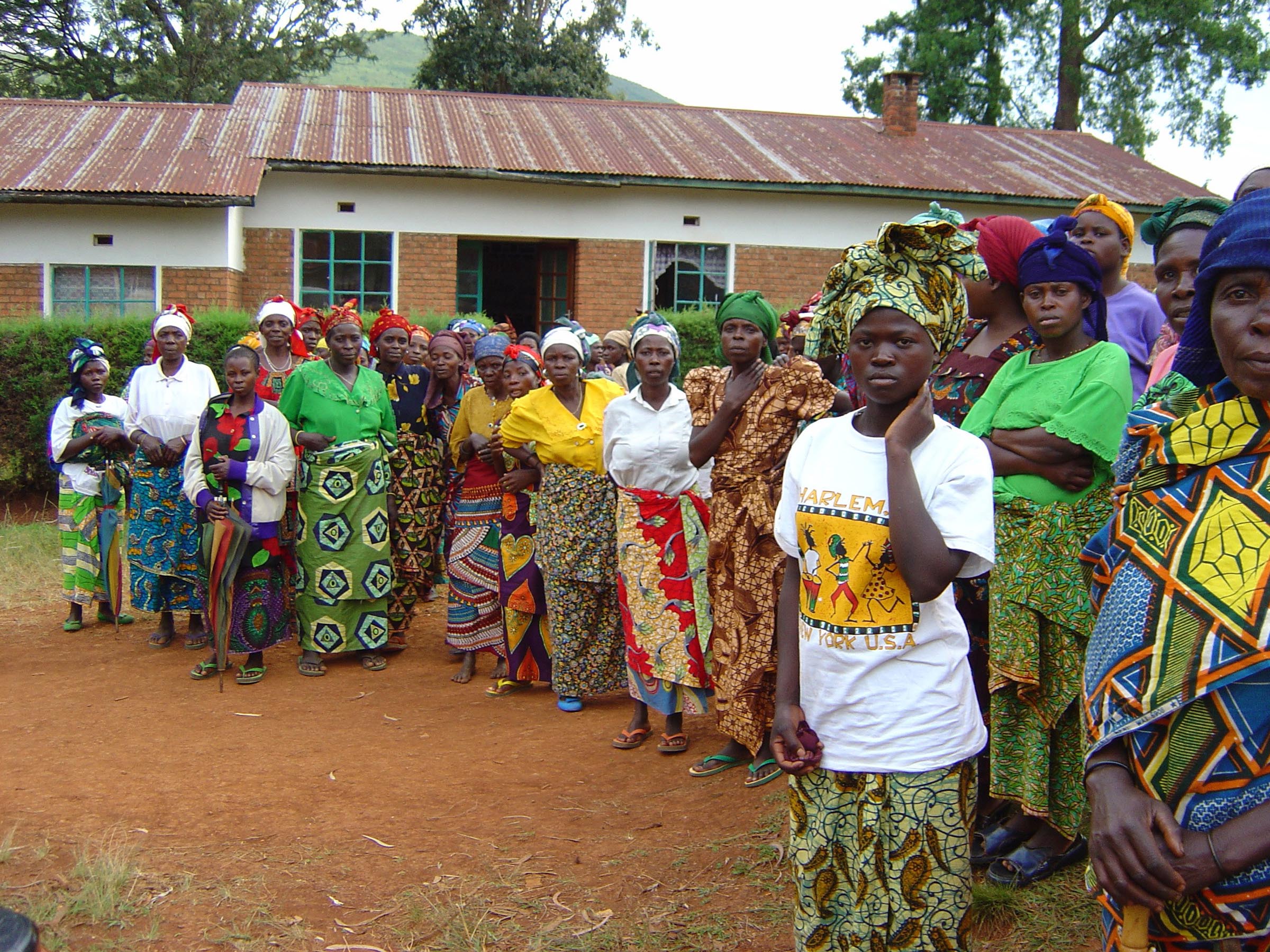
Meeting for rape victims in the DRC (c) L Werchick/USAID
It feels a little discomforting to be writing this on International Women's Day. It should be a day to celebrate. The fact that we have a specific day to 'celebrate' women acknowledges an international failing; women are not treated equally.

Women and girls are predominantly the victims of sexual abuse – although men and boys are also victims.

A couple of weeks ago, the UN produced its annual report on conflict-related sexual violence. According to the report:
Conflict-related sexual violence refers to incidents or patterns (for the purposes of listing in accordance with Security Council resolution 1960 (2010)) of sexual violence, that is rape, sexual slavery, forced prostitution, forced pregnancy, enforced sterilization or any other form of sexual violence of comparable gravity against women, men or children.

The report covers the period from December 2010 to November 2011, and details the abuses suffered at the hands of government and militia groups in conflict zones including Colombia, Democratic Republic of Congo (DRC) and Libya to name a few. It documents the (mass) rapes suffered by women, girls and boys, and refers to practices used by these armies including forced pregnancies.

Because of the social stigma attached to rape in many societies around the world, women and girls have little choice but to stay with their abusers. To return to their communities, which often does not support the armies that abused these victims, is not a viable alternative, as they are shunned by family, friends and neighbours. More so, when they are expecting a rapist's child.

In most cases, the UN is seeking judicial redress for the victims. It has had some success at the local levels, notably in courts such as the International Criminal Tribunal for Rwanda (ICTR) that paved the way for defining rape as an act of genocide, following the case of Akeyesu.

Nevertheless, on a personal level, studies have highlighted the powerlessness that local victims have felt in shaping and sharing their testimonies. On a social level, many do not want testify for fear of having to identify themselves as rape victims, which their family, friends and neighbours may have hitherto been unaware of.

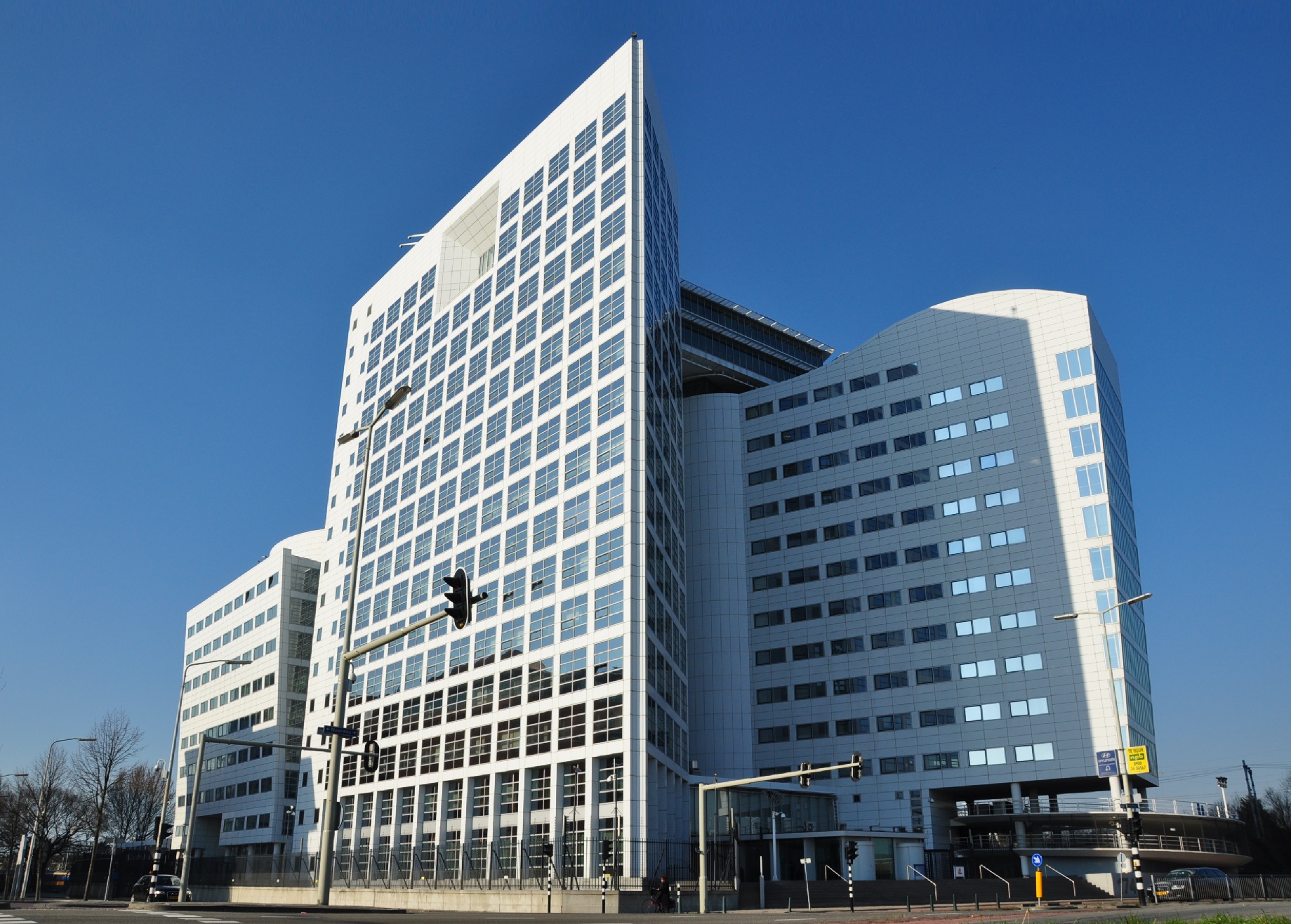
The International Criminal Court (ICC) also offers victims the chance for justice beyond the local level. Although castigated at first for not pursuing sexual violence charges in the case of Thomas Lubanga, supporters of the ICC claim that it has made strides following charges of rape as a war crime, and as a crime against humanity, that it brought against Jean-Pierre Bemba.

But this is just the tip of the iceberg. The Institute for War and Peace Reporting write that prosecutors struggle to obtain the evidence that they need for a court of law to secure a conviction. 
In a recent cross-examination by the defence in the Bemba case, a rape victim was asked why she had no medical certificate confirming that she had been raped.
“In our country if you want to see a Doctor at hospital you always need money. When I was raped I had no money. I couldn't go see a Doctor”, she replied.

This is a significant problem. In countries where females have less financial power, they are further dis-empowered by a judicial system that wants them to prove their abuse.

The International Criminal Court, The Hague (c) Vincent van Zeijst
Equally significant is the fact the ICC have not acted to bring any criminal charges against UN peacekeepers who have been accused of sexual violence. The ICC is supposed to operate independently of the UN. Therefore, it should have the means to investigate and prosecute those UN soldiers guilty of these war crimes, but there is little to suggest why it has not done/can not do so.

The UN's strategy for dealing with these soldiers is based around prevention, enforcement and remedial action. The statistics might well indicate that the message is getting through to UN peacekeepers, but this is difficult to verify causally.

It could just as easily be explained by women choosing not to step forward to report cases of sexual violence since they know that peacekeepers will not be brought to justice locally or internationally.

This impunity damages the credibility of the ICC, and that of their other locally established forms of criminal justice.

The UN also state:
...“The general breakdown in law and order, the absence of justice, continuing conflict, entrenched discriminatory attitudes and practices and the prevailing culture of impunity in these situations allowed for these crimes to be committed not only with appalling consequences for the victims, but with a force that destroys the fabric of society as a whole”.
“In all these situations, cases of conflict-related sexual violence remain largely unreported owing to several factors, such as social stigma, fear of reprisals, insecurity, a lack of available response services and the perceived futility of reporting as a result of weak administration of justice, apathy and political pressure”...

Both this quotation, and my discussion above, indicate that the problems are cultural and institutional. Both within the geo-spatial boundaries where the acts take place, and within the spaces that are supposed to protect the victims.

The UN propose the following initiatives to address conflict-related sexual violence:
  • Training on conflict-related sexual violence
  • Development of early warning indicators
  • Addressing conflict-related sexual violence in ceasefire and peace agreements
  • Comprehensive strategies to combat sexual violence
  • Programmatic and funding challenges and opportunities

All well and fine, but there is little substance to these proposals. Nothing that might serve to suggest that the UN are seeking to uproot the “entrenched discriminatory attitudes”, which is key to altering normative views of rape. Especially if the legal process is only going to be accessed by the few who can, and want, to use it.

Education (not the top-down approach) is going to be vital to altering social norms of sexual violence. To educate, we need to hear more from the victims and more from the rapists; because it is they that transgress the laws whilst operating within their gendered norms.

Nor am I confining this to the international conflict-related zones discussed here. Because in the West, we have constructed sexual violence in a certain way with regards to domestic conflict-related spaces, and realised justice through criminal mechanisms that operate with a similar impunity. 


Enhanced by Zemanta

Friday, 3 February 2012

A poetic social construction of crime


Oscar Wilde and his lover, Alfred Douglas,
prior to his trial in 1894

As we each slink off to our weekends, I am publishing the poem below, written by Criminonymous. You can find another piece here, published on Anna Raccoon a few days ago.  No need for me to add any more; the strength of the piece speaks for itself. 

The only thing we have to blame is blame itself

I fail to see what we gain from blaming the individual
The working class criminal whose education was minimal
Some see their behaviour as indefensible
That the casual accrual of wealth through unconventional or deviant methods
Demeans the tax-paying, hard-working and indebted

If it were only explained more clearly in schools
That it’s just a few tools
Who monopolise the making and enforcement of rules
Why do we assume that the criminal law is the best way to respond to these issues?
Crime is a social construction
Should homosexuality be a crime?
Obviously, obviously not
But some countries still consider it as such
Do you think that alcohol should be criminalised?
These things vary over space and time
It is wrong to assume that the laws as they stand
Are based on rational calculations
Nor should it be assumed
That the direction in which the criminal law is currently headed
Is necessarily in the long-term interests of society as a whole

Some people see ‘criminals’ as totally different to them
When they think about crime
They remember what they have seen in the media
They immediately think about the most heinous of transgressions
But this is only a tiny fraction of what ‘crime’ really entails
Incidentally, many of these people are swing voters
The central focus of modern-day locusts
But when elections are based on fear
There is no incentive to ensure that our electorate is educated
And this lack of knowledge is perpetuated

In reality, all are equally likely to be caught up in something this forlorn
Because you have no control over where or when you are born
Some people truly believe that they had immunity
Thinking: “They are not us, so they deserve no impunity”
But we were all born in the same world, without equality of opportunity
Substitute assumed fallacies for humanity
It’s safe to say that we’re pretty lucky
I could have been born in Kentucky
Home to sixteen of the one hundred poorest counties in that country
Equally, the Queen is lucky not to be an Armenian from 1915
Got any pre-teens?
Elsewhere they make green jeans for the armies
Like Akala said, as hard as some of us have it
We’re still far better off than ninety per-cent of the planet

It is totally understandable that in this environment of propaganda
People make false assumptions about crime and justice
We don’t get to decide what counts as a crime
When the law should change its mind
Or where our priorities should lie
Nor are these decisions made well for us
So forget your anxiety regarding impropriety
And consider the long-term interests of our society

Criminonymous

Wednesday, 21 December 2011

Luis Suarez, racist language & punishment


Luis Suarez (c) Ilya Khokhlov
Following Luiz Suarez's punishment by the Football Association (F.A.) for using “insulting words”, which included references to the colour of Patrice Evra, I am going to begin this post by setting out the following quotes and statements on this issue:

Today is a very difficult and painful day for both me and my family.
(Luiz Suarez on Twitter, 20/12/2011)

Very disappointed with today's verdict.

Liverpool Football Club is very surprised and disappointed with the decision of the Football Association Commission to find Luis Suarez guilty of the charges against him...
(Liverpool FC statement, 20/12/2011)

Suarez..told media in Uruguay that he "called him [Evra] something his team-mates at Manchester call him".
(BBC Football post, 20/12/2011)

It is quite an unbelievable statement and a harsh statement. Suarez could be suspended for 20% of the season - it's devastating for Liverpool
(Mark Lawrenson, BBC Football Sport Expert, 20/12/2011)

From what I understand from the likes of Liverpool-kop.com, the word Suarez used to abuse Patrica Evra was “negrita.” BBC Sport's, Tim Vickery, has written a good post on the use of similar words and their context in Uruguayan, and South American, football and culture.

The context of the use of “insulting words” appears to have been key in this judgment. The incident that seems to be relevant, happened when Suaraz and Evra were tussling for a ball towards the bye-line and corner flag.

From the TV cameras, it appears that Suarez was initially upset with Evra for what he thought was a dive. The crowd appear to have agreed and were baying at Evra. The two players can then be seen exchanging words, with both players appearing to be unhappy with each other.

Patrice Evra (c) Gordon Flood
After both players were called to speak to the referee, Suarez put his hand on the top of Evra's head. Evra took offence to this gesture and Suarez said something to him, which again woundd Evra up. Evra was obviously upset, as he was then booked.

Above, Suarez reckons that Evra's team-mates call him something that might be the equivalent of “negrita.” Do they? Does Glen Johnson, the only other black player I know of on Liverpool's first team get called “negrita” in training? If so, do Liverpool FC condone this, and if so, why?

Whilst arguments are made for Suarez on grounds of the cultural differences between English football and Uruguayan football, Suarez has been playing here since January 2011. Prior to this, he played for Ajax Amsterdam from 2007. The cultural differences between Holland and the UK are less wide.

The response to this punishment by Suarez, Liverpool FC and noted pundits, however, is seriously lacking in understanding being a victim of racial abuse. 

Suarez refers to it being a tough day for him, and Liverpool FC and Dalglish are very disappointed. Was it a tough day for Evra too when he was disparaged? Was he disappointed at being slurred by Suarez? Neither Suarez, nor Liverpool FC, have shown any dignity in their reactions to this decision.

Whilst Liverpool FC claim that nobody heard the remarks other than Evra, it does not mean that they did not occur. As noted above, it was very noisy in the area that these words appear to have been uttered. Besides Suarez admitted to Uruguayan media that he had said something. Perhaps he can be brave to tell us what he said to Evra.

As for Lawrenson's statement, it is nothing short of diabolical. Referring to the length of suspension, and the harm that it causes Liverpool FC in their vain quest to reach the dizzying heights of fifth place, it demonstrates what he knows about the harms associated with racial abuse.

More erudite commentary on the F.A.'s punishment comes from the likes of Rueben Hazell and Les Ferdinand, as players who have been on the receiving end of racism in football.

It was only last month that we were up in arms over the racist rant by a woman travelling on a London-Croydon tram. She has since been to court over the incident; Suarez has not. What might be the cultural context of her rant, i.e. the socio-economic reasons as to why she chose to use the awful words that she did, will not be accepted as a defence.

Whilst we regard Premiership footballers, and clubs, as celebrities, and therefore beyond reproach, neither football, nor those within it, are separate to society. Football reaches out to local communities and beyond; it is both in the community and of the community, in which we are all supposedly bound by the same laws, rules and regulations. 


However, like major corporations and other powerful institutions, the FA has special dispensation to punish the social harms caused by their members, whilst ordinary members of the public have to face an inflexible criminal justice system. 


Suarez and Liverpool FC should count themselves lucky.

Enhanced by Zemanta

Monday, 19 December 2011

Aidan Burley & the face of crime (part 2)

Aidan Burley MP (c) altogetherfool
Further to my post on Margaret Moran and the inequalities inherent in criminal justice systems, it seems apposite to mention the (in)action of Aidan Burley, Conservative MP for Cannock Chase.


From what the papers say, the objective of those attending the party was: 
"We are trying to intimidate as many people as possible. A lot have been quite offended, especially one guy who was both Jewish and gay." 
Another member of the party allegedly toasted the ideology of Adolf Hitler and the Nazi party. This makes Burley an accessory to inciting to intimidation, and potentially hate crimes.


Returning to the UK riots, and those who incited them on Facebook, even though none occurred as a result of their actions, why is it that someone in political power is facing nothing more than an internal inquiry into his conduct into something that caused harm?


What took place in France is little different to what took place on the internet. The objective in both cases was to intimidate and incite. Whilst one might argue that these incidents took place in separate geographical locations (France and the UK), I would counter this. 


The incitements to riot took place online. This is a space not confined to geographical boundaries, as Brown (2003) makes clear:
"Cyberspace can not be treated as a neutral space, or as a definitvely different space, but neither can it grasped by existing notions of crime and the law."
Besides, as Wall (2007) points out we have two separate ways of policing cyberspace. Distal (offline), as in traditonal, conventional policing and proximal (online) through the likes of internet service providers and community vigilante actions. Therefore, this space is different, in that it has different crimes, bound by more than just the UK's criminal justice system.


Buchenwald disabled Jews (c) United States Holocaust Memorial Museum
Moreover, who is to say that the crime has stopped? As a publicly elected official, I am assuming that Burley represents constituents from diverse backgrounds, with different needs. I wonder how the Jewish, homosexual, disabled communities in Cannock Chase feel about having an M.P. representing their interests, yet one who is willing to condone intolerance against their groups. 


I understand that what happened in France is illegal, although not in the UK. Given our recent political spats, it is possible that Burley will criminal charges. If he were to, then beware the political and mainstream media fallout. 


By recreating ideas of an 'us' and 'them' and a 'right' and 'wrong', we will no doubt hear that this incident was not really a crime, just because under UK law it is not. As such, he would have people in powerful positions distancing him from being constructed as a criminal. 


Due to these unequal power relations in society, the notion of crime is no longer an adequate term for understanding the experience that victims suffer and face. Ideas of 'social harm' would seem to be more appropriate for determining what constitutes what we call a crime.


Because as things stand, this case is just another example of what the face of crime looks like. 

Tuesday, 18 October 2011

A load of rubbish: Oliver Letwin, surveillance and justice

File:Surveillance quevaal.jpg
(c) Quevaal


The news last week that government minister, Oliver Letwin MP, had been discarding official papers in the dustbins of St James’ Park brought to mind notions of surveillance and justice.

Ideas of surveillance are based on the 18th Century notion of the ‘panopticon’. Jeremy Bentham considered building a prison with a watchtower in the middle, where prison guards could keep an eye on detainees in cells that surrounded it. The idea being that inmates would regulate their behaviours accordingly as if they were being watched, regardless of whether they were or not. Michel Foucault’s thoughts on panopticism lead us to believe that in an increasingly surveilled society (e.g. CCTV) that we regulate ourselves more vigorously; we discipline ourselves so that the state does not have to.

Power is prevalent in concepts of surveillance. Those considered ‘risky’, including those from particular ethnic and poorer socio-economic backgrounds, are subject to greater surveillance. We regularly see stories in the press that castigate ‘benefits cheats’. At about the same time last week, Jake Preston was secretly recorded winning a Motocross race. It is normally at the behest of state institutions that ‘risky’ individuals are monitored.

In Letwin’s case, it was the Daily Mirror that uncovered his trashing of papers, although presumably they found out from another source. Had the Daily Mirror, a reasonably powerful media player, not reported this story, I wonder whether it would have surfaced had a park attendant passed on the information directly to the police.

National security is the main focus of Letwin’s neglect. There were concerns that sensitive papers were amongst the documents that he disposed of, but it seems that none of the papers that he binned were that sensitive. He acknowledges that he was replying to constituents’ letters in the park and may have thrown these manuscripts away. Therefore, for his constituents, the papers may be sensitive.

(c) Cabinet Office


The Information Commissioner’s Office (ICO) is looking into whether Letwin breached the Data Protection Act (DPA). The ICO has a guide that de-clutters the legalese of the DPA. I understand that many letters were torn in half, but that some were not. Regardless, I am presuming that the name and address of the constituent is visible. If that is correct, then Letwin is in breach of Principle 7 of the DPA, on several counts.

Following Foucault’s line, it appears that Letwin, who does not come from a disadvantaged background, had no reason to believe that he too should be observed. For him, CCTV is something that follows ‘others’. However, it seems that ‘others’ are also ignorant of the prevalence of surveillance. So has surveillance brought about a more equitable system of justice?

Those who believe that the powerful face the same (synoptic) levels of surveillance miss the point. The powerful are rarely the target of surveillance operations. The state did not seek to stop Letwin causing harm because they do not track people like him. The justice system is still geared towards tracking the likes of ‘benefits cheats’, a term for which I have previously argued for a wider understanding.

Moreover, it remains to be seen how justice is to be administered in Letwin’s case. The harm that he has caused is, at present, unknown. Harms such as identity theft can take time before an individual becomes aware that his/her details have been misappropriated. For the state, retribution is swift and punitive, because the harms that ‘benefits cheats’ caused are already out there.

Power is implicit in surveillance and whilst it is mainly top-down, it can be turned on its head and used to bring about the fall of the mighty. However, in a culture where surveillance is now omnipresent, from the CCTV on our streets to the YouTube on our personal computers, it appears to have saturated itself, and diluted its own power to turn us into the model, self-disciplining citizens that it would have us become. 
Enhanced by Zemanta

Friday, 30 September 2011

E-petition palaver

(c) Johnny Cyprus
The idea of the e-petition is great.  It allows fools like myself to use the power of the internet to raise issues that would ordinarily not be seen. In accordance with the notion of a free and open internet, the e-petition website appears empowering and democratic.

When clicking on “How e-petitions work”, it becomes clear that individuals have to check the website to see if any other similar petitions have been published. If there are similar petitions available, your proposal is likely to be rejected. But why?

I submitted this e-petition in August which was rejected a couple of weeks later. I had checked the website and there appeared to be nothing similar. Even now, when I search ‘Trident’, there are no petitions that adhere to my wording. Furthermore, the search throws up a number of e-petitions that bear little resemblance to my proposal. The search includes titles such as Tax CarMiles, Reduce Petrol Prices, No Road Tax, Banks and Risk Exposure of RetailCustomers and voting credentials. None refer to ‘Trident’. Even though my rejected e-petition indicates that “there is already an e-petition about this issue”, there is no link to it. Is it even possible to verify whether a similar petition exists? 

Does it even really matter? Surely it is better for government to divide and conquer, and have people preferring one particular petition over a similar option, thus reducing the chances of it being debated in the House of Commons. If we truly live in a free and open society, that subscribes to ideas of choice, what does it matter if people submit similar petitions. After all, the majority of us vote for political parties and leaders whose manifestos are similar and offer little in the way of choice. 

I presented my e-petition, "Tackling gang culture", to the Home Office as the department responsible for dealing with this issue, not the Department of Business, Innovation and Skills. I waited six weeks before it was finally published. In between time, I contacted DirectGov about its whereabouts. I did not receive a response, until they confirmed its publication. The e-petition website is rather nebulous about how one might contact them, or how one might complain. In the end, I used the 'feedback' option; feedback is not normally a word I would associate with contact or complaint, but at least it worked. 

A search for gang-related e-petitions also reveals a number that appear unrelated to mine. This database is only likely to grow. Of course, there are still many people with no means to access the internet who are excluded from this democratic process, but if the public are expected to trawl through through these petitions to ascertain whether another proposal is similar to their own, then it is just as likely to deter some from actively participating in democracy. 

Whilst the concept of the e-petition suggests that democracy is fair and open, appearances can be deceptive. Searches reveal little about one's chance of success with a proposal. Instead, disembodied e-people decide whether a particular contribution to democracy is worthwhile, without offering a reasonable explanation as to why it might not be. One can not appeal or contact anyone to take the matter further. Moreover, nobody appears to be monitoring the system to see whether it is working  as it should, or to gauge whether it is fair and democratic. 

That said, I intend to continue government bothering in the interests of social justice.


Enhanced by Zemanta