Justitia, Old Bridge of Heidelberg

Justitia, Old Bridge of Heidelberg
Justitia, Old Bridge of Heidelberg © Gernot Keller, 2007
Blinkered Justice articles also appear on CrimeTalk and Government In The Lab
Showing posts with label terrorism. Show all posts

Thursday, 19 January 2012

Open secrets and the need to know


Reprieve protest during visit by President George W. Bush (c) art makes me smile
On a day when Wikipedia turned off its English language edition, in protest at the US Stop Online Piracy Act (SOPA) and Protect Intellectual Property Act (PIPA), it is somewhat ironic the the UK government have pulled the plug on the Gibson inquiry.

Not that the inquiry was ever likely to reveal all. Many critics, including human rights organisations and lawyers, were going to boycott the inquiry in protest at the government's decision to hold much of it in secret.

The investigation is now going to focus on documents that were recently unearthed following the revolution in Libya. Would the UK government have ditched the Gibson inquiry right now had these papers not come to light? Following the investigation, is it really any more likely that we will ascertain the truth(s) regarding the UK's complicity in rendition and torture?

At every turn the UK government appears to have been unwilling to reveal the extent of their knowledge of rendition and torture. The case of Binyam Mohamed is especially relevant.

The UK government tried to stop the release of 'torture documents' that demonstrated their complicity in his torture, and when defeated in the High Court, they appealed. And lost.

All this was done in the name of 'national security', yet all the Judges decided that any threat to 'national security' was not serious. Which begs the age old question: in whose name is 'national security' being evoked?

Furthermore, the Judges ruled that there was overwhelming public interest in disclosing this material. Discourses of 'national security' and 'public interest' are not that far removed from similar, concurrent discussions on UK libel laws.
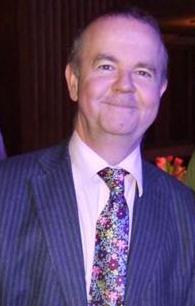
Ian Hislop (c) Nikki Montefiore
These laws have been criticised for denying freedom of expression and for permitting “libel tourism.”Anyone may be subject to legal action by the rich and powerful, individuals and multi-national corporations alike, if someone reads something critical of this person or organisation in the UK, regardless of where he, she, they or it reside.

As such, UK libel laws can be perceived as forms of 'individual security' and 'organisational security', protecting these private members of the public and commercial operations from scurrilous rumour and/or genuine criticism. Indeed, many powerful, wealthy individuals have used these laws to prevent stories being printed about their private lives, on grounds that it is not in the public interest.


Interestingly, the UK government is keen to change these laws as it is crushing freedom of expression in scientific and academic debate. The BBC reported that:
There will be a new requirement in the bill that a statement must have caused, or be likely to cause, substantial harm to someone's reputation, if it is to be considered defamatory.
Given the UK government's stance on renditions and torture, I find their position on libel laws quite hypocritical. As noted above, the UK government has sought legal means of gagging those that have criticised its means and methods of extracting information.

As with the wealthy, individual libel-seekers, these court cases cost money. Unlike the wealthy, individual libel-seekers, these court cases are paid for by the public. How much did it cost the UK government in their legal actions against Binyam Mohamed? 

Whilst the government is keen to raise the bar for those bringing libel cases against those that 'defame' them, the state will continue to act as Judge and Jury in its construction of public inquiries. Not only does it put an end to investigations when it chooses, as per Gibson, it also selects those that act as its arbiters.

I am not questioning the integrity of those that conduct such reviews, but with their selection comes the kudos of having been chosen, and the significant implications that this may have on a future career should they find something unpalatable and detrimental to their 'benefactor'. There are powerful, vested interests at stake here, something more than 'national security' and public interest.

Whilst some secrets have become public, in equal measure they are being silenced by those that have the power to do so. The key to resuscitating an open, truly democratic, UK is by opening up discussions on what constitutes public interest, so that we can then determine what 'national security' might mean.

For me, that interest means knowing what the UK has, or has not been, involved in, and acknowledging it. In knowing that we have nothing to hide, the UK government would actually make me feel more secure in my nation, and what it stands for. 

Enhanced by Zemanta

Sunday, 18 December 2011

Fighting freedom or freedom fighting: Newt Gingrich & Palestine


Meagermind (c) DonkeyHotey

Originally published in full here on The Pryer.

Republican frontrunners vying for the Presidential nomination for next year's election, including Cain, Romney, Perry and Bachmann have all dined at the dunce's trough over the last few months. 

The Guardian reports that Newt Gingrich referred to Palestinians as an “invented” people and “terrorists” last weekend. 

Originally populated by Native Americans, then European colonists, the United States of America (USA) of today has been transformed by further migrations of peoples from Latin America, Africa and elsewhere. Borders and boundaries have been redrawn, so that what constitutes the USA now looks different to how it did 200 years ago.

Each nation, and the nationals within it, is/are invented. What Gingrich says is true, but it is the way that he uses this idea that bothers me. Would he also agree that terrorism and the 'war on terror' is invented too?

The notion of a Palestinian homeland has been at the very heart of the 'war on terror' since 9/11. Osama Bin Laden refered to it in the second of his fatwas.

Gingrich's use of an “invented” people, and his association with ideas of terrorism is somehow meant to make the justification for a homeland less deserving. However, it is precisely this issue, still as yet unresolved, and rarely cited as an imperative for bringing the 'war on terror' to an end, that makes Gingrich an ignoramus.

The USA suffered a terrible loss on 9/11. This superpower and (self-appointed) arbiter of international justice since World War II, had an opportunity to reflect, re-imagine and re-construct itself and what it stood for in the 21st Century.

Why had this happened? Had the USA harmed anyone? If so who, and what steps should it take to get it right? What would be the best means of securing justice and a future security?

For many of us, it appears that the USA concluded that that this was the deed of irrational terrorists solely intent on destroying the American freedom and its way of life. The most effective means of dealing with this threat and effecting justice, it seems, was to use its military power.

The 'war on terror' began. In truth, terror was merely being exported.


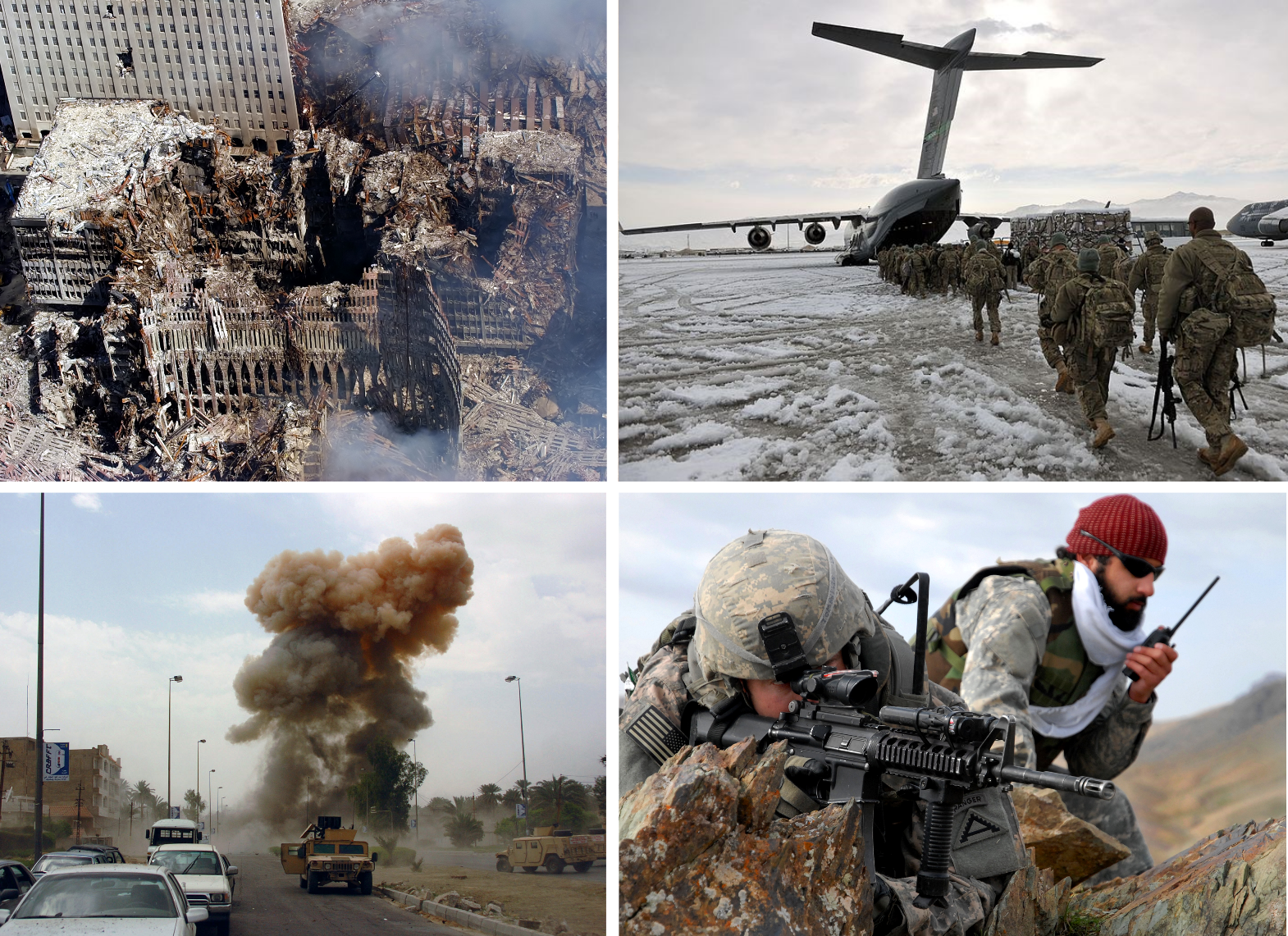
Montage War on Terror (c) poxnar/US Army/Navy
According to the latest report from the National Counterrorism Center:
  • Over 11,500 terrorist attacks occurred in 72 countries in 2010, resulting in approximately 50,000 victims, including almost 13,200 deaths. Although the number of attacks rose by almost 5 percent over the previous year, the number of deaths declined for a third consecutive year, dropping 12 percent from 2009...
  • Attacks in Afghanistan and Iraq rose in 2010. Almost a quarter of worldwide attacks occurred in Iraq, a slight increase from 2009, although deaths fell for the fourth consecutive year...
  • The fewest incidents in 2010 were reported in the Western Hemisphere, where both attacks and deaths declined by roughly 25 percent. Western Hemisphere attacks fell from 444 in 2009 to 340 in 2010 and deaths fell from 377 in 2009 to 279 in 2010...
  • Muslims continued to bear the brunt of terrorism based on the fact that most terrorist attacks occurred in predominantly Muslim countries.

What is evident is that terrorist incidents are on the increase. By focusing its 'war on terrorism' in Afghanistan and Iraq, the USA has used its military power to enforce a transfer of terror on civilians who previously neither suffered from it, and are less able to withstand it.

They may have had less freedom, if you define freedom in its politico-democracy cloak, but equally, they have less freedom to walk around safely; they have less life security. A by-product of the 'war on terror' is that it has wrought more terror, not less.

Terrorism has not gone away, just because the US government has relocated it, and it will not necessarily remain relocated. Current ideas of western citizenship come with responsibilities, as well as rights. Gingrich's comments are irresponsible.

It is a shame that those in power talk about freedom so vacantly as to mock those that those do not have it. If Islamic Jihadists hate us for our freedom and our way of life, then Gingrich is adding fuel to the fire. 

Tuesday, 13 December 2011

The Newburgh Four: labelling and terrorism in the U.S.A.


Federal Bureau of Investigation Seal (c) United States Department of Justice

I write this in the knowledge of an attack that has just taken place in Belgium. Regardless of whether it be termed a terrorist incident, or for the reasons behind it, this post is even more relevant for it. My sympathies go to those affected by the attack.

In yesterday's Guardian, Paul Harris reported on the Newburgh Four who were convicted of a terrorist plot in June. According to the report, the four men had been entrapped by an FBI informant who had offered the men life-changing amounts of money in return for carrying out the attack. Quite apart from the rather shady way that the FBI went about their “investigation”, there was little supporting evidence that these men would ordinarily have carried out the attacks, had the FBI not acted as a catalyst for it. Judge Colleen McMahon is reported as saying:
"Only the government could have made a terrorist out of Mr Cromitie, a man whose buffoonery is positively Shakespearean in its scope," she said in court. She added: "I believe beyond a shadow of a doubt that there would have been no crime here except the government instigated it, planned it and brought it to fruition."
In criminological thought, entrapment, or to use a more law enforcement friendly version of this term, stings that target problem people and problem places are associated with ideas of repeat victimisation and the prevention of future crimes. Targeting problem people and problem places relies on knowing who these people are and where they congregate. In this case, the sting involved targeting prospective “terrorists” who congregate in mosques. It might be a fair assumption to make that this type of sting is an obvious means of deterring future “terrorist” attacks, based on what we read, see and hear in the mainstream media. However, to understand “terrorism”, we need to rewind.

The devastating and tragic events of 9/11 broadcast the idea that “terrorists” and “terrorism” are largely associated with extremists, notably Islamic extremists. Further attacks have taken place in Indonesia, Spain and the UK. Every now and again, we are warned of impending “terrorist” attacks. Hence, three distinct words, Islam, extremism and terrorism, seem to be harnessed together to the extent that even a prospective President of the U.S.A. can't help but label Palestinians as terrorists.

Mandela on Israeli Apartheid (c) Carlos Latuff
Consider the term “convicted terrorist.” What do they look like? Coming from the UK, I am immediately minded of the once convicted, since proven innocent, Irish “terrorists” including the Birmingham Six and the Guildford Four. In terms of the U.S.A., I think of John Walker Lindh, Richard Reid and Timothy McVeigh. Regardless of whether justice was enacted correctly, all were tried in a court of law.

In fact, McVeigh is called an “American Terrorist” in the biography of his life. Why the need to label him differently? What purpose does it serve? Surely, it matters not whether he is American, and ethnically white, yet it seems that the authors felt the need to qualify McVeigh to their audience; he is not any “terrorist”, he is different. Different to “others.”

The U.S. government chose to kill Osama Bin Laden rather than try him. It has failed to try any of those it holds responsible for the “terrorism” committed on 9/11, choosing instead to detain inmates at Guantanamo Bay indefinitely, awaiting affirmation of their label. It is difficult to see how we have come to one particular view of “terrorists” and “terrorism”, when those that have been convicted of “terrorist” attacks represent such diverse ethnic, cultural and economic backgrounds.

As stated above, entrapment/sting operations are associated with repeat victimisation and crime prevention. Considering that the vast majority of the 9/11 pilots came from Saudi Arabia, it makes little sense in terms of repeat victimisation to target Muslim communities within the U.S.A.. Meanwhile, Muslim communities in the U.S.A. continue to be labelled and perceived as “terrorists.” They have to put up with being targeted in sting operations, and then losing family to long term prison sentences for dubiously constructed “crimes”.

By taking a hardline stance against these communities, based on little fact, the government threatens to create further division within the U.S.A. over its tactics. In turn, it may create extremist sympathisers within these communities that see the U.S.A. as Islamphobic. Far from preventing crime and “terrorism”, the U.S.A. might be fuelling internal “terrorist” acts of the future, thereby ensuring that the dominant idea of who “terrorists” are comes true.

Wednesday, 27 July 2011

Terrorism in Norway: Did Breivik commit a terrorist act?

Self-portrait (c) Anders Breivik

I am a little confused.

Whilst reading through my news reader, in the pursuit of blogging manna that was my last post, I noted that many major UK media outlets are now referring to the Norwegian tragedy as an attack or massacre. Breivik is now described as a gunman, killer or attacker.

Is there a particular reason why this tragedy is now being referred to as anything but terrorism, and why Breivik is not a terrorist, as originally reported?

Further to my post yesterday, I hope that this change in media reporting is not tied to the construction of the modern folk devil, that is the stereotypical “terrorist” i.e. Muslim.


Anyone have any thoughts on this?
Enhanced by Zemanta

Tuesday, 26 July 2011

Terrorism in Norway: Breivik behind closed doors

Norway Oslo Explosion
(c) AP
Yesterday, we learned a little more about Anders Breivik’s background, views, motives and plans. Whilst Norwegian courts are normally open to the public, we only ascertained this information via a press conference.

The Independent reports: 
"Breivik had wanted to explain in public why he perpetrated modern-day Norway's worst peace-time massacre. He was denied a public platform, but the judge, in his news conference, gave an account of what the accused 32-year-old had said. Heger said Breivik had accused the ruling Labour Party of betraying Norway with "mass imports of Muslims".
He said his bombing of government buildings in Oslo and massacre at a summer camp for Labour's youth wing was aimed at deterring future recruitment to the party. 
"The goal of the attack was to give a strong signal to the people," the judge quoted Breivik as saying."
I understand that the judge opted not to give him the opportunity to express his distasteful views originally following a public outcry, and later after a request from the police. The Guardian's live coverage offered the following:
“Based on information in the case the court finds that today's detention hearing should be held behind closed doors. 
It is clear that there is concrete information that a public hearing with the suspect present could quickly lead to an extraordinary and very difficult situation in terms of the investigation and security.”
On the face of it, I can understand why we should not allow him the opportunity of reveling in his terrible deed. I can understand that need to respect the grief of those nearest and dearest to those who tragically died; I am assuming that they would not want to hear Breivik attest to his crimes in court, but I do not know.
However, Breivik is headline news. The media have gone to great lengths to find out as much information as they can about him to try to inform us of his background, views, motives and plans. Moreover, we could have found this information out online. We know that he posted a 1,500-page document outlining his hatred of Islam, immigration and multi-culturalism, and we know that he had a Facebook page.
The Independent reports: 
"A Facebook group called "Boycott Anders Behring Breivik" carried the message: "He has planned this stage, to get propaganda. Do NOT let him get that freedom ... Boycott all media describing the Norwegian terrorist and his beliefs."
Given the omnipotence of Facebook, which is in itself a form of media, the paradox is that by establishing this group, further light is shone on Breivik and his beliefs.
Breivik is in the public domain. Therefore, holding a private hearing will not silence him, or what he stands for. If there are security concerns, then it is not clear whether this reflects the security of the investigation or a wider notion of national security. My concern is that by deciding to hold a closed-door hearing, that this will fan the flames of right-wing idolatry. If we seek to silence those whose views, I, for one, do not wish to tolerate, then we provide a rationale to extreme right-wing conspiracy theories that claim that the democratic system is biased towards immigrants. This makes democracy less, not more, secure. 
Enhanced by Zemanta

Friday, 6 May 2011

Obama and bin-Laden: in whose name do you wish justice to be done?


The following article has been republished in full from The Pryer as the original has been archived on an old server and is no longer available. 


President Obama speaking at Camp Lejeune (c) Lance Cpl. Michael J. Ayotte
Following the death of Osama bin Laden, President Barack Obama proclaimed that “justice had been done”. Whilst many have good reason to celebrate the death of this mass murderer, Obama’s references to notions of justice raises questions about the type of justice he is referring to, and whose justice he is talking about. These different ideas of justice are at the heart of the issues that originally led to 9/11.
Reading through Obama’s statement, it seems that Obama discusses justice (i.e. bin Laden’s death) in terms of it being a fair outcome for the crimes that he committed. Justice is uttered several times towards the end of his statement, and always towards the end of each paragraph, emphasising ideas of a sense of closure. Justice is also articulated through western notions of security and risk.
However, Obama uses contradictory repertoires to explain how Western justice has been served. In terms of justice for the families of those killed on 9/11, he states “We will be true to the values that make us who we are”. Obama later asserts that the USA is, “one nation, under God, indivisible, with liberty and justice for all”. Yet, many have been detained at Guantanamo Bay without trial. 


Recent wikileaks files reveal that about 20% of those detained at Guantanamo Bay were innocent. Regardless of this, human rights are not the sole preserve of the innocent or the good. All detainees were actively denied their liberties during their renditions, their incarcerations and their treatment, without recourse to a legal-political form of justice. This contradiction undermines western concepts of justice, and ultimately harms ideas of democracy and the USA’s standing as its moral authority.
Obama’s statement should also be read in conjunction with his statement on Srebrenica. In it, he demanded that those who perpetrated the massacre be arrested and prosecuted, including the man thought to be responsible for the killings, Ratko Mladic. Whilst bin Laden was supposedly killed in a gunfight, it was always clear that the USA government wanted him dead or alive. Why advocate a different form of justice for another mass murderer?
Stencil of bin Laden, Bucharest, Romania (c) bixentro
Initial delight and rejoicing at bin Laden's death has since been replaced by fear. Justice in its retributive legal form seeks to punish the criminal in a proportionate manner. In national cases involving mass murderers, as effected through western penal systems, being found guilty means either life imprisonment, or in some USA states , death. Families and friends of victims feel secure knowing that the perpetrator won’t harm them again. 


In contrast, the death of bin Laden has heightened security concerns in the UK and USA. The 'truth' surrounding his alleged burial at sea has been challenged and the religious manner of his burial has stoked further controversy. Bin Laden was merely a figurehead for his movement, and although he helped perpetrate atrocities, he has followers who may harm those same families and friends of victims again. The international justice enacted on bin Laden may have immediately sated its diners, but it is the (just) desserts of fear and insecurity that we need to consume to  feel truly content. 
Nobel prize-winning economist and philosopher, Amartya Sen, contends that there is no single, concrete and definitive justice; we each have our own philosophy of justice. Sen argues for a ‘global justice’, in which we understand that we have a sense of duty to each other as human beings at all times, no matter the circumstances . He advances a global human rights agenda to resolve injustices, rather than an international justice system, such as the International Criminal Court (ICC); the USA has never ratified the Rome statute of the ICC, and does not intend to. Any notion of justice requires dialogue between an ‘us’ and ‘them’. We need to understand the reasons for such attacks, and we need to respect and address these issues in order to make our own lives safer and more secure. 
Whilst such ideas sound fanciful and utopian in the current climate, it is a better option than foresaking values of democracy and freedom and living in fear of a terrorist attack.