Justitia, Old Bridge of Heidelberg

Justitia, Old Bridge of Heidelberg
Justitia, Old Bridge of Heidelberg © Gernot Keller, 2007
Blinkered Justice articles also appear on CrimeTalk and Government In The Lab
Showing posts with label Thomas Lubanga. Show all posts

Wednesday, 14 March 2012

The fallacy of international criminal justice


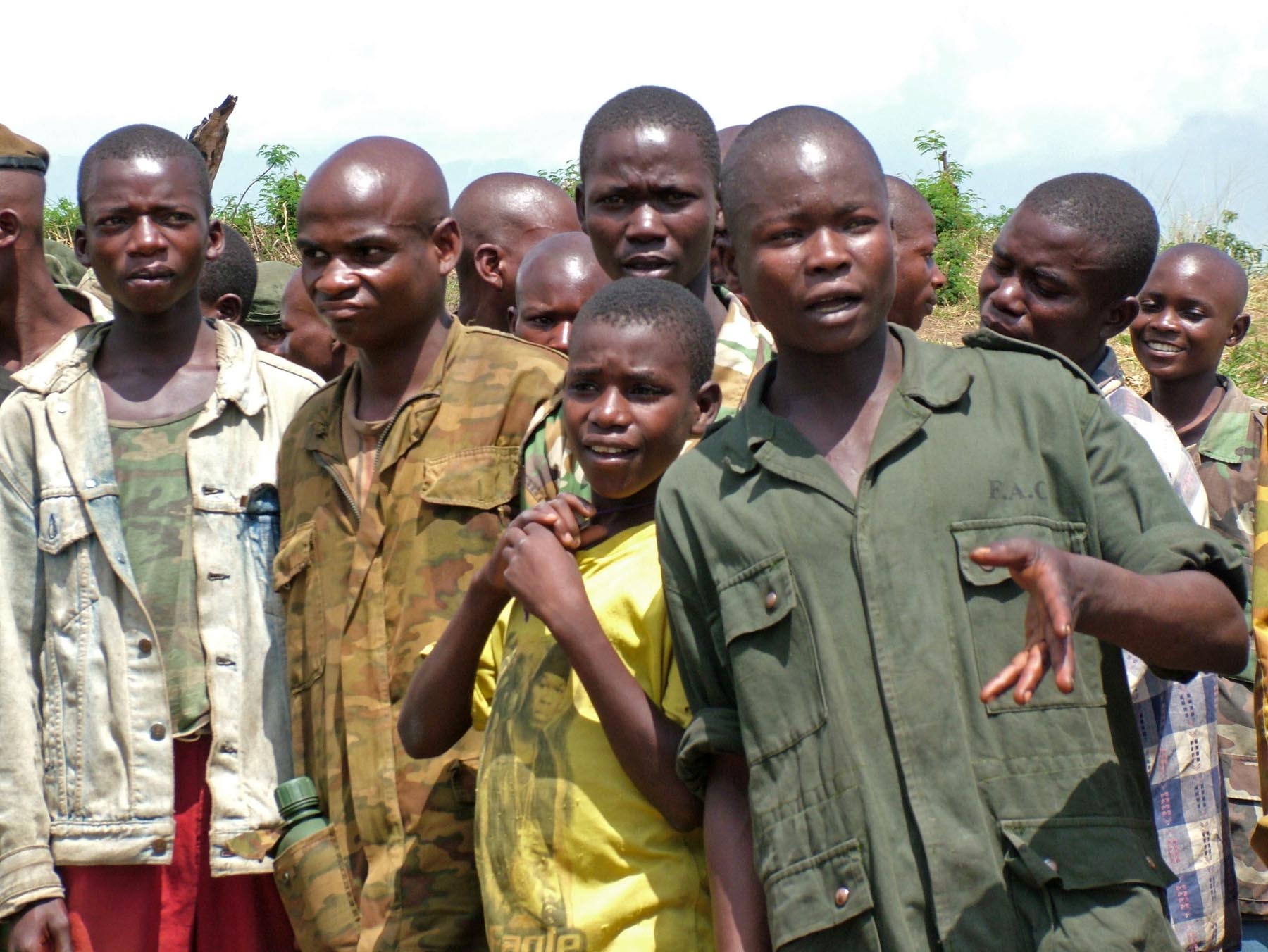
Former child soldiers in DRC (c) L Rose

Next month, Charles Taylor is due to find out whether he is guilty of the charges brought against him. Taylor's case has been heard at the Special Court for Sierra Leone (SCSL) in The Hague. Like cases held at the ICC, this case has taken place in a geographical space far removed from the sphere where crimes were carried out, and where the victims continue to live.

I was in Sierra Leone when Taylor was first arrested and transferred to Freetown. I have also attended and reported on one of the trials (Sam Hinga Norman) held at SCSL. My own perspective is that at the local level, justice meted out in this way does not work.

Many in Freetown expressed their public support for Norman. Despite the fact that there is a strong relationship, and a lot of goodwill, between Sierra Leone and the UK, even though the UK was instrumental in pursuing charges against all accused of war crimes, people argued that Norman was a hero.

For them, still shell-shocked at the brutalities waged during the previous decade, he had helped save (the soul of) Sierra Leone. In other words, they believed that Norman was a bringer of justice. That Western powers prosecuted him only divided the notions of Western and African justice.

The Foundation for Law, Justice and Society produced a series of essays on international justice and Africa written between 2008-2010. In his essay, 'International Criminal Justice and Non-Western Cultures', Tim Kelsall alerts us to the following anthropological quirks:
...It is difficult for most of us to imagine how unnerving international trials must be for many African witnesses, who find themselves miles from home, in a courtroom of extraordinary grandeur, confronted with robed judges and lawyers who speak a foreign language, and who subject them to highly unusual communicative practices including frequently hostile cross-examination. It is no wonder that getting clear testimony in such circumstances has often proved difficult (Cryer 2007), a problem compounded in contexts, not uncommon in Africa, where secrecy is prized as a high social ideal...

A project of the Open Society Justice Initiative, The Trial of Charles Taylor defendant offers further evidence of the problems that the international justice system faces, judging by the comments in several recent posts:
What do these ppl care about SL ppl anyways? Look at the volume of ignorance they’ve shown for human rights in other countries! (TJ, 09/03/2012) 
We were told Iraq had WEAPON OF MASS DESTRUCTION……who has been brought to JUSTICE for such MASS KILLINGS??? (Noko4, 10/03/2012)
It is regrettable to be aware of the fact that Mr Taylor was charge for the Sierra Leon civil war that kill thousands and cause thousands to lost body parts that was carry out by the sierra Leoners themselves and Mr Taylor was never charge for the brutal killing of Liberians and the destruction that were carry out by Mr Taylor and his forces in Liberia...Liberia need justice we do not want Taylor back in Liberia. (Samuel King, 03/03/2012)

The final comment reveals a paradox. On the one hand, the site is supposed to engage and include Sierra Leoneans in a discussion of the war as another means of achieving justice, yet it is Liberian voices that dominate, lamenting their own lack of access to international justice.

Add to that, the fact that the vast majority of Sierra Leoneans do not have access to the web, and those that do receive a cumbersome service, and it is not a surprise that many of those posting comments seem to live elsewhere (mainly the U.S.A.).

A daily news chalkboard in Liberia (c) Lt. Col. Terry VandenDolder
Although attempts have been made to reach out to those most affected, the international justice system still relies too heavily on Westernised ideas. In his analysis of the success and failures of the SCSL, Alpha Seesay recognises that Sierra Leonean victims were too far removed from the process; as well as bring geographically distant, the court had problems streaming the trial and it made no funds available for an outreach programme.

The ICC has been criticised as imperialist by various African governments. Several comments on The Trial of Charles Taylor defendant also refer to the iniquitous manner in which indictments and prosecutions only seem applicable to African leaders.

Whilst some locals may see the the ICC, and the reasons behind it, as a force for good, they are also frustrated at a lack of transparency as to whose justice is sought and why it does not include everyone. In places like Liberia, where traditional media outlets reach more people in more meaningful ways than the internet, potentially, this can do serious damage to an international justice system regardless of any outreach programme.

The U.S.A., the world's foremost human rights advocate, is not a member of the ICC. Most significantly, it threatens military action against the ICC if any of its citizens are brought before the court. This incompatible approach to human rights undermines the international criminal justice system.

Just as Okechukwu Oko posits in 'The Limits of Prosecutions', I believe that whilst prosecuting some African leaders might bring about some accountability, any form of international justice system needs to take into account the social, political and cultural norms that prevail across Africa. This should apply equally to leaders from the Americas, Asia or Eastern Europe.

Without doing so, the current international criminal justice system will fail to deliver justice to those affected by war crimes and crimes against humanity. 


Thursday, 8 March 2012

Justice for victims of conflict-related sexual violence?


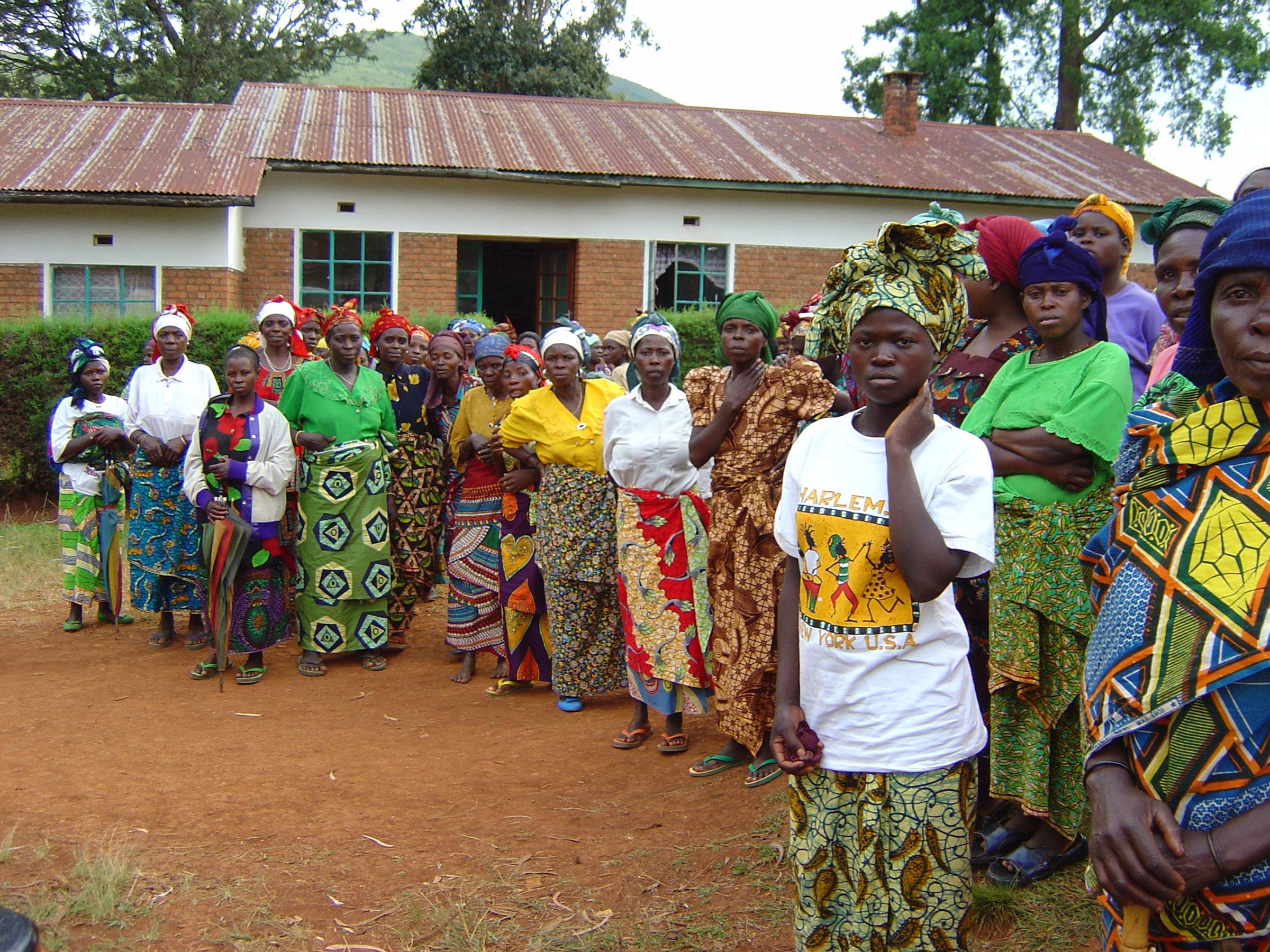
Meeting for rape victims in the DRC (c) L Werchick/USAID
It feels a little discomforting to be writing this on International Women's Day. It should be a day to celebrate. The fact that we have a specific day to 'celebrate' women acknowledges an international failing; women are not treated equally.

Women and girls are predominantly the victims of sexual abuse – although men and boys are also victims.

A couple of weeks ago, the UN produced its annual report on conflict-related sexual violence. According to the report:
Conflict-related sexual violence refers to incidents or patterns (for the purposes of listing in accordance with Security Council resolution 1960 (2010)) of sexual violence, that is rape, sexual slavery, forced prostitution, forced pregnancy, enforced sterilization or any other form of sexual violence of comparable gravity against women, men or children.

The report covers the period from December 2010 to November 2011, and details the abuses suffered at the hands of government and militia groups in conflict zones including Colombia, Democratic Republic of Congo (DRC) and Libya to name a few. It documents the (mass) rapes suffered by women, girls and boys, and refers to practices used by these armies including forced pregnancies.

Because of the social stigma attached to rape in many societies around the world, women and girls have little choice but to stay with their abusers. To return to their communities, which often does not support the armies that abused these victims, is not a viable alternative, as they are shunned by family, friends and neighbours. More so, when they are expecting a rapist's child.

In most cases, the UN is seeking judicial redress for the victims. It has had some success at the local levels, notably in courts such as the International Criminal Tribunal for Rwanda (ICTR) that paved the way for defining rape as an act of genocide, following the case of Akeyesu.

Nevertheless, on a personal level, studies have highlighted the powerlessness that local victims have felt in shaping and sharing their testimonies. On a social level, many do not want testify for fear of having to identify themselves as rape victims, which their family, friends and neighbours may have hitherto been unaware of.

The International Criminal Court (ICC) also offers victims the chance for justice beyond the local level. Although castigated at first for not pursuing sexual violence charges in the case of Thomas Lubanga, supporters of the ICC claim that it has made strides following charges of rape as a war crime, and as a crime against humanity, that it brought against Jean-Pierre Bemba.

But this is just the tip of the iceberg. The Institute for War and Peace Reporting write that prosecutors struggle to obtain the evidence that they need for a court of law to secure a conviction. 
In a recent cross-examination by the defence in the Bemba case, a rape victim was asked why she had no medical certificate confirming that she had been raped.
In our country if you want to see a Doctor at hospital you always need money. When I was raped I had no money. I couldn't go see a Doctor”, she replied.

This is a significant problem. In countries where females have less financial power, they are further dis-empowered by a judicial system that wants them to prove their abuse.

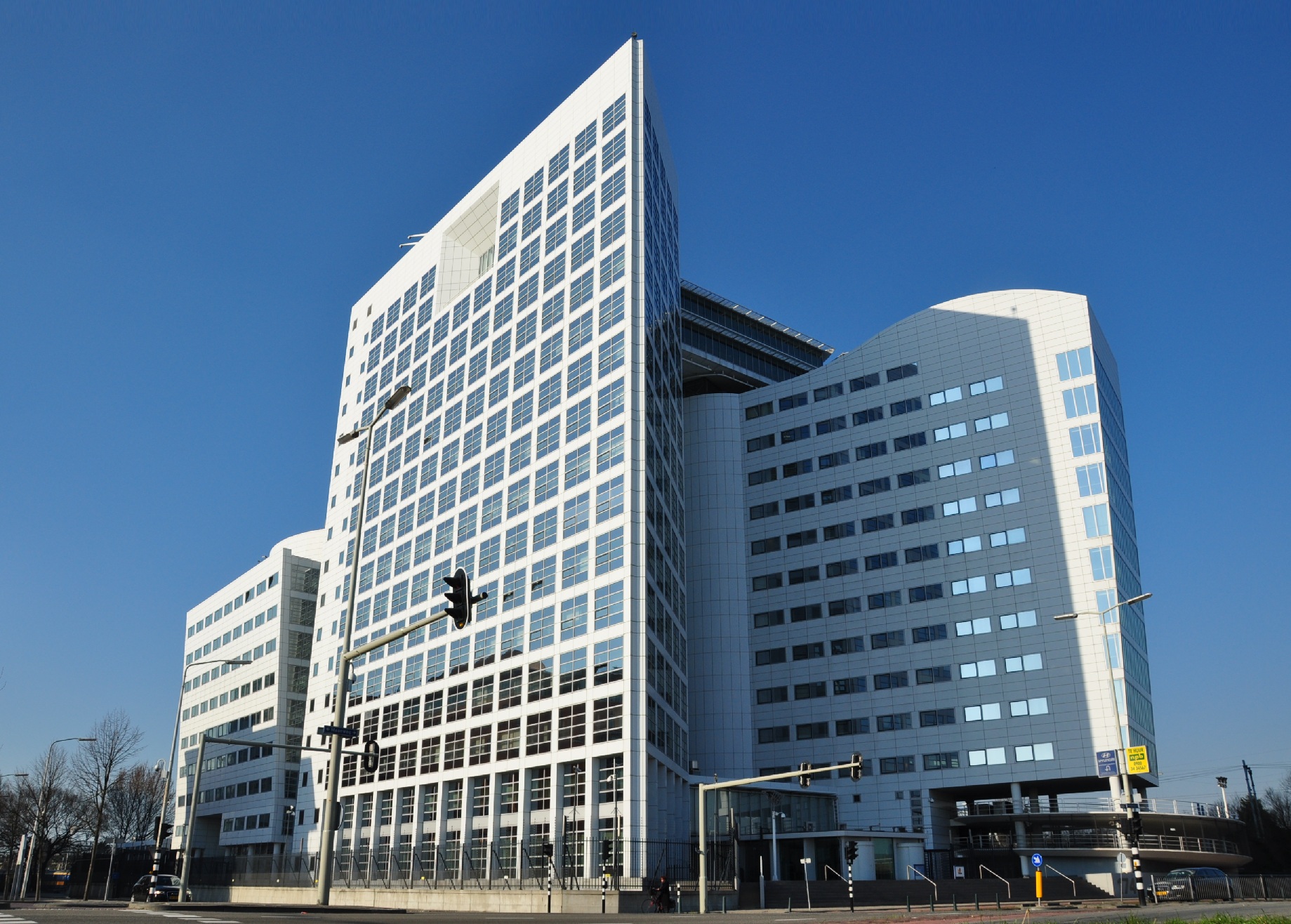
The International Criminal Court, The Hague (c) Vincent van Zeijst
Equally significant is the fact the ICC have not acted to bring any criminal charges against UN peacekeepers who have been accused of sexual violence. The ICC is supposed to operate independently of the UN. Therefore, it should have the means to investigate and prosecute those UN soldiers guilty of these war crimes, but there is little to suggest why it has not done/can not do so.

The UN's strategy for dealing with these soldiers is based around prevention, enforcement and remedial action. The statistics might well indicate that the message is getting through to UN peacekeepers, but this is difficult to verify causally.

It could just as easily be explained by women choosing not to step forward to report cases of sexual violence since they know that peacekeepers will not be brought to justice locally or internationally.

This impunity damages the credibility of the ICC, and that of their other locally established forms of criminal justice.

The UN also state:
...“The general breakdown in law and order, the absence of justice, continuing conflict, entrenched discriminatory attitudes and practices and the prevailing culture of impunity in these situations allowed for these crimes to be committed not only with appalling consequences for the victims, but with a force that destroys the fabric of society as a whole”.
In all these situations, cases of conflict-related sexual violence remain largely unreported owing to several factors, such as social stigma, fear of reprisals, insecurity, a lack of available response services and the perceived futility of reporting as a result of weak administration of justice, apathy and political pressure”...

Both this quotation, and my discussion above, indicate that the problems are cultural and institutional. Both within the geo-spatial boundaries where the acts take place, and within the spaces that are supposed to protect the victims.

The UN propose the following initiatives to address conflict-related sexual violence:
  • Training on conflict-related sexual violence
  • Development of early warning indicators
  • Addressing conflict-related sexual violence in ceasefire and peace agreements
  • Comprehensive strategies to combat sexual violence
  • Programmatic and funding challenges and opportunities

All well and fine, but there is little substance to these proposals. Nothing that might serve to suggest that the UN are seeking to uproot the “entrenched discriminatory attitudes”, which is key to altering normative views of rape. Especially if the legal process is only going to be accessed by the few who can, and want, to use it.

Education (not the top-down approach) is going to be vital to altering social norms of sexual violence. To educate, we need to hear more from the victims and more from the rapists; because it is they that transgress the laws whilst operating within their gendered norms.

Nor am I confining this to the international conflict-related zones discussed here. Because in the West, we have constructed sexual violence in a certain way with regards to domestic conflict-related spaces, and realised justice through criminal mechanisms that operate with a similar impunity. 


Enhanced by Zemanta