Justitia, Old Bridge of Heidelberg

Justitia, Old Bridge of Heidelberg
Justitia, Old Bridge of Heidelberg © Gernot Keller, 2007
Blinkered Justice articles also appear on CrimeTalk and Government In The Lab
Showing posts with label sex crime. Show all posts

Thursday, 10 May 2012

The Rochdale child sex gang and attributing blame

In need of affection and attention? (c) Stew Dean
The Telegraph columnist Allison Pearson wrote the following introduction for her article entitled, 'Asian sex gang: young girls betrayed by our fear of racism':
Nine white men are found guilty of grooming young Asian girls, aged between 13 and 15, whom they picked up on the streets of London. The girls were lured with free fish and chips before being raped or pimped as prostitutes. One Asian girl from a children's home was used for sex by 20 men in one night. Police insist the crimes were not "racially motivated". 
Imagine if that story were true. Would you really believe that race was not a hateful factor in those crimes?...
Yes, I would Allison.


My first thoughts were that this is another case of the powerful seeking to control the vulnerable.


In their more balanced article, 'Child sex grooming, the Asian question, The Independent, have posited that it may be a cultural issue but that the evidence suggesting as much is inconclusive. The Child Exploitation and Online Protection Centre acknowledges this.


Might we otherwise perceive this as being males using their power to control and abuse females? 


Recent evidence suggests that 10% of women have been raped and 35% have been sexually assaulted. Yet females rarely take their attacker to court because of our extremely low conviction rates. Just look at the recent Ched Evans rape case and the abuse that the victim suffered following his guilty verdict. These are symptomatic of the inequalities that women face in the name of security and protection.


Do the crimes committed in Rochdale not reflect these inequalities? Might it be a gender issue rather than a race issue? 


Or might it be the way that we 'treat' our children?


Ella Cockbain and Helen Brayley from the Jill Dando Institute of Security and Crime Science at University College London suggest that affection, attention and excitement are often enough for girls to succumb to their future abusers. Is this what they lack from parents and society at large?


The mainstream media regularly demonise our children as criminals in waiting. On the street, mainly. Which is where the girls in this case were groomed. But why are they on the street?


Over 18s, no hoodies (c) C Ford
UNICEF UK have studied children's happiness in the UK. They found that children miss the love of parents, who, as well as working the longest hours in Europe may also be working more than one job to provide for their children. They also concluded that there are too few leisure facilities available for children. Affection, attention and excitement.


UNICEF UK has called on the UK government to address these problems. I have not read, seen, or heard anything that might suggest that these issues have been resolved. 


What happened to these girls was abhorrent. It may well be a cultural problem, but if we truly want to protect our girls in the future, we should not jump to rash conclusions without a full consideration of other factors. 


Whilst paedophilia is defined differently, in that paedophiles groom pre-pubescent children, the victims are the same; children. On the street or online, grooming is grooming. 


We do not attribute paedophile rings with being white and European. We look beyond such a simplification. We should so in this case. 


Because then we might see that these girls were not solely betrayed by our fear of racism, but also because of a range of other factors.

Friday, 9 March 2012

The Invisible War: justice for victims of conflict-related sexual violence?


Following yesterday's post, I feel that it appropriate to highlight the sexual abuse suffered by American service women. Hence, the above trailer for the documentary, The Invisible War. 


Whilst it showcases an often unheard side of conflict-related sexual violence, it demonstrates that it is not confined to (African) borders and boundaries. Furthermore, their testimonies, and the low percentage of prosecutions and convictions, demonstrate that these women are subject to the same physical and mental hold that men around the world use to control women's place in society. And at home.


Because conflict-related sexual violence should also be considered in terms of domestic violence. Homes too can be conflict-zones, with partners, spouses and families at war with one another. As many women, and girls, are sexually abused at home by family members, the notion that this environment is always safe is a false one. 


The prevailing focus on the reasons for rape and sexual abuse need to change. It is not  specific to the way a woman dresses, what she drinks, or what type of person she is. It is about the rapist(s), and his/their power to control the victim(s) within their gendered, cultural and institutional norms.

Thursday, 8 March 2012

Justice for victims of conflict-related sexual violence?


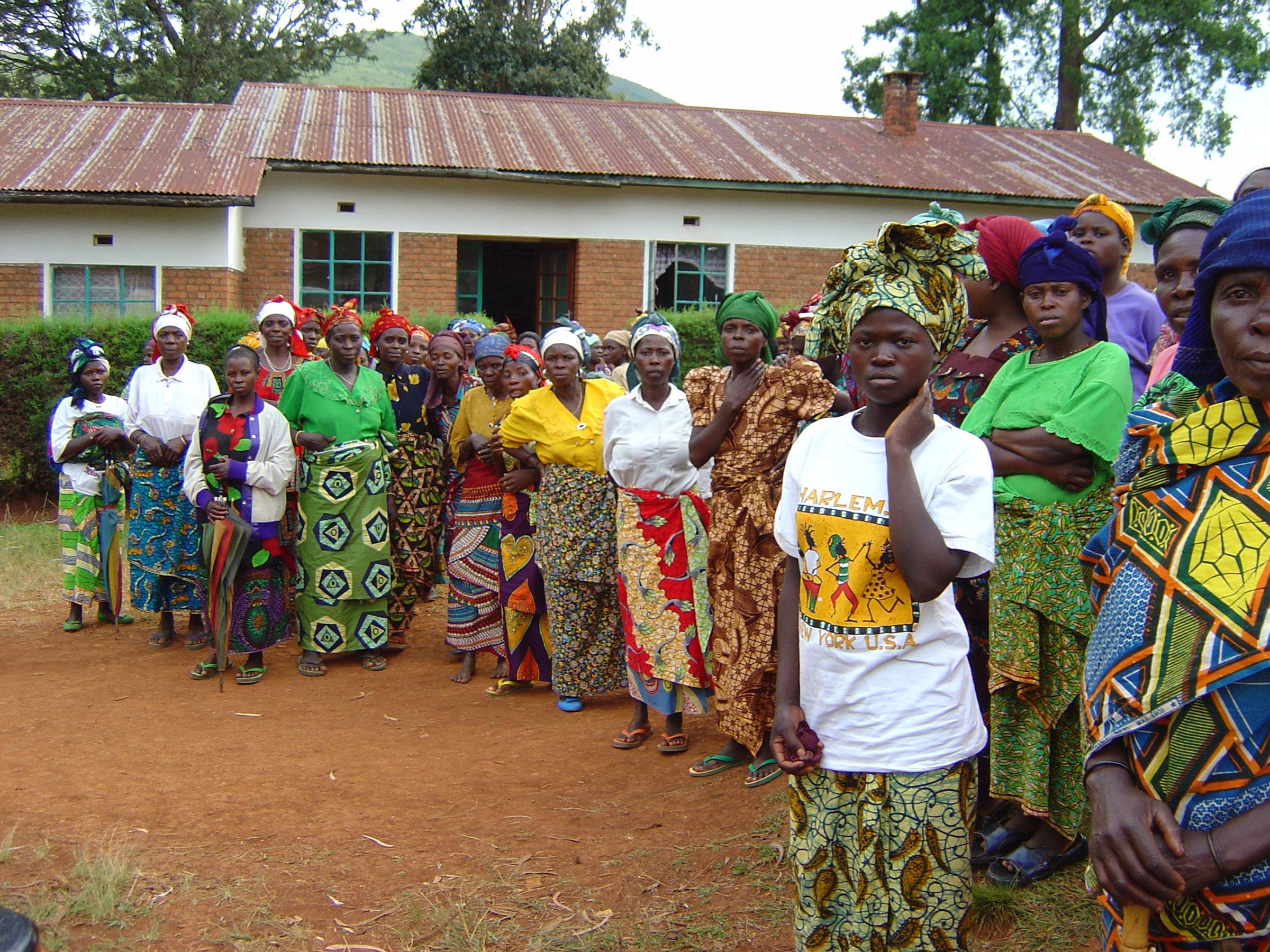
Meeting for rape victims in the DRC (c) L Werchick/USAID
It feels a little discomforting to be writing this on International Women's Day. It should be a day to celebrate. The fact that we have a specific day to 'celebrate' women acknowledges an international failing; women are not treated equally.

Women and girls are predominantly the victims of sexual abuse – although men and boys are also victims.

A couple of weeks ago, the UN produced its annual report on conflict-related sexual violence. According to the report:
Conflict-related sexual violence refers to incidents or patterns (for the purposes of listing in accordance with Security Council resolution 1960 (2010)) of sexual violence, that is rape, sexual slavery, forced prostitution, forced pregnancy, enforced sterilization or any other form of sexual violence of comparable gravity against women, men or children.

The report covers the period from December 2010 to November 2011, and details the abuses suffered at the hands of government and militia groups in conflict zones including Colombia, Democratic Republic of Congo (DRC) and Libya to name a few. It documents the (mass) rapes suffered by women, girls and boys, and refers to practices used by these armies including forced pregnancies.

Because of the social stigma attached to rape in many societies around the world, women and girls have little choice but to stay with their abusers. To return to their communities, which often does not support the armies that abused these victims, is not a viable alternative, as they are shunned by family, friends and neighbours. More so, when they are expecting a rapist's child.

In most cases, the UN is seeking judicial redress for the victims. It has had some success at the local levels, notably in courts such as the International Criminal Tribunal for Rwanda (ICTR) that paved the way for defining rape as an act of genocide, following the case of Akeyesu.

Nevertheless, on a personal level, studies have highlighted the powerlessness that local victims have felt in shaping and sharing their testimonies. On a social level, many do not want testify for fear of having to identify themselves as rape victims, which their family, friends and neighbours may have hitherto been unaware of.

The International Criminal Court (ICC) also offers victims the chance for justice beyond the local level. Although castigated at first for not pursuing sexual violence charges in the case of Thomas Lubanga, supporters of the ICC claim that it has made strides following charges of rape as a war crime, and as a crime against humanity, that it brought against Jean-Pierre Bemba.

But this is just the tip of the iceberg. The Institute for War and Peace Reporting write that prosecutors struggle to obtain the evidence that they need for a court of law to secure a conviction. 
In a recent cross-examination by the defence in the Bemba case, a rape victim was asked why she had no medical certificate confirming that she had been raped.
In our country if you want to see a Doctor at hospital you always need money. When I was raped I had no money. I couldn't go see a Doctor”, she replied.

This is a significant problem. In countries where females have less financial power, they are further dis-empowered by a judicial system that wants them to prove their abuse.

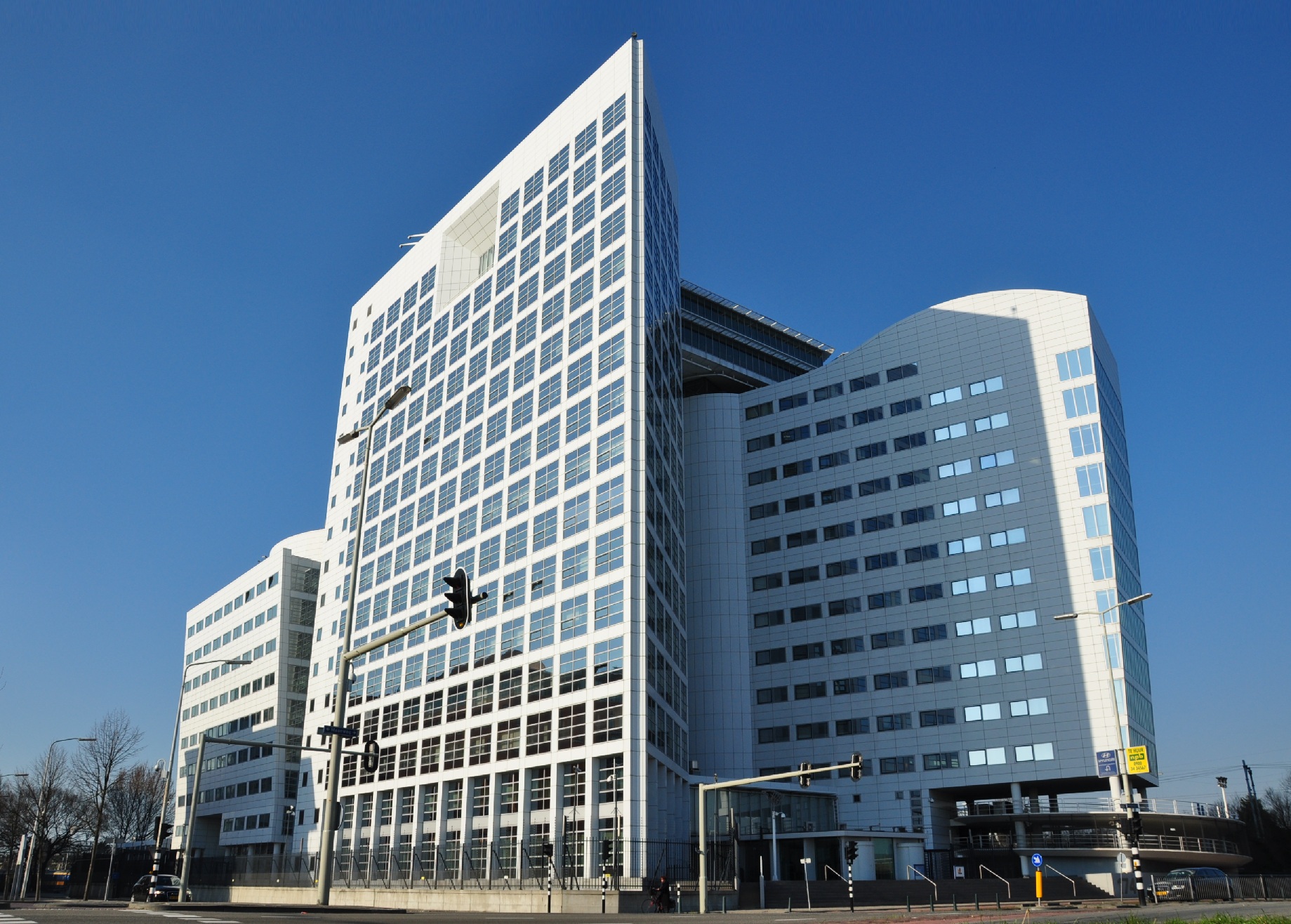
The International Criminal Court, The Hague (c) Vincent van Zeijst
Equally significant is the fact the ICC have not acted to bring any criminal charges against UN peacekeepers who have been accused of sexual violence. The ICC is supposed to operate independently of the UN. Therefore, it should have the means to investigate and prosecute those UN soldiers guilty of these war crimes, but there is little to suggest why it has not done/can not do so.

The UN's strategy for dealing with these soldiers is based around prevention, enforcement and remedial action. The statistics might well indicate that the message is getting through to UN peacekeepers, but this is difficult to verify causally.

It could just as easily be explained by women choosing not to step forward to report cases of sexual violence since they know that peacekeepers will not be brought to justice locally or internationally.

This impunity damages the credibility of the ICC, and that of their other locally established forms of criminal justice.

The UN also state:
...“The general breakdown in law and order, the absence of justice, continuing conflict, entrenched discriminatory attitudes and practices and the prevailing culture of impunity in these situations allowed for these crimes to be committed not only with appalling consequences for the victims, but with a force that destroys the fabric of society as a whole”.
In all these situations, cases of conflict-related sexual violence remain largely unreported owing to several factors, such as social stigma, fear of reprisals, insecurity, a lack of available response services and the perceived futility of reporting as a result of weak administration of justice, apathy and political pressure”...

Both this quotation, and my discussion above, indicate that the problems are cultural and institutional. Both within the geo-spatial boundaries where the acts take place, and within the spaces that are supposed to protect the victims.

The UN propose the following initiatives to address conflict-related sexual violence:
  • Training on conflict-related sexual violence
  • Development of early warning indicators
  • Addressing conflict-related sexual violence in ceasefire and peace agreements
  • Comprehensive strategies to combat sexual violence
  • Programmatic and funding challenges and opportunities

All well and fine, but there is little substance to these proposals. Nothing that might serve to suggest that the UN are seeking to uproot the “entrenched discriminatory attitudes”, which is key to altering normative views of rape. Especially if the legal process is only going to be accessed by the few who can, and want, to use it.

Education (not the top-down approach) is going to be vital to altering social norms of sexual violence. To educate, we need to hear more from the victims and more from the rapists; because it is they that transgress the laws whilst operating within their gendered norms.

Nor am I confining this to the international conflict-related zones discussed here. Because in the West, we have constructed sexual violence in a certain way with regards to domestic conflict-related spaces, and realised justice through criminal mechanisms that operate with a similar impunity. 


Enhanced by Zemanta

Friday, 20 May 2011

Evolutionary thinking

As yesterday’s international news events piped through my google reader, a recurring notion and old friend appeared in amongst them; power.

The No. 1 story du jour, at least this morning, was the Dominique Strauss-Khan (DSK) bail hearing application. Without wishing to going into any further detail on this matter (Catherine Tsalikis covered it eloquently on The Pryer a few days ago), I have noticed how the media make a particular point of mentioning the alleged victim’s nationality. As a Guinean, we are led to assume that, racially and ethnically, she is a black African.  Why does this matter?

A story on a Dr Satoshi Kanazawa caught my eye next. In his blog on Psychology Today, since removed, Kanazawa proclaimed black women were less physically attractive, and intelligent, than women of other ethnicities. If you really want to read the rather odd treatise, a copy of it can be found here. Kanazawa is an evolutionary psychologist at the London School of Economics (LSE). No mention of Kanazawa’s race here. Why not?

Speaking to The Guardian, Amena Amer, the incoming LSE students' union education officer, stated:

"We support free speech and academic freedom, but Kanazawa's research fuels hate against ethnic and religious minorities promoted by neo-Nazi groups. Not only does he use the LSE's credentials to legitimise his 'research' but this jeopardises the academic credibility of the LSE."

Although somewhat tarnished given recent events, LSE’s status and Kanazawa’s attachment to it add lustre to his academic status. It makes him appear more eminent. This is a dangerous position for him to hold.

Amena Amer’s words resonate with the DSK story. Both stories are about power, and the power to abuse. But equally, they are about the power of the media to inform, and not inform, and the effect that this has on racial stereotyping. 
Enhanced by Zemanta