Justitia, Old Bridge of Heidelberg

Justitia, Old Bridge of Heidelberg
Justitia, Old Bridge of Heidelberg © Gernot Keller, 2007
Blinkered Justice articles also appear on CrimeTalk and Government In The Lab
Showing posts with label power. Show all posts

Thursday, 8 March 2012

Justice for victims of conflict-related sexual violence?


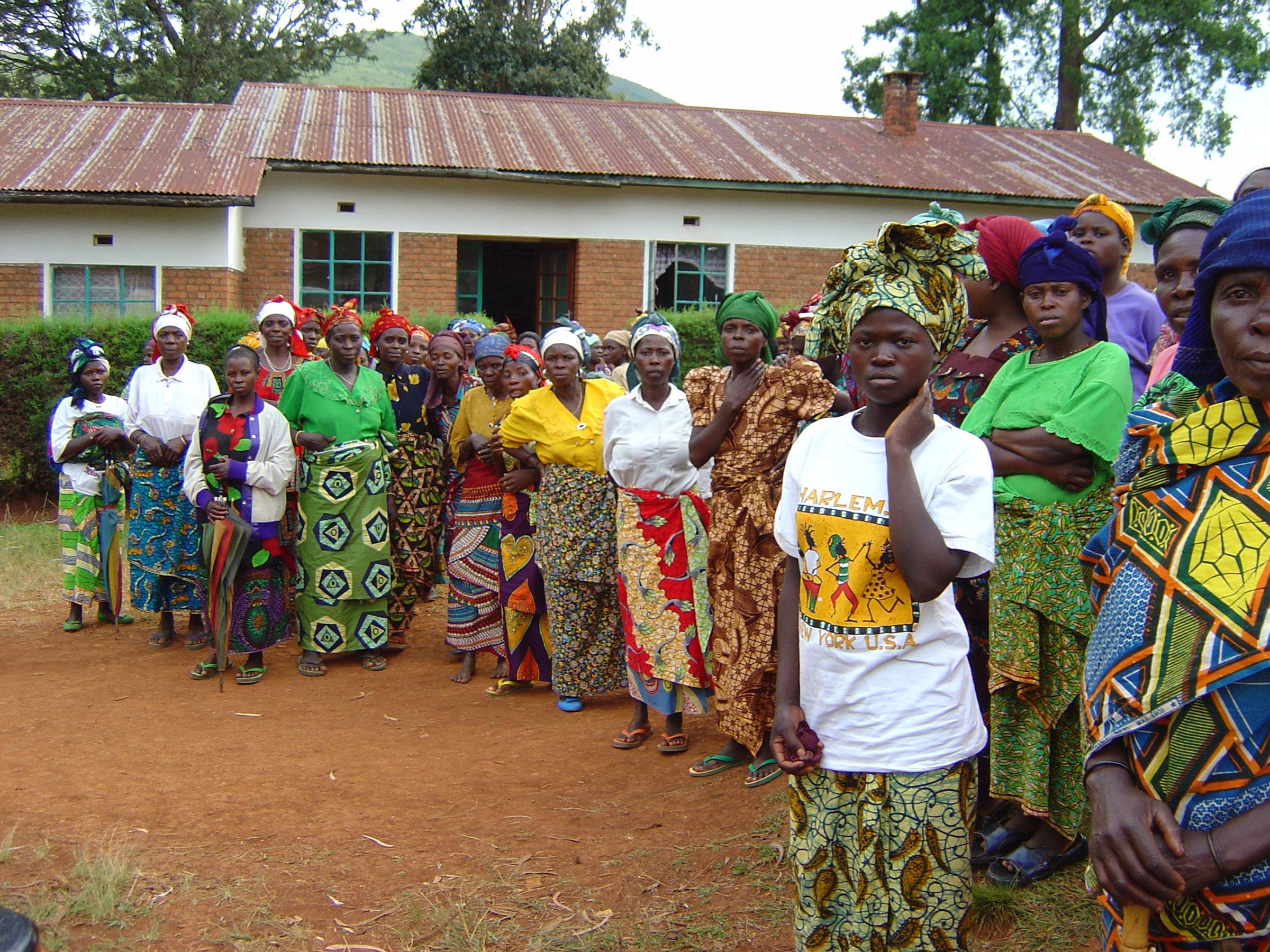
Meeting for rape victims in the DRC (c) L Werchick/USAID
It feels a little discomforting to be writing this on International Women's Day. It should be a day to celebrate. The fact that we have a specific day to 'celebrate' women acknowledges an international failing; women are not treated equally.

Women and girls are predominantly the victims of sexual abuse – although men and boys are also victims.

A couple of weeks ago, the UN produced its annual report on conflict-related sexual violence. According to the report:
Conflict-related sexual violence refers to incidents or patterns (for the purposes of listing in accordance with Security Council resolution 1960 (2010)) of sexual violence, that is rape, sexual slavery, forced prostitution, forced pregnancy, enforced sterilization or any other form of sexual violence of comparable gravity against women, men or children.

The report covers the period from December 2010 to November 2011, and details the abuses suffered at the hands of government and militia groups in conflict zones including Colombia, Democratic Republic of Congo (DRC) and Libya to name a few. It documents the (mass) rapes suffered by women, girls and boys, and refers to practices used by these armies including forced pregnancies.

Because of the social stigma attached to rape in many societies around the world, women and girls have little choice but to stay with their abusers. To return to their communities, which often does not support the armies that abused these victims, is not a viable alternative, as they are shunned by family, friends and neighbours. More so, when they are expecting a rapist's child.

In most cases, the UN is seeking judicial redress for the victims. It has had some success at the local levels, notably in courts such as the International Criminal Tribunal for Rwanda (ICTR) that paved the way for defining rape as an act of genocide, following the case of Akeyesu.

Nevertheless, on a personal level, studies have highlighted the powerlessness that local victims have felt in shaping and sharing their testimonies. On a social level, many do not want testify for fear of having to identify themselves as rape victims, which their family, friends and neighbours may have hitherto been unaware of.

The International Criminal Court (ICC) also offers victims the chance for justice beyond the local level. Although castigated at first for not pursuing sexual violence charges in the case of Thomas Lubanga, supporters of the ICC claim that it has made strides following charges of rape as a war crime, and as a crime against humanity, that it brought against Jean-Pierre Bemba.

But this is just the tip of the iceberg. The Institute for War and Peace Reporting write that prosecutors struggle to obtain the evidence that they need for a court of law to secure a conviction. 
In a recent cross-examination by the defence in the Bemba case, a rape victim was asked why she had no medical certificate confirming that she had been raped.
In our country if you want to see a Doctor at hospital you always need money. When I was raped I had no money. I couldn't go see a Doctor”, she replied.

This is a significant problem. In countries where females have less financial power, they are further dis-empowered by a judicial system that wants them to prove their abuse.
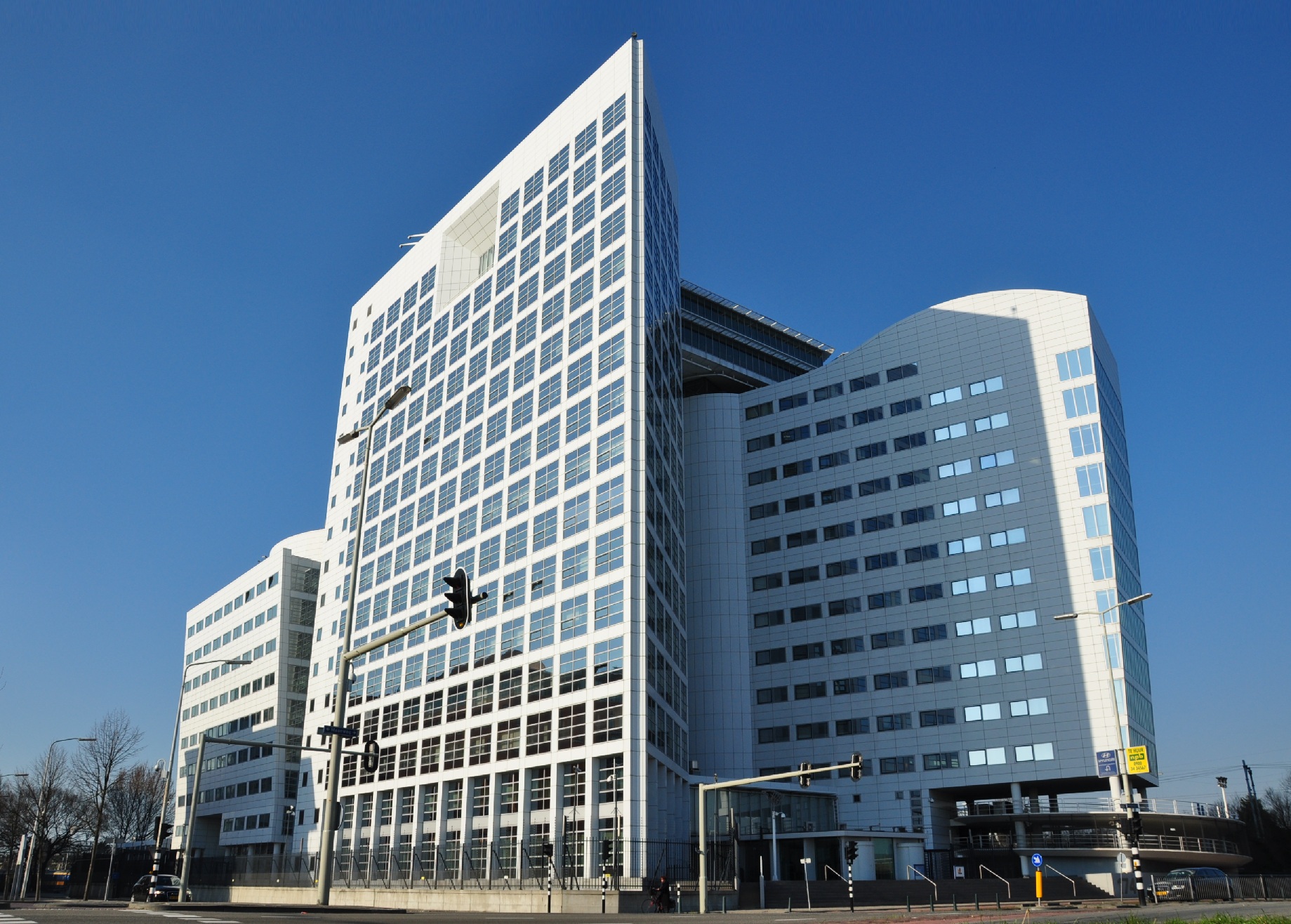
The International Criminal Court, The Hague (c) Vincent van Zeijst
Equally significant is the fact the ICC have not acted to bring any criminal charges against UN peacekeepers who have been accused of sexual violence. The ICC is supposed to operate independently of the UN. Therefore, it should have the means to investigate and prosecute those UN soldiers guilty of these war crimes, but there is little to suggest why it has not done/can not do so.

The UN's strategy for dealing with these soldiers is based around prevention, enforcement and remedial action. The statistics might well indicate that the message is getting through to UN peacekeepers, but this is difficult to verify causally.

It could just as easily be explained by women choosing not to step forward to report cases of sexual violence since they know that peacekeepers will not be brought to justice locally or internationally.

This impunity damages the credibility of the ICC, and that of their other locally established forms of criminal justice.

The UN also state:
...“The general breakdown in law and order, the absence of justice, continuing conflict, entrenched discriminatory attitudes and practices and the prevailing culture of impunity in these situations allowed for these crimes to be committed not only with appalling consequences for the victims, but with a force that destroys the fabric of society as a whole”.
In all these situations, cases of conflict-related sexual violence remain largely unreported owing to several factors, such as social stigma, fear of reprisals, insecurity, a lack of available response services and the perceived futility of reporting as a result of weak administration of justice, apathy and political pressure”...

Both this quotation, and my discussion above, indicate that the problems are cultural and institutional. Both within the geo-spatial boundaries where the acts take place, and within the spaces that are supposed to protect the victims.

The UN propose the following initiatives to address conflict-related sexual violence:
  • Training on conflict-related sexual violence
  • Development of early warning indicators
  • Addressing conflict-related sexual violence in ceasefire and peace agreements
  • Comprehensive strategies to combat sexual violence
  • Programmatic and funding challenges and opportunities

All well and fine, but there is little substance to these proposals. Nothing that might serve to suggest that the UN are seeking to uproot the “entrenched discriminatory attitudes”, which is key to altering normative views of rape. Especially if the legal process is only going to be accessed by the few who can, and want, to use it.

Education (not the top-down approach) is going to be vital to altering social norms of sexual violence. To educate, we need to hear more from the victims and more from the rapists; because it is they that transgress the laws whilst operating within their gendered norms.

Nor am I confining this to the international conflict-related zones discussed here. Because in the West, we have constructed sexual violence in a certain way with regards to domestic conflict-related spaces, and realised justice through criminal mechanisms that operate with a similar impunity. 


Enhanced by Zemanta

Wednesday, 22 February 2012

The Wednesday ? - British values of tolerance


A quick introduction into the Wednesday ?

I propose using the Wednesday ? on a trial basis over the next few weeks. The purpose of it, unlike Questioning The Headlines (which I will do again shortly), is to look at specific words and/or phrases that are used, mainly by those in power, as a means of short-cutting any criticism or independent thought.

I want to highlight these words and phrases, and promote public debate. This is where you come in. It would be fantastic if you could post your own thoughts to add to the discourse. By doing so, hopefully, we can build on a cultural understanding of these terms, and de-construct some of the (inherent?) assumptions contained within them.

British values of tolerance”

The Telegraph reported yesterday that the coalition government would be publishing their new integration strategy for immigrants coming to make the UK their home. The article continued:
The integration strategy will state: “We believe in certain values and will actively promote them: freedom of speech; freedom of worship; democracy and the rule of law. Long-standing British values of tolerance are the bedrock of our society. We will champion a united British identity, across class, colour and creed.”
I could have added the term “long-standing”, but this will be discussed as part of my critique. Equally, I could have covered “British values” as a stand-alone subject, but I want to keep this post shorter than my other analyses, and I would like you to stay awake.

Assumptions of the “British values of tolerance”

In terms of what is being promoted, I would hazard a guess that this phrase is being used to summon up that fuzzy feeling of “being proud to be British”; we are a civilised people, who have welcomed peoples of different race, creed, and religion to the UK. It assumes that we do not just “put up with” people from different backgrounds, but that we were the first nation to promote a “tolerance” that advocates equal rights.

The idea that it is traditionally British, embeds these values with being white, middle/upper class, able-bodied, and more than likely, male.

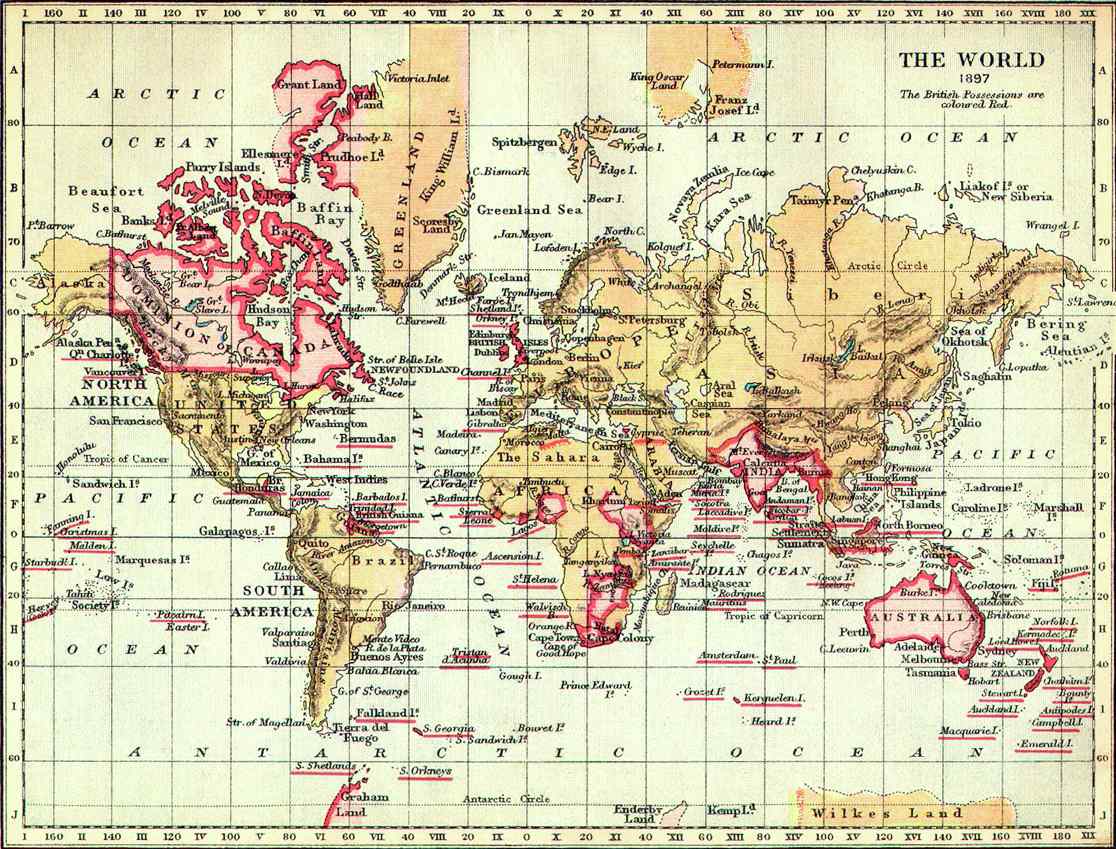
The world in 1897 - British possessions coloured red
British values of tolerance”?

Beyond the rampant theft of resources in Africa and Asia as the British Empire extended its power, another part of its expansion was evangelical, which saw us trying to “civilise” other nations. This was not a tolerance, this was an imposition of our behaviour onto those who lived in different parts of the world.

Since the turn of the 20th Century, whilst the British have allowed peoples from other cultures to settle in the UK, it has come with ever increasing legislation and consternation.

The Aliens Act of 1905 was the first act to introduce immigration controls for the UK; it was designed to stop an increasing number of Jewish immigrants entering the UK. Ever since, the British have legislated for other people to join them as a means to fill gaps in the labour market (British Nationalist Act 1948), and then have passed acts to stop them entering the UK (Commonwealth Immigrants Act 1962) as a result of a public backlash.

Racially motivated riots over the last 60 years or so do not indicate that we live/have lived in a society that has promoted tolerance in the way that the phrase indicates. Clearly, we welcome people into the UK when it fulfils British economic needs, but that we “put up” with them living here. The notion that this British value of tolerance is “long-standing” is faulty.

Although the term implies an equality of residential rights in the UK, it rests on the idea that immigrants are/were “lucky” to have come here. It does not take into account whether people were well-educated in their country of birth, nor that they took menial work and wage in the UK, let alone whether they have been driven out of their homes because of war. Including those that Britain engages in.

There is also a denial of other nation's values of tolerance in this term. Societies around parts of Asia and Africa regularly welcome foreigners, and strangers, into their homes, and treat them as family members or long-standing friends. Why is their value of tolerance supposedly not as good as ours?

Supposedly, this integration strategy also promotes ideas of tolerance to hate groups in the UK. My fear is that this strategy only promotes the kind of toleration discussed above, and that we are pandering to an outdated idea.

After a century of official multi-cultural living in the UK, it would be interesting to know what today's “British values of tolerance” mean now. Over to you.

Thursday, 16 February 2012

Free music downloads: police and thieves - the thieves


Nipper hears His Masters Voice (c) NewYork1956
Using the term 'free music download' on www.google.co.uk, this is what my search result revealed.

On the first page of results, amongst the odd service that I am aware of, such as Spotify and we7, were a host of others including mp3raid, WuZAM and beemp3. In fact, the latter named entities ranked higher than the former services. Why?

I am writing this post with reference to the news that the Serious Organised Crime Agency (SOCA) closed down a music download website, RnBXclusive.com, on Tuesday. A man has been arrested, and bailed, on fraud charges. This follows the recent high profile arrest of Kim DotCom, who ran the music sharing website Megaupload.

SOCA had posted a message up on the defunct website declaring:
"As a result of illegal downloads, young, emerging artists may have had their careers damaged. If you have illegally downloaded music, you will have damaged the future of the music industry."
Who are the “young, emerging artists” who have had their careers damaged? Have they already signed a record deal? Is it with a major or independent label? Are they unsigned? Without them, is there no “future of the music industry”? Do SOCA know something that the music industry do not, because the music industry is unsure what the future holds.

Beyond these words, the assumption is that the “future of the music industry” will look much the same as it does now. Moreover, the statement presumes that illegal downloading, or more to the point, the availability of free musical content online is a bad thing. Is it?

Lady Gaga (c) pink_daisy
There is a coalition of artists who believe that the use of free music can be a means to building an audience. The likes of Lady Gaga gave away free music as part of her business model.

That does not mean that artists are happy at their works/copyright being abused, but equally, they are coming to terms with illegal downloading and file-sharing. A music industry think tank advocates artists giving their albums away for free, and discusses how artists might profit from it whilst simultaneously defeating the services that provide free downloads of their material.

Either way, artists appear not to want to criminalise those who download their material for free. From well-known artists in the UK, to smaller, independent artists in the U.S.A., they see state regulation of the internet as a bad thing for artists.

Recording artists have long been dealt a raw deal. After years of record companies offering a pittance to their artists for their work, the internet appeared to offer salvation and a chance to control their destinies.

However, recording artists receive an even smaller portion of the pie when signing up with the new digital record companies of today. The likes of Amazon, iTunes, Last.fm and Spotify pay their artists even less than their traditional counterparts. Just who is stealing from recording artists?

In the case of RnBXclusive.com, SOCA have decided that the thieves are largely males, aged 18-25, who have downloaded music from this site. However, as my search above demonstrates, there are a variety of sites where people can supposedly download music 'legally' and 'for free'.

The problem is that many operate outside of the UK's borders. Some supposedly operate legally within their own borders, but not necessarily within the laws of the in-country hosting internet service providers (ISPs). Therefore, it is difficult, if not nigh on impossible, to ascertain whether these services are 'legal' or 'illegal'.

Furthermore, they all appear high in Google rankings. How does that happen?

Whilst it may be partly explained by the inbound links and keywords used by the more nebulous sites, surely they can not be using any different links and keywords to those used by Spotify or Last.fm. Could the higher ranking of sites like mp3raid, WuZAM and beemp3 be explained by advertising? Are Google, and other search engines, profiting from marketing 'illegal' downloads?

(c) Surka
The Independent notes that RnBXclusive.com was largely funded by advertising. Therefore, the owner was generating his 'fraudulent' income from those advertising on his site. Surely then, just as individuals are supposed to be responsible for checking the 'legality' of the site that they use, advertisers too must he held equally, if not, more accountable, given that they sustained this business.

Given that the 'legality' of downloading free music is unclear, and that Google, a trusted means of sourcing information, promotes these sites above others, it seems somewhat disproportionate that individuals can be heavily punished for transgressing a very blurred line. Especially when those propping up these 'illegal' services financially do not appear to have been sought after in the same way.

Whilst the official narrative runs that it is the artists who are the victims, artists themselves are offering free music downloads to build up their followings. It is possible that 'illegal' downloading might also provide them with a means to take greater control of their works and their income streams. 


If this be the case, then it is the record companies that are set to lose the ability to control the market, and the profits generated from it, not the artists. Therefore, downloading music freely is not in the commercial interests of businesses that currently do very nicely from it. 

Artists have regularly been, and continue to be, victims of legal 'theft'. It just appears more culturally palatable to portray males, aged 18-25, as criminals, rather than the 'legitimate' enterprises making large sums of money from it.

You may ask yourself, well, how did we get here?...

Enhanced by Zemanta

Thursday, 19 January 2012

Open secrets and the need to know


Reprieve protest during visit by President George W. Bush (c) art makes me smile
On a day when Wikipedia turned off its English language edition, in protest at the US Stop Online Piracy Act (SOPA) and Protect Intellectual Property Act (PIPA), it is somewhat ironic the the UK government have pulled the plug on the Gibson inquiry.

Not that the inquiry was ever likely to reveal all. Many critics, including human rights organisations and lawyers, were going to boycott the inquiry in protest at the government's decision to hold much of it in secret.

The investigation is now going to focus on documents that were recently unearthed following the revolution in Libya. Would the UK government have ditched the Gibson inquiry right now had these papers not come to light? Following the investigation, is it really any more likely that we will ascertain the truth(s) regarding the UK's complicity in rendition and torture?

At every turn the UK government appears to have been unwilling to reveal the extent of their knowledge of rendition and torture. The case of Binyam Mohamed is especially relevant.

The UK government tried to stop the release of 'torture documents' that demonstrated their complicity in his torture, and when defeated in the High Court, they appealed. And lost.

All this was done in the name of 'national security', yet all the Judges decided that any threat to 'national security' was not serious. Which begs the age old question: in whose name is 'national security' being evoked?

Furthermore, the Judges ruled that there was overwhelming public interest in disclosing this material. Discourses of 'national security' and 'public interest' are not that far removed from similar, concurrent discussions on UK libel laws.

Ian Hislop (c) Nikki Montefiore
These laws have been criticised for denying freedom of expression and for permitting “libel tourism.”Anyone may be subject to legal action by the rich and powerful, individuals and multi-national corporations alike, if someone reads something critical of this person or organisation in the UK, regardless of where he, she, they or it reside.

As such, UK libel laws can be perceived as forms of 'individual security' and 'organisational security', protecting these private members of the public and commercial operations from scurrilous rumour and/or genuine criticism. Indeed, many powerful, wealthy individuals have used these laws to prevent stories being printed about their private lives, on grounds that it is not in the public interest.


Interestingly, the UK government is keen to change these laws as it is crushing freedom of expression in scientific and academic debate. The BBC reported that:
There will be a new requirement in the bill that a statement must have caused, or be likely to cause, substantial harm to someone's reputation, if it is to be considered defamatory.
Given the UK government's stance on renditions and torture, I find their position on libel laws quite hypocritical. As noted above, the UK government has sought legal means of gagging those that have criticised its means and methods of extracting information.

As with the wealthy, individual libel-seekers, these court cases cost money. Unlike the wealthy, individual libel-seekers, these court cases are paid for by the public. How much did it cost the UK government in their legal actions against Binyam Mohamed? 

Whilst the government is keen to raise the bar for those bringing libel cases against those that 'defame' them, the state will continue to act as Judge and Jury in its construction of public inquiries. Not only does it put an end to investigations when it chooses, as per Gibson, it also selects those that act as its arbiters.

I am not questioning the integrity of those that conduct such reviews, but with their selection comes the kudos of having been chosen, and the significant implications that this may have on a future career should they find something unpalatable and detrimental to their 'benefactor'. There are powerful, vested interests at stake here, something more than 'national security' and public interest.

Whilst some secrets have become public, in equal measure they are being silenced by those that have the power to do so. The key to resuscitating an open, truly democratic, UK is by opening up discussions on what constitutes public interest, so that we can then determine what 'national security' might mean.

For me, that interest means knowing what the UK has, or has not been, involved in, and acknowledging it. In knowing that we have nothing to hide, the UK government would actually make me feel more secure in my nation, and what it stands for. 

Enhanced by Zemanta

Monday, 19 December 2011

Aidan Burley & the face of crime (part 2)

Aidan Burley MP (c) altogetherfool
Further to my post on Margaret Moran and the inequalities inherent in criminal justice systems, it seems apposite to mention the (in)action of Aidan Burley, Conservative MP for Cannock Chase.


From what the papers say, the objective of those attending the party was: 
"We are trying to intimidate as many people as possible. A lot have been quite offended, especially one guy who was both Jewish and gay." 
Another member of the party allegedly toasted the ideology of Adolf Hitler and the Nazi party. This makes Burley an accessory to inciting to intimidation, and potentially hate crimes.


Returning to the UK riots, and those who incited them on Facebook, even though none occurred as a result of their actions, why is it that someone in political power is facing nothing more than an internal inquiry into his conduct into something that caused harm?


What took place in France is little different to what took place on the internet. The objective in both cases was to intimidate and incite. Whilst one might argue that these incidents took place in separate geographical locations (France and the UK), I would counter this. 


The incitements to riot took place online. This is a space not confined to geographical boundaries, as Brown (2003) makes clear:
"Cyberspace can not be treated as a neutral space, or as a definitvely different space, but neither can it grasped by existing notions of crime and the law."
Besides, as Wall (2007) points out we have two separate ways of policing cyberspace. Distal (offline), as in traditonal, conventional policing and proximal (online) through the likes of internet service providers and community vigilante actions. Therefore, this space is different, in that it has different crimes, bound by more than just the UK's criminal justice system.


Buchenwald disabled Jews (c) United States Holocaust Memorial Museum
Moreover, who is to say that the crime has stopped? As a publicly elected official, I am assuming that Burley represents constituents from diverse backgrounds, with different needs. I wonder how the Jewish, homosexual, disabled communities in Cannock Chase feel about having an M.P. representing their interests, yet one who is willing to condone intolerance against their groups. 


I understand that what happened in France is illegal, although not in the UK. Given our recent political spats, it is possible that Burley will criminal charges. If he were to, then beware the political and mainstream media fallout. 


By recreating ideas of an 'us' and 'them' and a 'right' and 'wrong', we will no doubt hear that this incident was not really a crime, just because under UK law it is not. As such, he would have people in powerful positions distancing him from being constructed as a criminal. 


Due to these unequal power relations in society, the notion of crime is no longer an adequate term for understanding the experience that victims suffer and face. Ideas of 'social harm' would seem to be more appropriate for determining what constitutes what we call a crime.


Because as things stand, this case is just another example of what the face of crime looks like. 

Friday, 4 November 2011

The family justice review review


(c) Eric Ward

Yesterday, David Norgrove, wrote an article entitled, “Children’s welfare should not be trumped by parents’ rights” in The Guardian. This referred to the family justice review that he, and a panel, had conducted on the family justice system. Albeit in a blog post, I am going critique a part of the review that has drawn headlines, namely that divorced and separated fathers will not get a legal right to a ‘meaningful relationship’ with their children.

The overarching, and noteworthy, goal of this report was to ensure that any recommendations chimed with the ‘best interests of children.’ But what exactly are the ‘best interests of children?’

In paragraph 1 of his executive summary, Norgrove writes:

We published our interim report in March. This is our final report, which reflects our conclusions following well over 600 responses to our consultation and input from meetings in many parts of the country.

For all the repeated mentions of this notable aim, there is a distinct lack of evidence of children’s views in the construction of this review. There are no supporting statements that might demonstrate that children participated in this study. Therefore, what constitutes ‘best interests of children’ is left to more powerful voices.

The vast majority of quotations come from the consultation responses provided by legal and academic experts, and interested family organisations. Whilst children were provided with an opportunity to comment on the interim report, there is no evidence that they did so. How would interested children possibly get to know of such a report? CBeebies? T4? YouTube?

Whilst Norgrove has given reasonable consideration to an Australian study on the implications of implementing a legal right to a ‘meaningful relationship’, equally, he has not drawn on any studies that have considered children’s responses to the effects of divorce and separation. Even with taking the Australian study at face value, and forgetting its noted problems, no effort has been made to rebrand the term ‘meaningful relationship’; government services have rebranded ‘alternative dispute resolution’ to ‘dispute resolution services’. Surely, legal alternatives could be given further thought.

In paragraph 2.4 on the family justice system, reference is made to:

The United Nations Convention on the Rights of the Child also makes explicit the importance of children’s rights being considered and upheld in the family justice system. Article 12 of the Convention makes it clear that children have the right to have their voices heard in decisions that affect their lives.

That being the case, why is there so little evidence of their voices being heard in this report.

I have other issues with this report, including the make-up of the independent panel members and the idea of an online hub that is supposedly accessible to all. However...

(c) Irate
The major purpose for conducting the family justice review is to speed up the judicial process. Admittedly, this is also designed for clearing up problems associated with the adoption process, but in terms of private law, it appears to be creating additional layers of bureaucracy. As well as going through an online hub, parents would need to negotiate pre-application protocols, mediation, and a separated parents information programme.

Paragraph 4.73 notes:

We note that the concerns about delay and the effect on the Private Law Programme apply equally to the Pre-Application Protocol, which is already in force. But our difference from the respondents quoted in the preceding paragraph rests in many ways on a different view of the proper role of courts. We would argue first that the extra time will be well spent if it results as we expect in fewer cases going to court, and secondly that the opportunity of the FHDRA will still be there.

“If…as we expect”…not, then, the most effusive of reasons to be taking this route. 

Potentially, we have a system that is perceived to exclude parents from having an automatic right to a ‘meaningful relationship’, and then makes it harder to secure these rights. Would the parent concerned be willing to spend the extra time going through this process? How would the child feel not seeing the parent concerned whilst the process was ongoing?

There is a discursive link between contact and maintenance that is discussed in the report. In a system that prioritises the rights to family life of one parent over another, would this affect maintenance payments? Would this be in the ‘best interests of children’?

Without going into the arguments for the rights of grandparents (which too should be looked at in more depth), it is men in particular, who are the target audience for a review of private law. Fathers4Justice have long fought for the rights of men and their right to a more equal family life. From a feminist perspective, I wonder how women perceive this review. Does it perpetuate a stereotypical view of a patriarchal world in which women ‘naturally’ look after children, thereby exacerbating the financial pressures associated with looking after a child as a single parent?

Given the government’s recent talk of a broken society following the riots, and of the need for parents to engage in their children’s education, the family justice review into private law needs further consideration before implementation. From the perspective of children, primarily, but also from anyone else who has been excluded in the process.

Thursday, 20 October 2011

Drugs possession: A shot in the arm for punishment

(c) Cycle~
Last week, the Advisory Council on the Misuse of Drugs (ACMD) advised the UK government against criminalising drugs users. Instead, they suggested that offenders attend treatment and education programmes, and face alternative sanctions, such as the confiscation of driving licenses. Rather than imprisoning someone, which in turn may lead to less repeat offending, the government could save an estimated £45,000 a year.

Despite the potential benefits, The Guardian reported that the Home Office had quickly rejected ACMD’s proposal. A Home Office spokesman is quoted as saying:
"We have no intention of liberalising our drugs laws. Drugs are illegal because they are harmful – they destroy lives and cause untold misery to families and communities.
"Those caught in the cycle of dependency must be supported to live drug-free lives, but giving people a green light to possess drugs through decriminalisation is clearly not the answer.
"We are taking action through tough enforcement, both inland and abroad, alongside introducing temporary banning powers and robust treatment programmes that lead people into drug-free recovery."
I am shocked by this statement. Companies push their legal drugs onto the market every bit as hard as criminals market their illegal products. They can lead to the same harms. Alcohol is freely available over the counter and every bit as harmful, if not more harmful, than other drugs. Cigarettes, and the large profits that the UK carte….sorry, government, earns from it, has led to burgeoning competition from illegal tobacco traders.

(c) Trexer
More pertinently, addiction needs to be discussed. Recovering addicts attend the likes of Alcoholics Anonymous and Narcotics Anonymous to rid themselves of their addictions. More and more people are becoming addicted to gambling, with the majority coming from more disadvantaged backgrounds, and yet the UK government actively promotes gambling. Why?


Besides, the government does not appear to be basing their objections on any evidence that might suggest that current policy is working. In 2001, Portugal adopted a similar approach to their drug problems as that advocated by ACMD. The Cato Institute (2009) studied the effects of this policy and produced a white paper for creating fair and successful drug policies. Whilst Time critiqued the likelihood of it working in the USA, it does not contest its findings.

So why is the UK government failing to respond to their own experts’ advice and evidence? 


If the Conservative party are trying to placate those MPs and party members who are politically right of centre through a robust approach to law and order, then they need to take into account what it is the British public wants. Not what they think it wants.

In their recent study, “Custody or community? Exploring the boundaries of public punitiveness in England and Wales”, Roberts and Hough (2011) found that the public were far less concerned with imposing custodial sentences when mitigating factors were relayed to them. They found that a significant number of people would accept community penalties as retribution, even for fairly serious offences. The Transform Drugs Policy Foundation also has links to a number of opinion polls and studies that have been conducted in this field. Much of the evidence reveals that the public do not support punitive measures.  

At a time when austerity measures are beginning to exert additional financial pressures on the public, and at a time when individuals, families and communities are expected to economise, the UK government’s decision to reject this proposal out of hand is duplicitous. 


The government are happy to make cuts to public services, yet on this occasion, despite the financial savings, they will not reconsider this policy for their own political whims. Not only are the government harming those whom they imprison, and their families, but equally, the government is harming you and me. 
Enhanced by Zemanta

Tuesday, 18 October 2011

A load of rubbish: Oliver Letwin, surveillance and justice

File:Surveillance quevaal.jpg
(c) Quevaal


The news last week that government minister, Oliver Letwin MP, had been discarding official papers in the dustbins of St James’ Park brought to mind notions of surveillance and justice.

Ideas of surveillance are based on the 18th Century notion of the ‘panopticon’. Jeremy Bentham considered building a prison with a watchtower in the middle, where prison guards could keep an eye on detainees in cells that surrounded it. The idea being that inmates would regulate their behaviours accordingly as if they were being watched, regardless of whether they were or not. Michel Foucault’s thoughts on panopticism lead us to believe that in an increasingly surveilled society (e.g. CCTV) that we regulate ourselves more vigorously; we discipline ourselves so that the state does not have to.

Power is prevalent in concepts of surveillance. Those considered ‘risky’, including those from particular ethnic and poorer socio-economic backgrounds, are subject to greater surveillance. We regularly see stories in the press that castigate ‘benefits cheats’. At about the same time last week, Jake Preston was secretly recorded winning a Motocross race. It is normally at the behest of state institutions that ‘risky’ individuals are monitored.

In Letwin’s case, it was the Daily Mirror that uncovered his trashing of papers, although presumably they found out from another source. Had the Daily Mirror, a reasonably powerful media player, not reported this story, I wonder whether it would have surfaced had a park attendant passed on the information directly to the police.

National security is the main focus of Letwin’s neglect. There were concerns that sensitive papers were amongst the documents that he disposed of, but it seems that none of the papers that he binned were that sensitive. He acknowledges that he was replying to constituents’ letters in the park and may have thrown these manuscripts away. Therefore, for his constituents, the papers may be sensitive.

(c) Cabinet Office


The Information Commissioner’s Office (ICO) is looking into whether Letwin breached the Data Protection Act (DPA). The ICO has a guide that de-clutters the legalese of the DPA. I understand that many letters were torn in half, but that some were not. Regardless, I am presuming that the name and address of the constituent is visible. If that is correct, then Letwin is in breach of Principle 7 of the DPA, on several counts.

Following Foucault’s line, it appears that Letwin, who does not come from a disadvantaged background, had no reason to believe that he too should be observed. For him, CCTV is something that follows ‘others’. However, it seems that ‘others’ are also ignorant of the prevalence of surveillance. So has surveillance brought about a more equitable system of justice?

Those who believe that the powerful face the same (synoptic) levels of surveillance miss the point. The powerful are rarely the target of surveillance operations. The state did not seek to stop Letwin causing harm because they do not track people like him. The justice system is still geared towards tracking the likes of ‘benefits cheats’, a term for which I have previously argued for a wider understanding.

Moreover, it remains to be seen how justice is to be administered in Letwin’s case. The harm that he has caused is, at present, unknown. Harms such as identity theft can take time before an individual becomes aware that his/her details have been misappropriated. For the state, retribution is swift and punitive, because the harms that ‘benefits cheats’ caused are already out there.

Power is implicit in surveillance and whilst it is mainly top-down, it can be turned on its head and used to bring about the fall of the mighty. However, in a culture where surveillance is now omnipresent, from the CCTV on our streets to the YouTube on our personal computers, it appears to have saturated itself, and diluted its own power to turn us into the model, self-disciplining citizens that it would have us become. 
Enhanced by Zemanta

Thursday, 29 September 2011

E-petition success

(c) Charlotte
Back. Yes. Good. 


After 6 weeks of querying the whereabouts of my e-petition, "Tackling gang culture", I finally received an email confirming that it has been published. 


The e-petition will have lost some of its significance now, given that the context of its gestation were the UK riots and the fallout from it. Just as there was public clamour for punitive measures to be taken against the "gangs" that had looted town centres, and the government's decision to hire a US 'supercop' to tackle gang culture, this e-petition seeks to apply a wider, more equitable definition of "gang", to include large corporations who gang up on and loot consumers' pockets


Feel free to click on the e-petition and sign if you so desire. The competition commission seem to be doing nothing about it, so why don't we. Another post to follow shortly. 


5CU6Y7DFFCU9
Enhanced by Zemanta

Monday, 18 July 2011

The UK, Malawi and understanding aid


Andrew Mitchell (c) acumenimages

The bilateral relationship between the UK and Malawi took a further blow last week, when the Secretary of State for International Development, Andrew Mitchell, announced that the UK were withholding £19m worth of aid from the government of Malawi. A Department for International Development (DfID) press release stated the following concerns:
On governance, demonstrations have been suppressed, civil society organisations intimidated, and an Injunctions Bill passed that would make it easier for the Government to place restrictions on opponents without legal challenge. 
On the economy, the UK is concerned that Malawi’s overvalued exchange rate has created chronic foreign exchange shortages which are having a serious impact on the Malawian private sector’s ability to drive future growth. There are now daily fuel queues, tobacco exports have deteriorated and Malawi is off-track with its IMF programme.”
Relations have been worsening over the last couple of years. The Guardian reports that in 2009, the UK withdrew £3m worth of aid after the government of Malawi purchased a presidential jet worth more than £8m. Earlier this year, the British High Commissioner to Malawi was expelled following the leak of a diplomatic cable to the Foreign and Commonwealth Office (FCO). The note criticised Malawi's president Bingu wa Mutharika as "ever more autocratic and intolerant of criticism". At the time, the FCO suggested that there would be consequences for declaring their man “persona non grata”.

On the surface, the reasons given for the withdrawal of aid appear hypocritical. Whilst the government claims that it is in the interests of the UK taxpayer, we can not exactly hold ourselves up as shining beacons of governance and economic management. On governance, UK state institutions suppress demonstrations (e.g. “kettling” of children during student protests) and intimidate civil society organisations such as trade unions (e.g. sorry, News International/Wapping dispute). On the economy…need I write anything.

Although the UK will continue to provide aid to Malawi through other donors, budget support is used to help governments deliver their own national strategies for reducing poverty. The context and background to the announcement on the removal of budget support raises questions about what aid means and in whose interest aid is provided.

From a dominant western perspective, aid appears to be linked to ideas of human rights. The Universal Declaration of Human Rights came into force in 1948. Drafted by government representatives from the more powerful Western nations, there were only 51 recognised nation states that signed this document. Africa and swathes of Asia were not yet independent and remained under colonial rule. Western notions of human rights prioritise ideas of civil and political rights above economic, social and cultural rights. In terms of aid, this assumes that westernised ideals of “good governance” will bring about economic and social development, and so, reductions in poverty and improvements in education and health. This has a knock-on effect of empowering the purpose of the work of aid agencies; they become adjuncts of the state with their own agendas and quests for funding.

(c) Khym54
Following an audit of DfID Malawi in 2009, the National Audit Office (NAO) commissioned a review to establish greater evidence of impact, value for money and efficiency savings. DfID’s review on the impact of the heath Sector-Wide Approach (SWAp) in Malawi is the sort of project that they were supporting until funding was cut last week. This 2010 report was limited to being a desk-bound study, which seems to have frustrated its author; further studies were taking place that could have provided greater in-depth evidence as to its impact, which would have saved the government, and UK taxpayer, money.

Some of the key messages to come from this report are:
Assessing impact and attribution pose particular problems. It is not possible to attribute results achieved to DFID support or the SWAp.” 
Good progress has certainly been made during the SWAp period, although Malawi is unlikely to achieve the Millennium Development Goals (MDGs) health targets.” 
Improvements in terms of outputs – whether in terms of service coverage or the implementation of reforms - have been made. However, the picture is mixed and huge challenges still remain.” 
Some progress has been made in terms of key reforms – stronger in some areas than others e.g. decentralisation - whilst progress has been much weaker in terms of pharmaceutical supply.” 
The government is spending far more than was initially expected on health in absolute terms - though it has fallen a little behind in its commitment to the Abuja Declaration (to allocate 15% of the national budget to health) - and recent years have seen some drop-off.” 
There is a further question as to whether a SWAp should actually have to show impact.”
From an UK government view, these findings appear to indicate that traditional ideas of aid are working to some extent. But is it possible to quantify what price one should place on these improvements?

Whilst there may governance problems in Malawi, we are going to fund projects in countries that are conflict-ridden and "fragile", including Bangladesh, Somalia, Sudan and Zimbabwe. If we aid only these states, then we are not offering aid in the traditional altruistic sense. Instead, we are funding our own security.

The Africa Research Institute produces a series of “counterpoints” that reflect locally-constructed ideas of Africa. In Voices of Disquiet on the Malawian Airwaves, the author highlights the importance of the state-funded Malawi Broadcasting Corporation’s (MBC) radio programme, Nkhani Zam’maboma, to its people.

Attracting several million listeners, this programme exposes everyday economic injustices experienced by Malawians. Using local idioms to bring grievances to life, they are also used as a means of expressing their displeasure at authority. The author notes foreign donors and human rights activists take little note of Nkhani Zam’maboma, ostensibly because it is broadcast in the national language, Chichewa, which few foreigners speak. He also notes that human rights campaigners have often condemned MBC as being a propagandist tool of the government. The author considers this an unreasonable assumption, as it supposes that all the journalists working there are fuelled by the patronage of the government. Furthermore, he suggests that Malawians listen to state-sponsored stories critically, and that human rights groups do not take this into account.

Culturally, there is no direct translation of human rights. In Chichewan it corresponds to “birth freedom”. After studying 500 stories that had been broadcast, the author queried why there was a lack of human rights issues on the programme. The editors retorted that “they are NGOs’ things”.

This highlights the cultural differences that exist in human rights, and aid, discourse. It also exposes the iniquitous power divide that separates the rich nations from the poor. Globally, the west continues to define, and re-imagine, what aid is. For governments, donors and activists remain crucial to the delivery of human rights and aid. They bring it to those in need. Yet, it is a western version of human rights and aid that is imposed on them, and not something that reflects local injustices. Despite the centrality of equality in human rights discourse, the relationship between donor and recipient is not equal.

One might argue that UK aid to Malawi has been working in its traditional, charitable connotation. However, the UK has redefined aid to suit its own agenda. That said, the delivery of aid in its current format may well not be economically sound, but, not for the reasons given by DfID. If we are to take human rights issues, and aid, seriously, then we need to unravel earlier assumptions of human rights, and re-imagine a global system that fully addresses the cultural understandings of the less powerful. 
Enhanced by Zemanta