Justitia, Old Bridge of Heidelberg

Justitia, Old Bridge of Heidelberg
Justitia, Old Bridge of Heidelberg © Gernot Keller, 2007
Blinkered Justice articles also appear on CrimeTalk and Government In The Lab
Showing posts with label Charles Taylor. Show all posts

Monday, 30 April 2012

Charles Taylor: justice done or justice seen to be done?


Wallace Johnson Statue, Freetown, Sierra Leone (c) Mark Gee
As we celebrate the guilty verdict handed down to Charles Taylor for the crimes that he helped perpetuate, we appear to have gotten carried away with the man and what it means for human rights. We seem to have lost focus of his victims whether justice has been served to those who were most affected by his crimes.

I have checked the online versions of mainstream papers based in Sierra Leone (Awareness Times, Awoko, Exclusive Press and Sierra Leone Daily Mail), and in Liberia (The 1847 Post, In Profile Daily, The Inquirer and Daily Observer). Although far from a perfect means of gathering evidence - basic internet coverage that only a small percentage of population have access to/can afford – I was hoping to understand whether local Sierra Leoneans and Liberians feel that justice has been served.

Other than stating,Thousands of survivors of Sierra Leone’s brutal civil war celebrated after learning of the conviction”, the Sierra Leone Daily Mail only covers the reactions of Special Court of Sierra Leone (SCSL) officials, the US government, and non-government organisations (NGOs). None of the other online resources in Sierra Leone have any news on the Taylor verdict. I also understand that there has been little coverage of the Taylor verdict in the printed press in Sierra Leone.

In Liberia, all of the news outlets mentioned above have covered the verdict in some way. As well as publishing articles in the lead up to the Taylor verdict, the Liberian press have covered official and NGOs responses in more detail. The Inquirer has dedicated most coverage to public reaction. Of a local BBC phone-in, they report:
Reverend Jasper Nd'ganblor said, “...our concern is the peace that has been so far attained in the region whether it will hold and if it will help us sustain the peace it will be in the right direction...Liberia has gone through so much and that of Sierra Leone and we want the diplomatic tie to continue to abide instead of seeing each other as enemies.”
Julliet, women's advocate in Sierra Leone added her feelings by saying, “This verdict is with mixed feelings...Impunity needs to be addressed; justice needs to be given to whom it is due. This man pronounced war on Sierra Leone. He said we will taste the bitterness of war and we tasted it; the women tasted it. The women died; the women suffered and I am not happy at all.”
A local vox pops found:
Mr. Varney Konneh of Monrovia said, “I hope Sierra Leoneans are happy; they wanted justice and now they have justice. I just hope they will be at peace; Liberians will remember this day, because of Sierra Leoneans; Liberians are grieving over the situation.”
Justice has been done; there is nothing we can do about it and Sierra Leoneans are rejoicing because they think it is the right thing to do but let them know that what comes around goes around,” one Mr. Jallah said.
I am so happy that Taylor will not be set free, I suffered in this country when Taylor was in power. My daughter was raped by Taylor's so-called ATU soldiers; today he has been punished for all the wrongs he did to us,” Madam Yvonnie Smith said.

Wheelchair merchant, Monrovia, Liberia (c) whiteafrican
Other regional media outlets, such as Africa Review note:
Motorists honked in the streets of Freetown, in apparent jubilation for the verdict, but next door in Liberia, tension was high....The ruling has also reportedly heightened tension between Sierra Leone and Liberia.
Whilst the Global Post states that reactions in Liberia were mixed:
Taylor's war-crimes conviction is a watershed moment, said Aaron Weah, program associate at the International Center for Transitional Justice. "The verdict signals hope for Liberians who were victims of the civil war here that, five to six years from now, they too will get justice," said Weah.
So why might reaction in Sierra Leone be so muted?

There may well be a number of reasons for this, but it is noteworthy that their own (show) trials of Foday Sankoh, commander of the RUF, Sam Bockarie, leader of the RUF, Johnny Paul Koroma, leader of the AFRC, and Sam Hinga Norman, head of the CDF, have never taken place. Sankoh, Bockarie and Norman have all died, whilst Koroma has eluded capture and may be dead.

Eight other indictees, representing the armed forces of the rebels (RUF, AFRC) and government of Sierra Leone (CDF), have since been found guilty of war crimes atrocities. These verdicts gathered a lot less attention in the West, despite the fact that the AFRC case made legal history by ruling on the recruitment of child soldiers and forced marriage in an armed conflict for the first time.

Perhaps the most pertinent of the UK articles on the Taylor verdict and its implications for justice, is this one written by Mwangi Kimenyi and John Mbaku. In “Why wasn't it Africa that found Charles Taylor guilty?, Kimenyi and Mbaku lament the lack of institutional capacities within African justice systems to deal with human rights abuses.

In her blog post for the Overseas Development Initiative, Lisa Denney writes:
The Special Court will undoubtedly have an impact on the post-conflict landscape in Sierra Leone and, of course, sets important precedents in international law and holding political leaders to account. But its short-term nature, limited scope and overwhelming ‘foreignness’ means its will have less effect on most Sierra Leoneans than reform of the country’s legal systems (both formal and informal) – which will remain long after the white four wheel drives and international staff have departed...Indeed, most Sierra Leoneans have had to resolve grievances with community members from the civil war through informal mechanisms, without the judges, robes and new court rooms that international formal legal processes have attracted.

The future of Sierra Leone? (c) Mark Gee
So has justice been done or been seen to be done?

As of today, it is extremely difficult to assess whether Sierra Leoneans and Liberians feel that justice has been done. Whilst some may see justice as having been done, others are unhappy that Taylor has not been tried for the crimes that he committed in Liberia. More worryingly, the verdict appears to have heightened tensions between Liberia and Sierra Leone.

What is more apparent is that justice has been seen to be done, in terms of the Western media's ready acceptance of governments' and NGOs' views of the Taylor trial. Taylor himself has become the sole focus of the international community's war crimes narrative, and more important than other judicial advances (e.g. forced marriage in armed conflict).

Additionally, the SCSL cost a lot of money. As such, donor countries would want to see some form of return to justify the money spent on their international legal project.

Headlines of an historic verdict may well secure future funding for future localised, international justice projects, but it masks an important issue; international justice should reflect local victims' sense of retribution and redress. 

Friday, 27 April 2012

Does Charles Taylor's guilty verdict signal the end of impunity?


(c) Galehr [CC-BY-3.0] via Wikimedia Commons 
No.

Although that is not what the UK media would have us believe today. The likes of The Independent and The Telegraph have written lead articles suggesting that all leaders can be held accountable for their crimes by the International Criminal Court (ICC). The Independent froths:
Of even greater significance, however, is the milestone the case marks in the effort to ensure that even the most powerful individuals may be held to account under international law. As the first conviction of a former head of state since the Nuremberg trials, Taylor's sentence sends the clear signal that even those in the highest positions are not untouchable.
So who might these most powerful individuals be? If we are talking about leaders of nation states, then we should look immediately at the the leaders of the United Nations Security Council; the Presidents of the USA, France and Russia, the Prime Minister of the UK, and the Premier of China.

Yet three of these leaders would face no sanction under international criminal law because they are not party to the Rome Statute that governs the ICC. The USA, Russia and China have not ratified the statute, and so are immune to any charges brought against their elites.

The likes of Presidents Bush, Putin, and Hu will never face criminal sanctions for their roles (aiding and abetting) war crimes, crimes against humanity and genocide in Iraq, Afghanistan, Chechnya and Tibet to name but a few. Whilst the UK is a party to the ICC, how likely is it that we will see former Prime Minister Tony Blair, and his Ministers, such as Jack Straw, brought to justice for their complicities in Iraqi and Libyan abuses?

The Independent conclude:
But so comparatively new, and awesomely complex, an endeavour as the establishment of international criminal procedures was never going to be easy. For all the criticisms and caveats, the most important point is still that the so-called Big Men who have held sway in Africa – and in the Balkans and the Middle East – for so many decades have witnessed an hour of reckoning at last. No longer can they rest easy in the comfortable assumption they may do as they please, however atrocious, without fear of the consequences. Position and power place no warlord above the law. With the conviction of Taylor, the days of impunity are over.
(c) Strassengalerie [CC-BY-SA-3.0], via Wikimedia Commons
We see the court, and perhaps the court sees itself, as being responsible for prosecuting those easily identified as “monsters” or “bogey men”; we change the language from “leaders” or “heads of state” to “warlords” or “dictators”. They come from places that are understood as being “troublesome” or “failed states”. Just as with our domestic criminal justice systems, our eyes averted from the crimes of the powerful.

This is a thorny issue for Africa, as the ICC predominantly prosecute African leaders without taking any action against more powerful Western leaders. Afua Hirsch's blog, and the comments on it, further demonstrate the distrust with which this Westernised legal structure is perceived.

Unlike our domestic criminal justice systems, which have the power to hold public officials to account (regardless of how often they pursue a charge), the ICC has no authority to hold the more powerful state officials to account at the international level. As long as the more powerful countries are able to elude the long arm of the law, any justice can not be free from political interference.

Consequently, it does not signal the end of impunity. 

Enhanced by Zemanta

Wednesday, 14 March 2012

The fallacy of international criminal justice


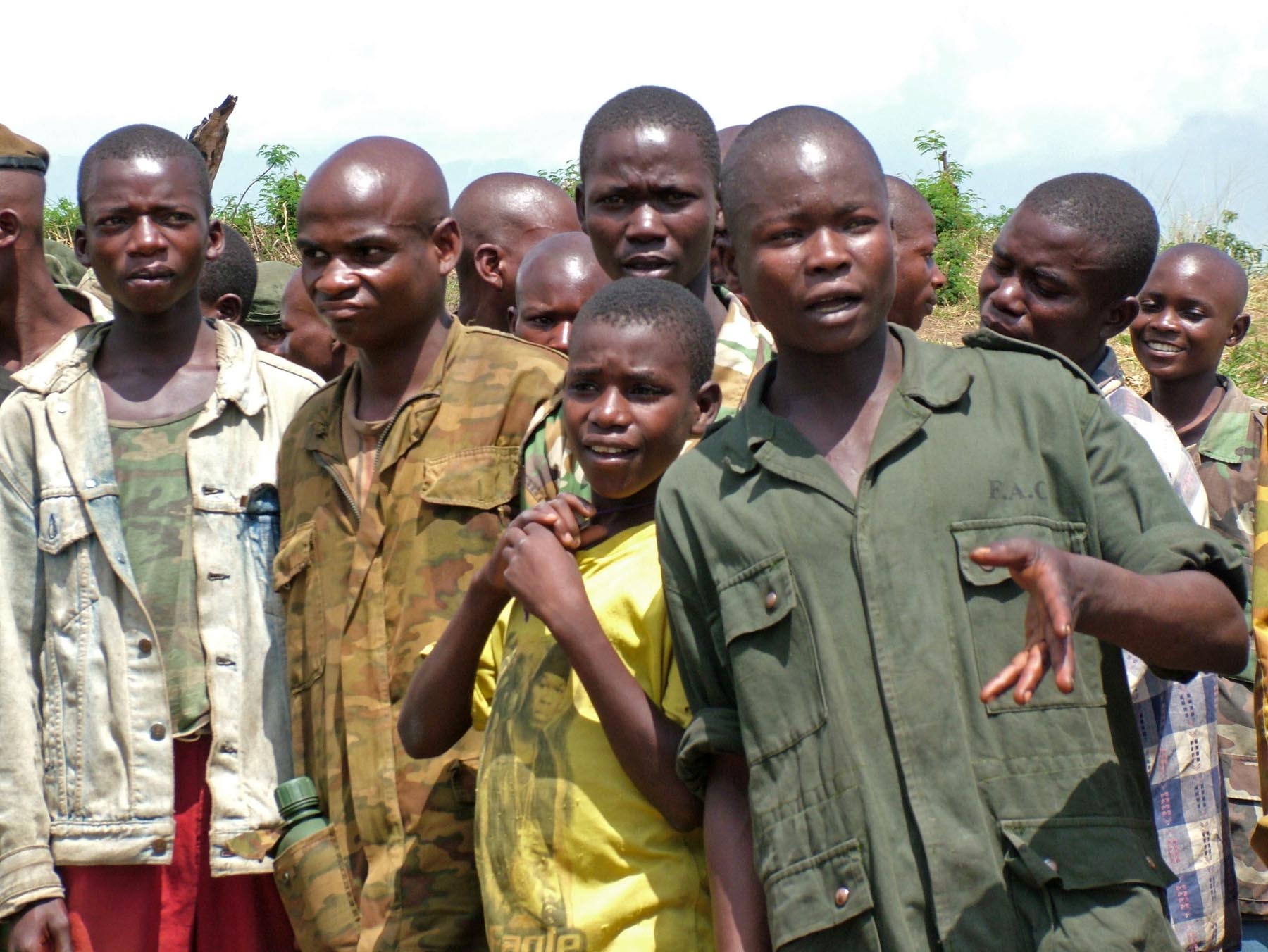
Former child soldiers in DRC (c) L Rose

Next month, Charles Taylor is due to find out whether he is guilty of the charges brought against him. Taylor's case has been heard at the Special Court for Sierra Leone (SCSL) in The Hague. Like cases held at the ICC, this case has taken place in a geographical space far removed from the sphere where crimes were carried out, and where the victims continue to live.

I was in Sierra Leone when Taylor was first arrested and transferred to Freetown. I have also attended and reported on one of the trials (Sam Hinga Norman) held at SCSL. My own perspective is that at the local level, justice meted out in this way does not work.

Many in Freetown expressed their public support for Norman. Despite the fact that there is a strong relationship, and a lot of goodwill, between Sierra Leone and the UK, even though the UK was instrumental in pursuing charges against all accused of war crimes, people argued that Norman was a hero.

For them, still shell-shocked at the brutalities waged during the previous decade, he had helped save (the soul of) Sierra Leone. In other words, they believed that Norman was a bringer of justice. That Western powers prosecuted him only divided the notions of Western and African justice.

The Foundation for Law, Justice and Society produced a series of essays on international justice and Africa written between 2008-2010. In his essay, 'International Criminal Justice and Non-Western Cultures', Tim Kelsall alerts us to the following anthropological quirks:
...It is difficult for most of us to imagine how unnerving international trials must be for many African witnesses, who find themselves miles from home, in a courtroom of extraordinary grandeur, confronted with robed judges and lawyers who speak a foreign language, and who subject them to highly unusual communicative practices including frequently hostile cross-examination. It is no wonder that getting clear testimony in such circumstances has often proved difficult (Cryer 2007), a problem compounded in contexts, not uncommon in Africa, where secrecy is prized as a high social ideal...

A project of the Open Society Justice Initiative, The Trial of Charles Taylor defendant offers further evidence of the problems that the international justice system faces, judging by the comments in several recent posts:
What do these ppl care about SL ppl anyways? Look at the volume of ignorance they’ve shown for human rights in other countries! (TJ, 09/03/2012) 
We were told Iraq had WEAPON OF MASS DESTRUCTION……who has been brought to JUSTICE for such MASS KILLINGS??? (Noko4, 10/03/2012)
It is regrettable to be aware of the fact that Mr Taylor was charge for the Sierra Leon civil war that kill thousands and cause thousands to lost body parts that was carry out by the sierra Leoners themselves and Mr Taylor was never charge for the brutal killing of Liberians and the destruction that were carry out by Mr Taylor and his forces in Liberia...Liberia need justice we do not want Taylor back in Liberia. (Samuel King, 03/03/2012)

The final comment reveals a paradox. On the one hand, the site is supposed to engage and include Sierra Leoneans in a discussion of the war as another means of achieving justice, yet it is Liberian voices that dominate, lamenting their own lack of access to international justice.

Add to that, the fact that the vast majority of Sierra Leoneans do not have access to the web, and those that do receive a cumbersome service, and it is not a surprise that many of those posting comments seem to live elsewhere (mainly the U.S.A.).

A daily news chalkboard in Liberia (c) Lt. Col. Terry VandenDolder
Although attempts have been made to reach out to those most affected, the international justice system still relies too heavily on Westernised ideas. In his analysis of the success and failures of the SCSL, Alpha Seesay recognises that Sierra Leonean victims were too far removed from the process; as well as bring geographically distant, the court had problems streaming the trial and it made no funds available for an outreach programme.

The ICC has been criticised as imperialist by various African governments. Several comments on The Trial of Charles Taylor defendant also refer to the iniquitous manner in which indictments and prosecutions only seem applicable to African leaders.

Whilst some locals may see the the ICC, and the reasons behind it, as a force for good, they are also frustrated at a lack of transparency as to whose justice is sought and why it does not include everyone. In places like Liberia, where traditional media outlets reach more people in more meaningful ways than the internet, potentially, this can do serious damage to an international justice system regardless of any outreach programme.

The U.S.A., the world's foremost human rights advocate, is not a member of the ICC. Most significantly, it threatens military action against the ICC if any of its citizens are brought before the court. This incompatible approach to human rights undermines the international criminal justice system.

Just as Okechukwu Oko posits in 'The Limits of Prosecutions', I believe that whilst prosecuting some African leaders might bring about some accountability, any form of international justice system needs to take into account the social, political and cultural norms that prevail across Africa. This should apply equally to leaders from the Americas, Asia or Eastern Europe.

Without doing so, the current international criminal justice system will fail to deliver justice to those affected by war crimes and crimes against humanity.