Justitia, Old Bridge of Heidelberg

Justitia, Old Bridge of Heidelberg
Justitia, Old Bridge of Heidelberg © Gernot Keller, 2007
Blinkered Justice articles also appear on CrimeTalk and Government In The Lab
Showing posts with label Rupert Murdoch. Show all posts

Monday, 28 May 2012

Murdoch and NewsCorp support an uncapped immigration policy for the UK


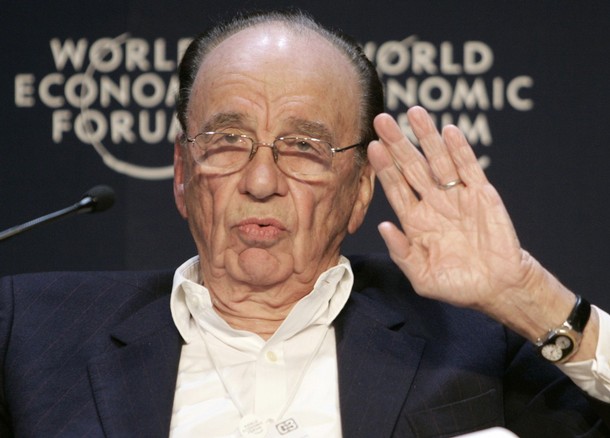
Rupert Murdoch (c) World Economic Forum
.as long as it suits them of course. But still.

Researching emails between Fred Michel and Jeremy Hunt's office for my earlier post, I came across the following correspondence entitled 'Immigration cap - meeting' between Michel and Giles Wilkes, special adviser to business secretary, Vince Cable. On 10th October 2010, Michel wrote to Wilkes:

...”I am writing to see if we could meet up to discuss the reform plans on the immigration cap. As you can imagine, it is a policy area which will have a major impact on News Corporation”.

Wilkes responded sympathetically to this request, given the “major impact this might have on News International”. He added that the Department for Business, Innovation and Skills (BIS) were trying to get views on this matter from businesses across the board, so that they could feed them into government policy.

On 12th October, Wilkes told Michel that he could not meet him later that week, but that he was interested in finding out News Internationals thoughts on an immigration cap. Michel responds:

...”I will send you our first thoughts and hope we can be helpful on this debate. We are looking at it from a mobility viewpoint but also ability to hire talents for a global company etc. We also have some relevant expertise in-house on this”.

Correspondence between the pair is rejoined on 21st October, when Michel gave Wilkes a heads-up of the speech that Rupert Murdoch was giving on global mobility at the inaugaral Margaret Thatcher lecture later that night. And then it all went a little off piste, after Wilkes asked Michel, “Out of interest, are his editors in the audience as a rule”? “Cheeky!”, retorted Michel.

Cheeky (c) Johan Larsson
Wilkes apologised, stating that he had no intention of being cheeky, and explained:

But as I am sure you are aware, there is a strong anti-immigration feeling in the UK, and this is seen in some quarters as coming from the popular press. It would be interesting if the same sentiments that RM is expressing in the speech were to be amplified in your highly respected newspapers”.

Fair point, Mr Wilkes. In his speech, Murdoch states:

In short, Britain needs companies robust enough to compete in this global market – whether in finance or pharmaceuticals, transport or telecommunications, retail or entertainment. And we need to attract the brightest talent, regardless of background and ethnicity.

In other words, Britain should be a magnet for the best students and best workers from around the world”.

Was it reported in Murdoch's media? Nothing appears online, so it would appear that Murdoch and NewsCorp preferred to keep this quiet in the UK. Strange. Or is it?

Over the last couple of years, the Murdochs have expanded their operations in India. NewsCorp operate through Star India Pvt Ltd, and they own stakes in a number of other industries in India, including the Tata Group and Harper Collins. For the Murdochs, India represents the future, and the future looks promising.

Coincidentally, Indian citizens need visas to work and study in the UK. Will NewsCorp be sponsoring student applications from their commercial partners to oil the wheels of commerce? Are NewsCorp already thinking ahead in terms of their future workforce – will they insource their future employees? Pure speculation on my part, but NewsCorp is a business that plans ahead strategically when it comes to expansion.

The government is already struggling to curb abuse of student visas. It would seem quite disingenuous then for the UK government to consider what might be best for the likes of NewsCorp.

But there again, who really holds the power when it comes to shaping public opinion and policy? It will be interesting to see what steps the government takes towards meeting their commitment of reducing net immigration.

One last thing. Feel free to circulate this piece more widely so that NewsCorp subscribers (including readers of The Sun, Times etc.) and shareholders are aware of NewsCorp's liberal immigration stance. 

Enhanced by Zemanta

Wednesday, 13 July 2011

Phone-hacking saga: public and private lives

(c) World Economic Forum/Photo by Andy Mettler 

Following further claims the other day of the dubious practices employed by News International, this article is going to focus on ideas of the public and private and what it means in terms of the ongoing phone-hacking furore.

The recent revelations of the hacking of the Dowler family’s mobile phones have rightly led to widespread revulsion. Their otherwise private world, only subject to media interest due to tragedy, has sparked wider press and public attention.

The phone-hacking scandal has been running since early 2006, when Prince William and some of his aides and contacts suspected that their phone messages had been intercepted. Clive Goodman, the then Royal Editor of the News of the World, subsequently reported on the Prince’s knee injury and his plans to edit his gap-year videos and DVDs together to make a home movie. Riveting. Since then, we know that there have been approximately 4000 victims of phone hacking, including celebrities, politicians, sportsmen, and members of the public.

As this story has only recently erupted because of the Dowler family’s involvement, this calls into question at what point we, the British public, think that it’s reasonable to intrude into the private lives of those in the public eye. Do they have a right to a private life? Are any details of the private lives of the rich and famous in the public interest? Or is it merely that the public is interested in the lives of the rich and famous?

 "This story is so old and boring. Where does it take anybody? Newspapers will seek out information from whatever sources they can, until newspapers close down. I don't think it does us any damage. It's a bit of a non-story."


(c) Gene Hunt
The above quotation, comes from a Scotland Yard source in response to a story in The Guardian in September last year. This suggests that although the act of phone-hacking is in itself illegal, that institutionally, The Met considers it quasi-illegal and only one of a number of questionable ways that the press go about their business. For instance, many celebrities complain of being “papped”. When being “papped”, they may be in a public space, or sometimes not, but either way they are denied a right to privacy in return for a “story”. Should this be legal?

Over the last couple of decades or so, we have witnessed the dramatic growth of celebrity culture.  From the likes of Hello and OK magazines to reality TV programmes such as Big Brother, we have consumed ideas of celebrity and begat more celebrities. Our desire for celebrity has seen a blurring between the private and the public. Public, famous people have let us into their houses to gawp at their personal wedding photos and private, less famous people have allowed us to watch them shower and go to bed in public. 

The printed press, who are in the business of selling newspapers, have reacted to this ever-growing demand. Take a look at the online front pages of today’s popular newspapers including The SunThe Mirror and Daily Mail, and in amongst some news, you will still find all you might desire on the latest celebrity stories. With celebrity culture as it is, the printed press have embarked on maximising their profits by using and abusing it. The press will do whatever they can to get a "story” and do not care who gets in the way.

By engaging in these activities, we have contributed to an insatiable demand for stories relating to the public and private lives of those who appear in the news. And this is where we, the British public, are accountable. We have led the media to believe that this is all that we are interested in. Like the relationship between a dealer and addict, they believe that we crave as much information on the private lives of those in the news, knowing that we will happily gorge on it and come back for more. In our droves, we buy the newspapers and magazines that contain these "stories" and we watch the TV programmes that create more interest in celebrity. In conjunction with the media, we have constructed modern celebrity culture and created the climate for suspect media practices to exist.

I am not saying that we should not be interested in the lives of celebrities, sports people, film and TV stars, or politicians. On certain occasions, intruding into the private lives of public figures is in the public interest (e.g. David Cameron’s dinner parties with senior News International executives). However, regardless of the arguments over whether celebrities use the press or not to further their own interests, we have the power to decide whether to buy into it. Put simply, we can shut the media up by not buying their particular paper or magazine and not watching particular TV programmes. We can further change this, so that we do not unwittingly harm the lives of those who have been caught in the public glare. I shall be launching a Facebook campaign, asking those of you who follow me there, on this blog, or on Twitter, to impose a celebrity “fast” on yourselves. Further details will follow.

Due to the indistinct borders between the public and private, and spiralling celebrity culture, we seem to find it hard to gauge exactly what it is that we should know about the private lives of families and individuals. Consequently, in our quest to know all we can of those in the news, the media do all that they can to provide us with that information, and people get hurt. It is not just the media, the organisations that own them or The Met that are culpable for recent events. It is us too.   
Enhanced by Zemanta

Tuesday, 12 July 2011

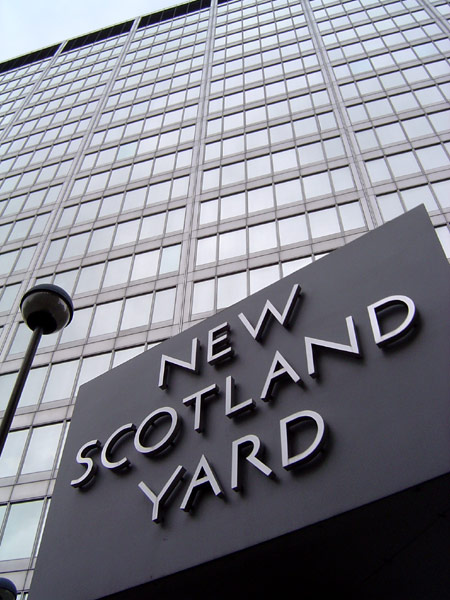
Hacking scandal: what role Scotland Yard?

(c) ChrisO
Re-published in full from The Pryer 

"This story is so old and boring. Where does it take anybody? Newspapers will seek out information from whatever sources they can, until newspapers close down. I don't think it does us any damage. It's a bit of a non-story".
These are the words of a Scotland Yard source as reported in The Guardian on 6th September 2010 regarding the news that the phone hacking scandal investigation might be reopened. With hindsight, and lets be honest, with any foresight, these are not clever words. But might they represent something else, something more sinister regarding the motives of Scotland Yard in this whole debacle?

I should note that I am mainly using The Guardian’s articles in this post because they have been the most pro-active media outlet in getting to the bottom of this scandal. Whereas other newspapers appear to have been fearful of writing about the dubious activities of News International for whatever reason, since it returned to the headlines in 2009, The Guardian have been exemplary in their coverage.

This morning, the Prime Minister (PM) David Cameron offered an opening statement on the affair during a press conference. In an attempt to harvest the public moral outrage at the intrusions of News International journalists hacking into the private phones of ordinary vulnerable citizens, the PM publicly announced that two inquiries will take place. The first, and possibly the most important of the two inquiries, is to be conducted by a Judge and will look at the failure of the first police investigation in phone hacking in 2006. He stated:
“So for those worried about the police investigating the police, this has full and independent oversight. But let's be clear. Police investigations only get you so far.What people really want to know is - what happened? And how was it allowed to happen? That is why the Deputy Prime Minister and I have agreed that it's right and proper to establish a full, public inquiry to get to the bottom of what happened. A judge needs to be in charge so there's no question that it is totally independent and things are done properly.”
Yet right from the start, the Metropolitan police have been less than forthcoming on the nature of their investigation. John Whittingdale MP, who was chair of the House of Commons media select committee inquiry, told The Guardian in early 2010:
"We found it difficult to get information from a number of bodies, including the police, who were less than forthcoming. I think there was an acceptance that it was convenient to a lot of people that one reporter should get the blame. But the important thing for us is to ensure it can't happen again."
Subsequent articles in April 2010 by Nick Davies in The Guardian, here and here, highlight the apparent contradictory, evasive and misleading ways that Scotland Yard have gone about their business. They have deliberately misled the public over the number of people whose phones have been hacked, they did not tell victims that their phones had been clandestinely infiltrated, and they have avoided revealing information that is in the public interest despite Freedom of Information requests. 
All the evidence that has been coming out in the last few days has been in police hands since it was gathered in 2005/6. Why does none of this evidence surface until it has been uncovered by more scrupulous journalists and released into the public domain? Who are the Met seeking to protect?
Andy Hayman, the man who was formerly in charge of The Met’s phone hacking investigation, and since employed by News International may be able to help with enquiries. Hayman resigned from the Met following allegations over his credit card expense claims and allegations of improper conduct with female colleagues, although an internal inquiry cleared him of wrongdoing. However the Independent Police Complaints Commission (IPCC) criticised Hayman for misleading the public over the De Menezes shooting. 
We now know that News International were paying some police officers for information. Andy Coulson and Clive Goodman have been arrested over the last few hours. Given Hayman’s employment and his direct link to the original investigation, it would be interesting to know whether there was any evidence of a relationship between Hayman and News International before his resignation.
Whoever might be responsible at an individual level, there has been little evidence of institutional acceptance at The Met for what has happened since 2006. Nobody has come forward to publicly apologise to the victims of phone hacking for their inaction or lack of candour thus far. Legally, the victims of phone hacking are victims of a crime. 
Regardless of the discussions and arguments over the public/private nexus and the rights of the rich and famous, phone hacking victims should be treated as such and afforded explanations as any other victims are.
 

Enhanced by Zemanta