Justitia, Old Bridge of Heidelberg

Justitia, Old Bridge of Heidelberg
Justitia, Old Bridge of Heidelberg © Gernot Keller, 2007
Blinkered Justice articles also appear on CrimeTalk and Government In The Lab
Showing posts with label migration. Show all posts

Monday, 28 May 2012

Murdoch and NewsCorp support an uncapped immigration policy for the UK


Rupert Murdoch (c) World Economic Forum
.as long as it suits them of course. But still.

Researching emails between Fred Michel and Jeremy Hunt's office for my earlier post, I came across the following correspondence entitled 'Immigration cap - meeting' between Michel and Giles Wilkes, special adviser to business secretary, Vince Cable. On 10th October 2010, Michel wrote to Wilkes:

...”I am writing to see if we could meet up to discuss the reform plans on the immigration cap. As you can imagine, it is a policy area which will have a major impact on News Corporation”.

Wilkes responded sympathetically to this request, given the “major impact this might have on News International”. He added that the Department for Business, Innovation and Skills (BIS) were trying to get views on this matter from businesses across the board, so that they could feed them into government policy.

On 12th October, Wilkes told Michel that he could not meet him later that week, but that he was interested in finding out News Internationals thoughts on an immigration cap. Michel responds:

...”I will send you our first thoughts and hope we can be helpful on this debate. We are looking at it from a mobility viewpoint but also ability to hire talents for a global company etc. We also have some relevant expertise in-house on this”.

Correspondence between the pair is rejoined on 21st October, when Michel gave Wilkes a heads-up of the speech that Rupert Murdoch was giving on global mobility at the inaugaral Margaret Thatcher lecture later that night. And then it all went a little off piste, after Wilkes asked Michel, “Out of interest, are his editors in the audience as a rule”? “Cheeky!”, retorted Michel.

Cheeky (c) Johan Larsson
Wilkes apologised, stating that he had no intention of being cheeky, and explained:

But as I am sure you are aware, there is a strong anti-immigration feeling in the UK, and this is seen in some quarters as coming from the popular press. It would be interesting if the same sentiments that RM is expressing in the speech were to be amplified in your highly respected newspapers”.

Fair point, Mr Wilkes. In his speech, Murdoch states:

In short, Britain needs companies robust enough to compete in this global market – whether in finance or pharmaceuticals, transport or telecommunications, retail or entertainment. And we need to attract the brightest talent, regardless of background and ethnicity.

In other words, Britain should be a magnet for the best students and best workers from around the world”.

Was it reported in Murdoch's media? Nothing appears online, so it would appear that Murdoch and NewsCorp preferred to keep this quiet in the UK. Strange. Or is it?

Over the last couple of years, the Murdochs have expanded their operations in India. NewsCorp operate through Star India Pvt Ltd, and they own stakes in a number of other industries in India, including the Tata Group and Harper Collins. For the Murdochs, India represents the future, and the future looks promising.

Coincidentally, Indian citizens need visas to work and study in the UK. Will NewsCorp be sponsoring student applications from their commercial partners to oil the wheels of commerce? Are NewsCorp already thinking ahead in terms of their future workforce – will they insource their future employees? Pure speculation on my part, but NewsCorp is a business that plans ahead strategically when it comes to expansion.

The government is already struggling to curb abuse of student visas. It would seem quite disingenuous then for the UK government to consider what might be best for the likes of NewsCorp.

But there again, who really holds the power when it comes to shaping public opinion and policy? It will be interesting to see what steps the government takes towards meeting their commitment of reducing net immigration.

One last thing. Feel free to circulate this piece more widely so that NewsCorp subscribers (including readers of The Sun, Times etc.) and shareholders are aware of NewsCorp's liberal immigration stance. 

Enhanced by Zemanta

Wednesday, 11 April 2012

Here we are now, integrate us: England's integration strategy


Currently on a short break. I will return in full next week, but will try and tweet in the next few days. Found this little piece which I had prepared a few weeks ago hidden under the cyber carpet. Hope you all well.

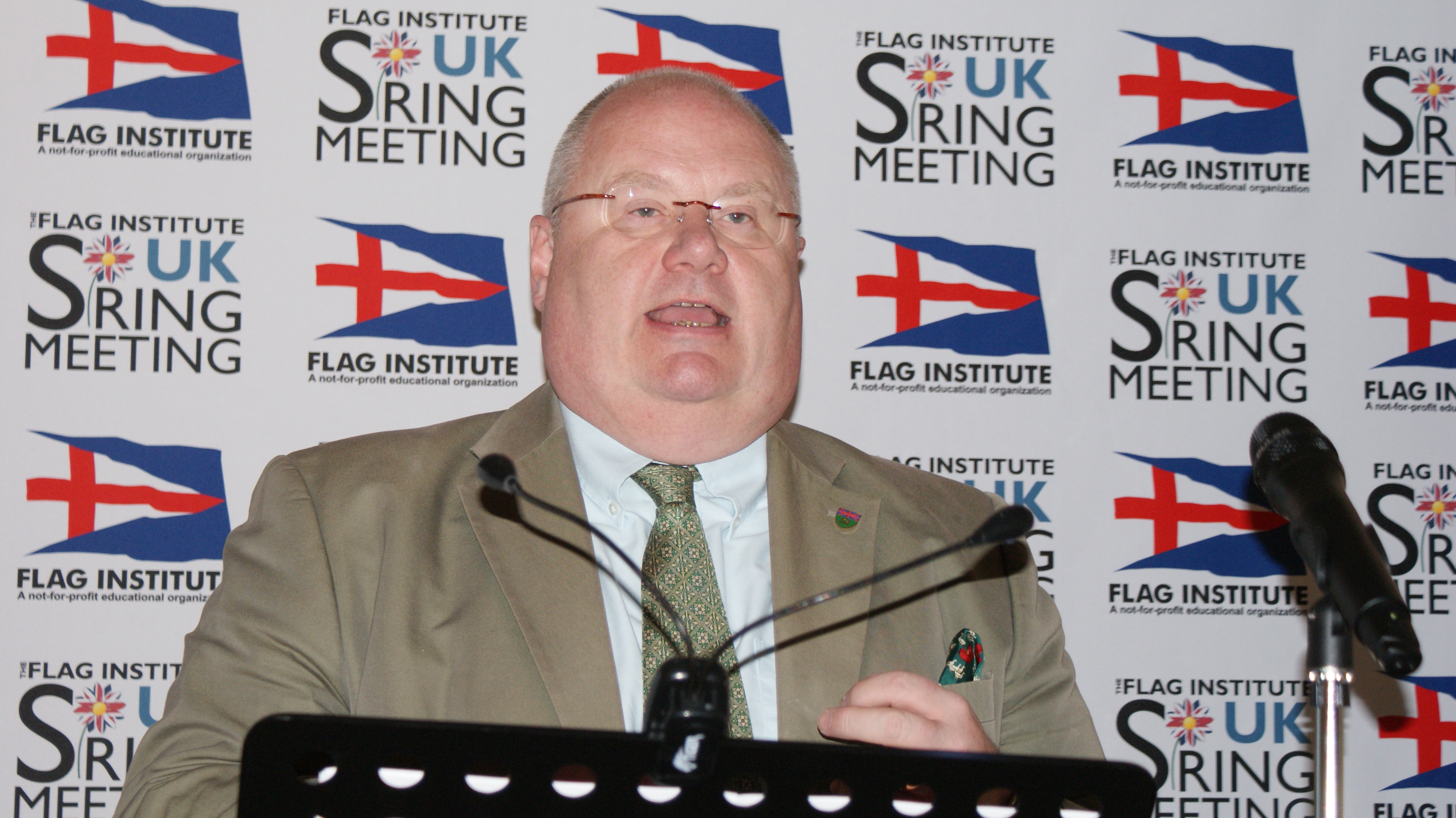
Eric Pickles delivering keynote address at Flag Institute 2011
(c) Charles Ashburner [CC-BY-SA-3.0]
A few weeks ago, Eric Pickles, the Minister for the Department for Communities and Local Government (DCLG) unveiled the government's integration strategy, which plan to help create an harmonious England, free of discord and hatred.

The idea is that in an integrated society, everyone can play a full part in the every day workings of life nationally and locally. The UK government believes that there are 5 key themes on which an integrated society can be built: social mobility, participation, responsibility, common ground, and tackling extremism and intolerance.

Despite using several of these same themes, multiculturalism is seen to have failed, with the sense that we now live in a more divided society. The 2011 summer riots, and the perceived threat from Islamic extremists inform this strategy, with risk, fear and security pervading its discourse. As such, the government considers that something needs be done:
We should be robustly promoting British values such as democracy, rule of law, equality of opportunity and treatment, freedom of speech and the rights of all men and women to live free from persecution of any kind. It is these values which make it possible for people to live and work together, to bridge boundaries between communities and to play a full role in society. When this is underpinned both by opportunities to succeed, and a strong sense of personal and social responsibility to the society which has made success possible, the result is a strong society.
The use of “British values” in this context is used to represent a nation that is civilised, Christian and white. The same values that informed a colonial Empire, raiding Africa and Asia for her resources. Why is it that “British values” are different to, or better than, other nation's values?

The strategy is predominantly aimed at a young, male, disadvantaged Muslim/White audience. In a society that has “welcomed” migrants from all over the world, English identity, and values, may well have changed, through personal and professional partnerships, and through other cultural influences, such as music, film and food.

Disability protest poster (c) Byzantine_K
As evidence that their targeted audience is the right one, DCLG refer to their own, commissioned reports, and the Equality and Human Rights Commission's Triennual Review (2010). “How fair is Britain” notes that women and the disabled experience social exclusion, certainly in the guise of a lack of being able to participate and intolerance. Yet, there is nothing for them in this integration strategy.

Is this because the UK government considers that both groups have integrated? If so, why would the government consider that its key factors might work for its target audience, when women and the disabled still feel excluded?

It is in the shift from 'the national' to 'the local', that the government believes that cultural nirvana can be attained. DCLG notes that local communities have long come together to address civil problems, and it is drawing on this social capital to resolve our divided society. However, it accepts that it has to provide a national framework to make it work, utilising the production of civic leadership on integration, with locally-led partnerships driving it forward thanks to cross-Whitehall liaison and assistance.

Even in this basic approach, there are anomalies. For example, whilst the government talk of civic leadership and creating “the space for an open and honest debate”, it recently closed the door to a number of health-industry leaders' involvement in discussions on the localisation of health services. This undermines participation.

Although each of the 5 factors mentioned above appear distinct from each other, they overlap and intertwine, just as ideas of the local and national do.

DCLG propose encouraging young people to develop their sense of responsibility and self-management, through volunteering and a National Citizens Service. Deemed to be participating in their local communities, DCLG will ensure that “people can trust public bodies”, such as those who can enable them to find work locally. Yet when these public bodies face charges of fraud and corruption, it is difficult to see how this might work. More so, when the state fails to rescind its central contract.

In terms of localities leading the way in economic regeneration, and thereby creating social mobility and tackling extremism, DCLG have failed to explain how this might come about. Whilst speaking English is assumed to enable social mobility and a sense of common ground, it ignores those migrant businesses, such as Chinese restaurants, that use the same language and cultural references. Their chefs may not speak English, and depending on your understanding of local, few would argue they have not integrated into their local areas.

Chinatown, London - local integrated community? (c) Aurelien Guichard
The additional language requirement for people to be able to speak English before they settle here is surely a bid to appease a supposed silent majority who baulk at immigrants not speaking English. In any case, it is difficult to see how this might happen, given that the rules for entry into England also concern the rest of the UK.

So how does 'local' England integrate with their (inter)national partners overseas? Within the EU, and the UK, it has not adopted the Euro, and it has not come on board with Schengen. We veto EU moves to regulate the financial markets that helped cause the recent crises. Cynics might argue that the UK has sought to take without giving, seeing its own rights and responsibilities in an international arena quite differently to how it views its “problem people” acting out theirs.

To close, DCLG make the following point in their strategy:
People come together through day-to-day activities, not 'integration projects' which too often feel irrelevant and prove unsustainable.
Quite.

Tuesday, 13 March 2012

Which way home


Above you will find a trailer for a documentary called “Which way home”.

The documentary follows several children who are trying to make their way to the USA from various Latin American countries. “Which way home” does a fantastic job of telling the personal stories of each of the children involved in these migrations. All have different reasons for trying to get to the USA (e.g. joining family) and all encounter a range of dangers and harms along their journeys.

Whilst the documentary is set on the American continent, it could be set anywhere. It is as much a story of disadvantage, migration and the harms caused by having borders and boundaries. 


Given the number of deaths, abuse and other related harms that children, and adults, suffer as a result of trying to seek refuge in more developed countries, are borders and boundaries truly worth maintaining?

Europe has questioned it. Whilst far from perfect, at least the borders between the Schengen nation states are a lot of more fluid, allowing for a less harmful passage for those joining family and finding work.

I am not pretending that I expect the world's states to subscribe to this type of Sen-globalism, and open up their borders to all any time soon. But given that these “imagined communities”, that pass for nation states, have only been in existence for a short space of time, perhaps we need to reconsider whether borders are worth the human, and economic, costs.

If you like what you see from the trailer, you can watch video clips from the documentary online here. I hope that you find it as engaging and as thought-provoking as I did.


Tuesday, 6 March 2012

G4S turns a profit in "asylum markets": who's speaking out and whose lips are sealed


(c) Holger Ellgaard
I am republishing the following article as found on openDemocracy. It was written by John Grayson, who works with the South Yorkshire Migration and Asylum Action Group. The article discusses the contract won by G4S to house asylum seekers/refugees (having beaten beaten Sheffield City Council to it on costs), and of his frustrations with local MPs and various asylum charities who have failed to speak out against the G4S takeover. 

G4S have a chequered history. They were implicated in the deaths of Jimmy Mubenga and Eliud Nyenze, they provide services to illegal settlements in the West Bank, and are accused of overworking and underpaying their staff, to name but a few of their crimes. As John points out in his conclusion, we should be concerned about G4S's (militaristic?) expansion into the criminal justice system, and the effects that this will have for all detainees who become nothing more than commodities and assets on the G4S balance sheet.   

G4S turns a profit in “asylum markets”: who's speaking out and whose lips are sealed?


The vast private sector security company, G4S, feared and distrusted by asylum seekers, is about to be awarded contracts to run asylum seeker housing throughout the North East, Yorkshire and Humberside. Last Friday a group of asylum seekers’ advocates and academics met with government and company representatives to explain why this is a thoroughly bad idea.

That the meeting happened at all was some kind of victory for the South Yorkshire Migration and Asylum Action Group (SYMAAG), of which I am a member, for local people who protested outside the UK Border Agency’s Sheffield offices  on 15 February, and for 28 outraged academics from Yorkshire universities whose protest letter was published in the Yorkshire Post  . The academics — researchers and university teachers in the fields of housing and immigration in the Yorkshire region — cited the death of Jimmy Mubenga in G4S’s care, and the 773 complaints lodged against G4S in 2010 by detainees including 48 claims of assault, and said:
Asylum seeker tenants already feel intimidated and threatened by the prospect of prison guard companies being installed as their managing landlords.”
Soon after the 15 February protest, the UK Border Agency declined to speak with us, saying the contracts were as good as done. Then they appeared to change tack, agreeing to meet with us at a Sheffield refugee centre on Friday afternoon (24 February). The people they sent were not procurement or due diligence experts but serving members of UKBA Local Immigration Teams (one in full uniform) who had been working closely with G4S apparently in the period since last December when preferred bidders were announced.

It emerged during the meeting that since December 2011 a project called COMPASS TRANSITION UKBA, scheduled to begin after contracts were signed, had been actively cooperating with G4S to ‘minimise’ the effects of evicting potentially 900 asylum seeker occupants of local authority housing in Yorkshire. They had not been scrutinising the costings or human rights risks or, as UKBA claimed, working to “ensure that there are no material risks” with the contracts. They had not, it emerged, bothered to check on the impacts on asylum seeker families and children’s human rights, on education and health by referring the contract to Local Safeguarding Children Boards (LSCBs) who have statutory responsibility for impact assessments of public sector of contracts this kind.

In the meeting G4S switched from its denials of being a “prison guard company” (as we had described them in the Yorkshire Post), to now claiming that G4S was developing a specialist and very separate housing division to take on asylum seeker housing as part of its interest in “asylum markets”.

This reinforces the view already held by some analysts that it is G4S’s intention to continue expanding its management of the prisons, criminal justice and immigration ‘estates’, while managing a housing contract (with effectively no legal rights for tenants), and to use this dubious base to expand into the wider privatised housing market. Housing academics and voluntary sector organisations amongst the campaigners have made clear to G4S their distaste for this enterprise, rooted as they are in traditions of public and charitable housing provision with statutory rights for tenants as both customers and citizens.

The meeting clearly demonstrated that a G4S takeover meant the end of sixty years of government and council funded humanitarian housing in South and West Yorkshire boroughs for vulnerable individuals fleeing torture and persecution and applying for asylum in the UK under international treaties.

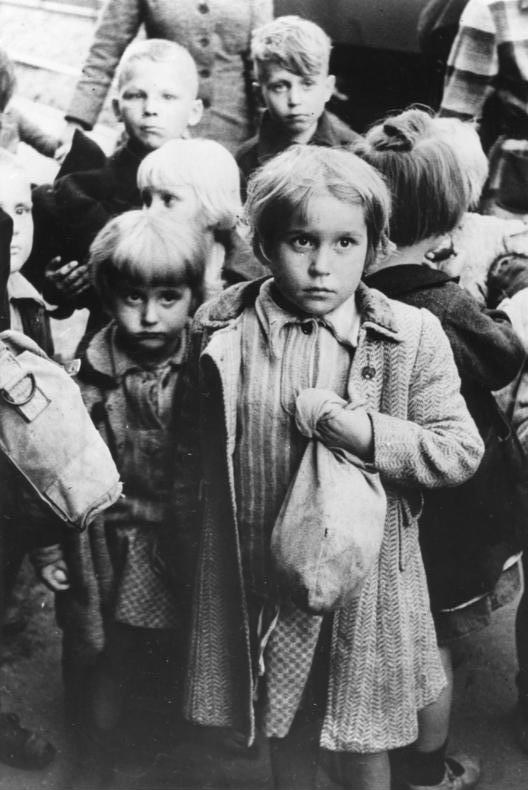
Repatriation of German children after
WWII - source German Federal Archive
Sheffield City Council was the first ‘City of Sanctuary’ and still embraces the label. The Council certainly did not want to get rid of asylum housing which at present serves 60 per cent of local asylum seekers – they were simply outbid on ‘cost’. When local Sheffield asylum rights organisations presented a petition opposing the G4S takeover at the city Council meeting on 1st of February the whole council applauded.

Councillors and campaigners understand that the G4S contract not only privatises this humanitarian function but destroys it and replaces it with the clear message adopted by both Labour and the Coalition that asylum seekers are not welcome here, indeed they should be treated like criminals with prison guards as their landlords, as part of deliberate policy of deterrence. As one Zimbabwean asylum seeker in Sheffield declared, “I do not want a prison guard as my landlord.”

Besides the Yorkshire Post we’ve had positive coverage on Sheffield local radio, Big Issue in the North and the Barnsley Chronicle. There’s been little interest from the mainstream national media, although the Independent  reported on our public letter, which also featured in Socialist Worker  . OurKingdom and the Institute of Race Relations  have published our journalism, we have a growing social media presence, and a newly established website  .

But for all our awareness-raising, some people you might expect to care don’t seem too bothered. In Sheffield, after Liberal Democrat local councillors helped to get a petition before the city council supporting the campaign, deputy Prime Minister Nick Clegg, a local MP, wrote to immigration minister Damien Green on 3 February and is apparently still waiting for a reply.

Labour politicians in South Yorkshire have not even responded to e-mails from their own constituents about the matter. In Barnsley, where shadow culture minister and ex-SAS hero Dan Jarvis has his seat alongside shadow Cabinet minister Michael Dugher, there has been absolutely no response.

As the campaign has spread the picture is little different. Across in Hull, campaigners lobbying Labour MP Diana Johnson to intervene before contracts were signed at the end of February, were advised by Ms Johnson to go away and get an e-petition with 100,000 signatures so that there could be a debate in Parliament.

Two Labour politicians have responded with positive action. John McDonnell promised to raise the matter in Parliament. Crucially, perhaps, the Rt Hon David Winnick MP has asked for a detailed research report from the campaign to be sent to members of the Parliamentary Home Affairs Select Committee on Friday 24th of February which only two weeks ago published a report strongly critical of G4S  .

Whilst campaigners are astonished at how far we have come in very little time, we’re disappointed about the apparent lack of advocacy for asylum seekers that we’ve encountered in some surprising places. Refugee Action’s sole contribution was referring us to its chief executive’s statement  about his ‘concerns’ on its otherwise campaign-free website.

Distributing food aid in Congo refugee
camp (c) Julien Harneis
Refugee Action receives funding under UKBA’s voluntary returns programme, with volunteers at Vulcan House, UKBA’s regional headquarters in Sheffield, handing out leaflets to asylum seekers fleeing persecution, suggesting that they return ‘home’. The Refugee Council website search facility cannot locate a reference to G4S and the campaign, the Council of course eschews ‘politics’ and receives (much reduced) government funding.

Other asylum charities, funded through subcontracting for companies like international security company Serco, avoided the campaign. Some voluntary organisations and local authorities have been negotiating for work with G4S before contracts have been signed. Others have negotiated to reduce the impacts of the takeover — but they have still failed to voice support for the campaign.

The Yorkshire grass roots charities, refugee and asylum seeker groups, church groups, political networks and campaigners are much more vocal in their opposition to G4S and possible threats to the human rights of asylum families. In Sheffield the Children’s Society in South Yorkshire’s Embrace Project (supported by the national Society) is backing a submission to the Sheffield Safeguarding Children Board (SSCB) to demand that UKBA does a thorough children’s rights assessment of the contract.

In Barnsley local council officers are publicly backing a similar approach. In Kirklees the Local Safeguarding Children Board approach is spearheaded by Huddersfield University’s Applied Childhood Studies Department. In Bradford and Kirklees campaigners are now active and the human rights organisation Just West Yorkshire is reporting the issues.


Wednesday, 22 February 2012

The Wednesday ? - British values of tolerance


A quick introduction into the Wednesday ?

I propose using the Wednesday ? on a trial basis over the next few weeks. The purpose of it, unlike Questioning The Headlines (which I will do again shortly), is to look at specific words and/or phrases that are used, mainly by those in power, as a means of short-cutting any criticism or independent thought.

I want to highlight these words and phrases, and promote public debate. This is where you come in. It would be fantastic if you could post your own thoughts to add to the discourse. By doing so, hopefully, we can build on a cultural understanding of these terms, and de-construct some of the (inherent?) assumptions contained within them.

British values of tolerance”

The Telegraph reported yesterday that the coalition government would be publishing their new integration strategy for immigrants coming to make the UK their home. The article continued:
The integration strategy will state: “We believe in certain values and will actively promote them: freedom of speech; freedom of worship; democracy and the rule of law. Long-standing British values of tolerance are the bedrock of our society. We will champion a united British identity, across class, colour and creed.”
I could have added the term “long-standing”, but this will be discussed as part of my critique. Equally, I could have covered “British values” as a stand-alone subject, but I want to keep this post shorter than my other analyses, and I would like you to stay awake.

Assumptions of the “British values of tolerance”

In terms of what is being promoted, I would hazard a guess that this phrase is being used to summon up that fuzzy feeling of “being proud to be British”; we are a civilised people, who have welcomed peoples of different race, creed, and religion to the UK. It assumes that we do not just “put up with” people from different backgrounds, but that we were the first nation to promote a “tolerance” that advocates equal rights.

The idea that it is traditionally British, embeds these values with being white, middle/upper class, able-bodied, and more than likely, male.

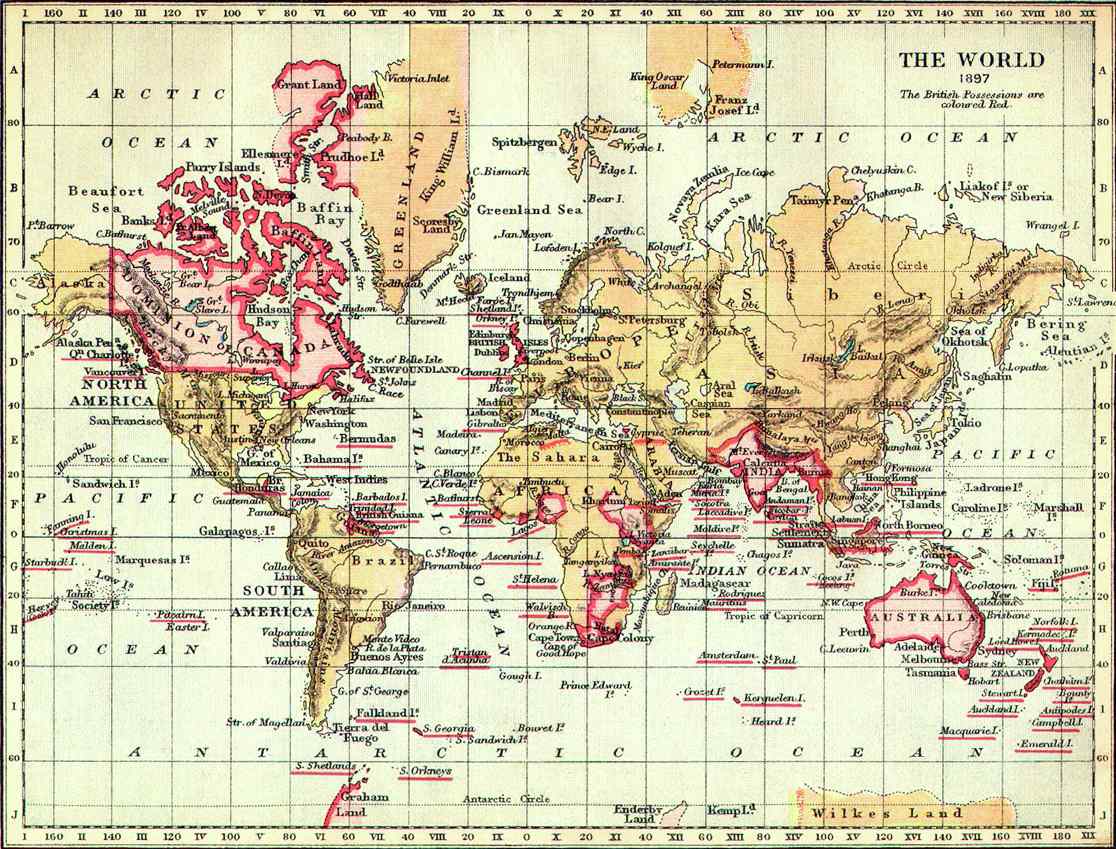
The world in 1897 - British possessions coloured red
British values of tolerance”?

Beyond the rampant theft of resources in Africa and Asia as the British Empire extended its power, another part of its expansion was evangelical, which saw us trying to “civilise” other nations. This was not a tolerance, this was an imposition of our behaviour onto those who lived in different parts of the world.

Since the turn of the 20th Century, whilst the British have allowed peoples from other cultures to settle in the UK, it has come with ever increasing legislation and consternation.

The Aliens Act of 1905 was the first act to introduce immigration controls for the UK; it was designed to stop an increasing number of Jewish immigrants entering the UK. Ever since, the British have legislated for other people to join them as a means to fill gaps in the labour market (British Nationalist Act 1948), and then have passed acts to stop them entering the UK (Commonwealth Immigrants Act 1962) as a result of a public backlash.

Racially motivated riots over the last 60 years or so do not indicate that we live/have lived in a society that has promoted tolerance in the way that the phrase indicates. Clearly, we welcome people into the UK when it fulfils British economic needs, but that we “put up” with them living here. The notion that this British value of tolerance is “long-standing” is faulty.

Although the term implies an equality of residential rights in the UK, it rests on the idea that immigrants are/were “lucky” to have come here. It does not take into account whether people were well-educated in their country of birth, nor that they took menial work and wage in the UK, let alone whether they have been driven out of their homes because of war. Including those that Britain engages in.

There is also a denial of other nation's values of tolerance in this term. Societies around parts of Asia and Africa regularly welcome foreigners, and strangers, into their homes, and treat them as family members or long-standing friends. Why is their value of tolerance supposedly not as good as ours?

Supposedly, this integration strategy also promotes ideas of tolerance to hate groups in the UK. My fear is that this strategy only promotes the kind of toleration discussed above, and that we are pandering to an outdated idea.

After a century of official multi-cultural living in the UK, it would be interesting to know what today's “British values of tolerance” mean now. Over to you.

Monday, 7 November 2011

The security of UK borders and "others"

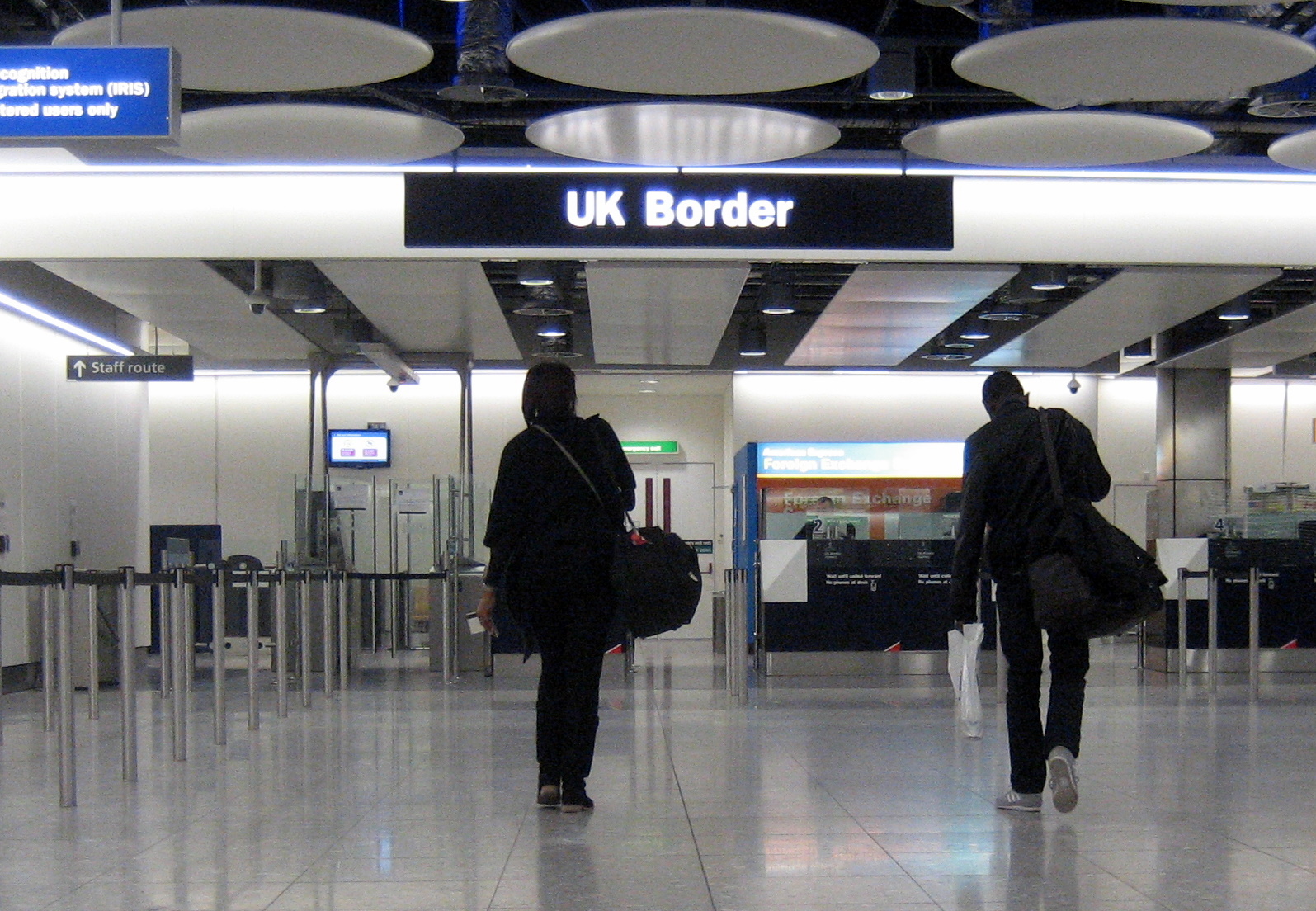
The UK border at Heathrow airport (c) dannyman
Republished in full from The Pryer


I can hear loud bangs outside … not sure what is going on … could it be guns … bombs …? Yes, the UK border force decided not to check the biometric passport details of hundreds of thousands of foreigners entering the UK … they could be criminals … or terrorists.
As we celebrate a night of fireworks in honour of an UK-born terrorist, and I climb off my sarcastically high horse, I find it apposite that the Daily Mail is referring to foreigners (“others”) in similar terms. If what they say about UK borders being relaxed is true, there are a couple of questions that need answering:
  1. For which non-EU countries’ citizens were these checks relaxed?
  2. Do citizens from these countries require visas to enter the UK?
Having practised immigration work myself, I know a little of the system and the back-office “administration” that takes place.  The questions that I raise have important implications for the moral panic now engulfing British consciousness, and the supposed safety of British citizens.
If the answer to these questions is that biometrics checks were relaxed for countries that require visas, then this should not a big security issue. Firstly, the majority of these countries do not have biometric passports. In fact, the majority of nations do not have biometric issuing facilities yet (please see the graphic below, where dark green represents those countries where biometric passports are available to the public, and light green those who have announced that biometric passports will be made available). In the countries that do have a biometrics system, most have only been in operation in the last few years; many citizens will still be using their non-biometric passports.

Availability of biometric passports (c) Igor Alexandrov
Secondly, we issue visas to citizens from many non-EU countries. This means that the basic “security” checks are performed outside of the UK. After this, application forms are checked, people occasionally interviewed, and if successful, visas are issued. In fact, anyone entering the UK with a visa has faced far more risk assessment than citizens from countries, such as those in the EU, that do not require visas. Why, then, waste the time of an immigration officer, when the work has already been performed overseas by an entry clearance officer?
From what I can read into the situation, this is a political and ideological power struggle. Like other government departments, UKBA will be cutting a third of its staff by 2014. Whilst biometric passports appear to be the panacea that deters “foreign” threats, all they contain is the basic biographical details, and a photograph, of the person holding said passport. Moreover, the chips within these passports can be cloned and altered.
The technological security measures that states use are forever being tested and challenged. Although we think that we are safer, based on our understanding of technology and in this case, biology, this is a misconception. Surveillance mechanisms are designed by man, and rely on enculturated ideas along ethnic, gender and other divisions. In terms of passports, biometric chips are not objective. People have implanted these differences into the data that the chip collects. Therefore, we are sanctioning racialised, and group, differences in the name of security.
From being Jewish at the turn of the 20th century, to being Irish in the 1970s, to being Muslim in the 21st century, we have used immigration as a means of identifying so-called problem groups. Without the full details behind it, this story is nothing more than a ruse to sell “news”, and more dangerously, replants the seeds of fear and loathing of “others” during troubled times.