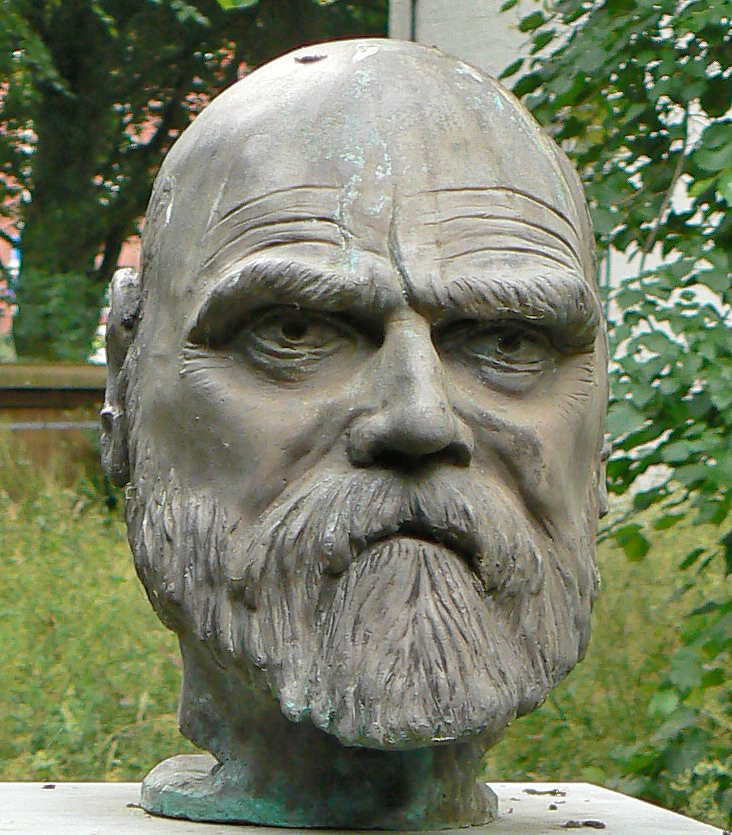
Justitia, Old Bridge of Heidelberg

Justitia, Old Bridge of Heidelberg
Justitia, Old Bridge of Heidelberg © Gernot Keller, 2007
Blinkered Justice articles also appear on CrimeTalk and Government In The Lab
Showing posts with label surveillance. Show all posts

Tuesday, 7 August 2012

Micro drones and a techriminal justice system


Wormwood Scrubs, Holloway and Strangeways (now Manchester). Here they go. Is it really so strange to think that these institutions may become extinct?

According to The Guardian, The US Defence Advanced Research Project Agency's 'Nano Hummingbird', as seen above, has inspired the MoD's Defence Science and Technology Laboratory (DSTL) “to stimulate new lines of thought”. DSTL sent out research proposals last year for micro and nano unmanned aircraft systems that “operate inside buildings and within deep urban canyons”.

Whilst the priorities still seem militaristic, almost 5 years ago, The Telegraph reported that insect sized drones had been seen at anti-war protests in Washington and New York. A similar sighting was reported in 2004. 

We know that the US Defence Department has been funding research projects to create “cyborg moths”. These moths can be controlled remotely via computer chips that were implanted into moth pupae. In 2006, Flight were given exclusive access to CIA Headquarters in Langley, Virginia, where they saw a model of a drone that had been on display since 2003 in its museum. 

The UK police have been using drone technology for some time, with the first arrest using a drone reported over 2 years ago. But it is the use of micro drones and what they offer in terms of surveillance that is interesting UK police forces; freedom of information requests have recently been submitted to the police forces of Greater Manchester and West Midlands. It will be worth keeping an eye on their replies to the two requests numbered 3. 

As G4S expand their criminal justice remit from prisons to police stations, it is worth bearing in mind what impact this might have on a future UK criminal justice system. Given their financial and political muscle (and an inability to provide sufficient security staff), it may prove too attractive a proposition not to look at drones as a long-term solution for keeping an eye on suspects. They already use drone technology in Madagascar

Drone fly...or is it? (c) SidPix
If micro drones are to become a norm in the surveillance of suspects, will they also become a norm in the monitoring of detainees? And if the act of guarding a prisoner can be done remotely by a micro drones, then need this take place within what we now see as a prison setting? Will we see an expansion of house arrests and a gradual phasing out of state Victorian prisons, with private homes becoming public detention centres, ? 


Speculation on my part? In the first chapter of 1984, George Orwell wrote,

“In the far distance a helicopter skimmed down between the roofs, hovered for an instant like a bluebottle, and dashed away again with a curving flight”. "It was the police patrol, snooping into people's windows..." 

The technology was barely nascent at the time of his words. Right now, the technology is in place. And it will continue to improve. With public sector cuts and a rolling back of the state, the political and economic will is certainly in place. 

But perhaps most importantly for the criminal justice system, we currently associate drones with terrorism. And without wishing to sound all 'Team America', terrorists are bad people – for a wider discussion of terrorism, feel free to start here

If we accept, as we currently do, that those on the receiving end of military drones are criminals, then we are only a step away from assuming anyone in a drone's sight is a criminal. Charged, tried and sentenced by the state and its partners, this is a criminal justice system which presumes guilt over innocence. The technology may well have its benefits, but a techriminal justice system reliant on micro drones is a real concern. 

Good night. Don't let the bed bugs... 
Enhanced by Zemanta

Monday, 7 November 2011

The security of UK borders and "others"

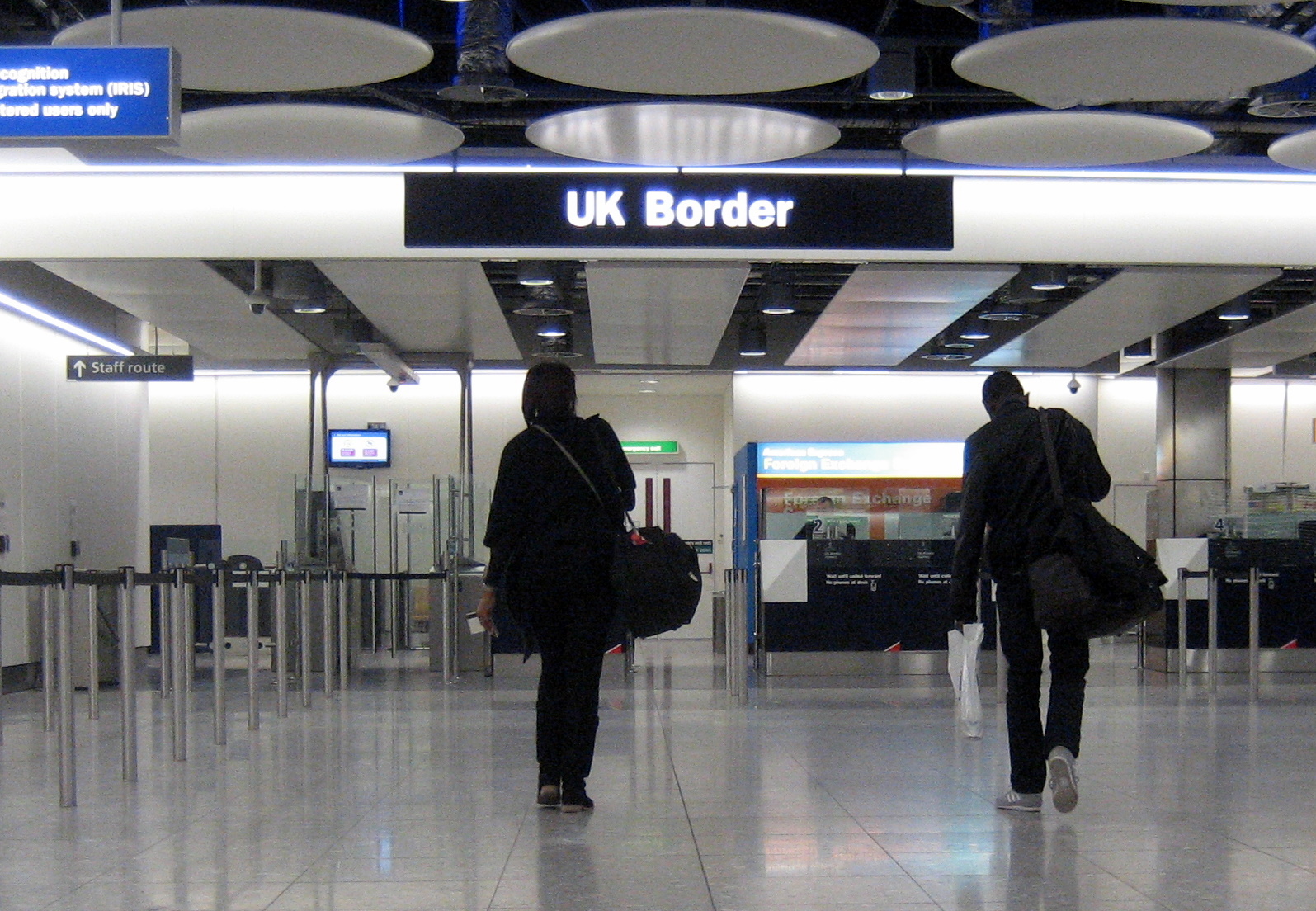
The UK border at Heathrow airport (c) dannyman
Republished in full from The Pryer


I can hear loud bangs outside … not sure what is going on … could it be guns … bombs …? Yes, the UK border force decided not to check the biometric passport details of hundreds of thousands of foreigners entering the UK … they could be criminals … or terrorists.
As we celebrate a night of fireworks in honour of an UK-born terrorist, and I climb off my sarcastically high horse, I find it apposite that the Daily Mail is referring to foreigners (“others”) in similar terms. If what they say about UK borders being relaxed is true, there are a couple of questions that need answering:
  1. For which non-EU countries’ citizens were these checks relaxed?
  2. Do citizens from these countries require visas to enter the UK?
Having practised immigration work myself, I know a little of the system and the back-office “administration” that takes place.  The questions that I raise have important implications for the moral panic now engulfing British consciousness, and the supposed safety of British citizens.
If the answer to these questions is that biometrics checks were relaxed for countries that require visas, then this should not a big security issue. Firstly, the majority of these countries do not have biometric passports. In fact, the majority of nations do not have biometric issuing facilities yet (please see the graphic below, where dark green represents those countries where biometric passports are available to the public, and light green those who have announced that biometric passports will be made available). In the countries that do have a biometrics system, most have only been in operation in the last few years; many citizens will still be using their non-biometric passports.

Availability of biometric passports (c) Igor Alexandrov
Secondly, we issue visas to citizens from many non-EU countries. This means that the basic “security” checks are performed outside of the UK. After this, application forms are checked, people occasionally interviewed, and if successful, visas are issued. In fact, anyone entering the UK with a visa has faced far more risk assessment than citizens from countries, such as those in the EU, that do not require visas. Why, then, waste the time of an immigration officer, when the work has already been performed overseas by an entry clearance officer?
From what I can read into the situation, this is a political and ideological power struggle. Like other government departments, UKBA will be cutting a third of its staff by 2014. Whilst biometric passports appear to be the panacea that deters “foreign” threats, all they contain is the basic biographical details, and a photograph, of the person holding said passport. Moreover, the chips within these passports can be cloned and altered.
The technological security measures that states use are forever being tested and challenged. Although we think that we are safer, based on our understanding of technology and in this case, biology, this is a misconception. Surveillance mechanisms are designed by man, and rely on enculturated ideas along ethnic, gender and other divisions. In terms of passports, biometric chips are not objective. People have implanted these differences into the data that the chip collects. Therefore, we are sanctioning racialised, and group, differences in the name of security.
From being Jewish at the turn of the 20th century, to being Irish in the 1970s, to being Muslim in the 21st century, we have used immigration as a means of identifying so-called problem groups. Without the full details behind it, this story is nothing more than a ruse to sell “news”, and more dangerously, replants the seeds of fear and loathing of “others” during troubled times.

Wednesday, 26 October 2011

Surveillance society: visibility and accessibility

(c) oogiboig
I have published a post on the use of CCTV as a situation crime prevention mechanism on a new blog site, Blinkered Justice Xtra. I am using this site to muse on criminological theory and research, and to promote a sense of collaboration and partnership amongst those interested in criminology. 


Please feel free to check out this new site and to join in the discourse. 

Sunday, 23 October 2011

Bystander Apathy 2.0 - Chinese edition - A reply


(c) VollwertBIT
The Global Sociology Blog published this post on the sad death of 2-year old Chinese girl, Wang Yue. I have commented on the article as I believe it ignores the local context. 

I have not watched the video, and so I can comment on the 'bystander apathy' referred to in the article. My argument is for a broader understanding of the cultural relativity in this particular crime. My comment, published on The Global Sociology Blog, is on the same page. I now see that The Guardian printed this piece a few days ago. 


Quite apart from my comments on the cultural contexts, there are flaws in the original Darley and Latane experiment and findings that gave birth to this term. The experiment lacked ecological validity; the victim was male, the victim was not murdered, the bystanders could not see the victim, or each other, are among the most obvious. 


However, it is the social psychological elements that are missing from the study and findings that need to be taken into account for future research. 


Tuesday, 18 October 2011

A load of rubbish: Oliver Letwin, surveillance and justice

File:Surveillance quevaal.jpg
(c) Quevaal


The news last week that government minister, Oliver Letwin MP, had been discarding official papers in the dustbins of St James’ Park brought to mind notions of surveillance and justice.

Ideas of surveillance are based on the 18th Century notion of the ‘panopticon’. Jeremy Bentham considered building a prison with a watchtower in the middle, where prison guards could keep an eye on detainees in cells that surrounded it. The idea being that inmates would regulate their behaviours accordingly as if they were being watched, regardless of whether they were or not. Michel Foucault’s thoughts on panopticism lead us to believe that in an increasingly surveilled society (e.g. CCTV) that we regulate ourselves more vigorously; we discipline ourselves so that the state does not have to.

Power is prevalent in concepts of surveillance. Those considered ‘risky’, including those from particular ethnic and poorer socio-economic backgrounds, are subject to greater surveillance. We regularly see stories in the press that castigate ‘benefits cheats’. At about the same time last week, Jake Preston was secretly recorded winning a Motocross race. It is normally at the behest of state institutions that ‘risky’ individuals are monitored.

In Letwin’s case, it was the Daily Mirror that uncovered his trashing of papers, although presumably they found out from another source. Had the Daily Mirror, a reasonably powerful media player, not reported this story, I wonder whether it would have surfaced had a park attendant passed on the information directly to the police.

National security is the main focus of Letwin’s neglect. There were concerns that sensitive papers were amongst the documents that he disposed of, but it seems that none of the papers that he binned were that sensitive. He acknowledges that he was replying to constituents’ letters in the park and may have thrown these manuscripts away. Therefore, for his constituents, the papers may be sensitive.

(c) Cabinet Office


The Information Commissioner’s Office (ICO) is looking into whether Letwin breached the Data Protection Act (DPA). The ICO has a guide that de-clutters the legalese of the DPA. I understand that many letters were torn in half, but that some were not. Regardless, I am presuming that the name and address of the constituent is visible. If that is correct, then Letwin is in breach of Principle 7 of the DPA, on several counts.

Following Foucault’s line, it appears that Letwin, who does not come from a disadvantaged background, had no reason to believe that he too should be observed. For him, CCTV is something that follows ‘others’. However, it seems that ‘others’ are also ignorant of the prevalence of surveillance. So has surveillance brought about a more equitable system of justice?

Those who believe that the powerful face the same (synoptic) levels of surveillance miss the point. The powerful are rarely the target of surveillance operations. The state did not seek to stop Letwin causing harm because they do not track people like him. The justice system is still geared towards tracking the likes of ‘benefits cheats’, a term for which I have previously argued for a wider understanding.

Moreover, it remains to be seen how justice is to be administered in Letwin’s case. The harm that he has caused is, at present, unknown. Harms such as identity theft can take time before an individual becomes aware that his/her details have been misappropriated. For the state, retribution is swift and punitive, because the harms that ‘benefits cheats’ caused are already out there.

Power is implicit in surveillance and whilst it is mainly top-down, it can be turned on its head and used to bring about the fall of the mighty. However, in a culture where surveillance is now omnipresent, from the CCTV on our streets to the YouTube on our personal computers, it appears to have saturated itself, and diluted its own power to turn us into the model, self-disciplining citizens that it would have us become. 
Enhanced by Zemanta

Wednesday, 13 July 2011

Phone-hacking saga: public and private lives

(c) World Economic Forum/Photo by Andy Mettler 

Following further claims the other day of the dubious practices employed by News International, this article is going to focus on ideas of the public and private and what it means in terms of the ongoing phone-hacking furore.

The recent revelations of the hacking of the Dowler family’s mobile phones have rightly led to widespread revulsion. Their otherwise private world, only subject to media interest due to tragedy, has sparked wider press and public attention.

The phone-hacking scandal has been running since early 2006, when Prince William and some of his aides and contacts suspected that their phone messages had been intercepted. Clive Goodman, the then Royal Editor of the News of the World, subsequently reported on the Prince’s knee injury and his plans to edit his gap-year videos and DVDs together to make a home movie. Riveting. Since then, we know that there have been approximately 4000 victims of phone hacking, including celebrities, politicians, sportsmen, and members of the public.

As this story has only recently erupted because of the Dowler family’s involvement, this calls into question at what point we, the British public, think that it’s reasonable to intrude into the private lives of those in the public eye. Do they have a right to a private life? Are any details of the private lives of the rich and famous in the public interest? Or is it merely that the public is interested in the lives of the rich and famous?

 "This story is so old and boring. Where does it take anybody? Newspapers will seek out information from whatever sources they can, until newspapers close down. I don't think it does us any damage. It's a bit of a non-story."


(c) Gene Hunt
The above quotation, comes from a Scotland Yard source in response to a story in The Guardian in September last year. This suggests that although the act of phone-hacking is in itself illegal, that institutionally, The Met considers it quasi-illegal and only one of a number of questionable ways that the press go about their business. For instance, many celebrities complain of being “papped”. When being “papped”, they may be in a public space, or sometimes not, but either way they are denied a right to privacy in return for a “story”. Should this be legal?

Over the last couple of decades or so, we have witnessed the dramatic growth of celebrity culture.  From the likes of Hello and OK magazines to reality TV programmes such as Big Brother, we have consumed ideas of celebrity and begat more celebrities. Our desire for celebrity has seen a blurring between the private and the public. Public, famous people have let us into their houses to gawp at their personal wedding photos and private, less famous people have allowed us to watch them shower and go to bed in public. 

The printed press, who are in the business of selling newspapers, have reacted to this ever-growing demand. Take a look at the online front pages of today’s popular newspapers including The SunThe Mirror and Daily Mail, and in amongst some news, you will still find all you might desire on the latest celebrity stories. With celebrity culture as it is, the printed press have embarked on maximising their profits by using and abusing it. The press will do whatever they can to get a "story” and do not care who gets in the way.

By engaging in these activities, we have contributed to an insatiable demand for stories relating to the public and private lives of those who appear in the news. And this is where we, the British public, are accountable. We have led the media to believe that this is all that we are interested in. Like the relationship between a dealer and addict, they believe that we crave as much information on the private lives of those in the news, knowing that we will happily gorge on it and come back for more. In our droves, we buy the newspapers and magazines that contain these "stories" and we watch the TV programmes that create more interest in celebrity. In conjunction with the media, we have constructed modern celebrity culture and created the climate for suspect media practices to exist.

I am not saying that we should not be interested in the lives of celebrities, sports people, film and TV stars, or politicians. On certain occasions, intruding into the private lives of public figures is in the public interest (e.g. David Cameron’s dinner parties with senior News International executives). However, regardless of the arguments over whether celebrities use the press or not to further their own interests, we have the power to decide whether to buy into it. Put simply, we can shut the media up by not buying their particular paper or magazine and not watching particular TV programmes. We can further change this, so that we do not unwittingly harm the lives of those who have been caught in the public glare. I shall be launching a Facebook campaign, asking those of you who follow me there, on this blog, or on Twitter, to impose a celebrity “fast” on yourselves. Further details will follow.

Due to the indistinct borders between the public and private, and spiralling celebrity culture, we seem to find it hard to gauge exactly what it is that we should know about the private lives of families and individuals. Consequently, in our quest to know all we can of those in the news, the media do all that they can to provide us with that information, and people get hurt. It is not just the media, the organisations that own them or The Met that are culpable for recent events. It is us too.   
Enhanced by Zemanta

Tuesday, 12 July 2011

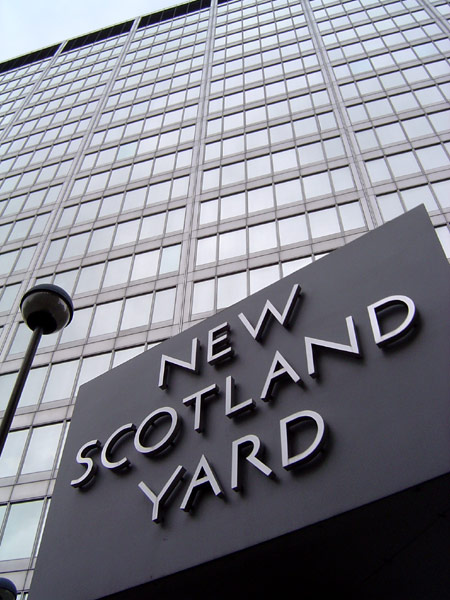
Hacking scandal: what role Scotland Yard?

(c) ChrisO
Re-published in full from The Pryer 

"This story is so old and boring. Where does it take anybody? Newspapers will seek out information from whatever sources they can, until newspapers close down. I don't think it does us any damage. It's a bit of a non-story".
These are the words of a Scotland Yard source as reported in The Guardian on 6th September 2010 regarding the news that the phone hacking scandal investigation might be reopened. With hindsight, and lets be honest, with any foresight, these are not clever words. But might they represent something else, something more sinister regarding the motives of Scotland Yard in this whole debacle?

I should note that I am mainly using The Guardian’s articles in this post because they have been the most pro-active media outlet in getting to the bottom of this scandal. Whereas other newspapers appear to have been fearful of writing about the dubious activities of News International for whatever reason, since it returned to the headlines in 2009, The Guardian have been exemplary in their coverage.

This morning, the Prime Minister (PM) David Cameron offered an opening statement on the affair during a press conference. In an attempt to harvest the public moral outrage at the intrusions of News International journalists hacking into the private phones of ordinary vulnerable citizens, the PM publicly announced that two inquiries will take place. The first, and possibly the most important of the two inquiries, is to be conducted by a Judge and will look at the failure of the first police investigation in phone hacking in 2006. He stated:
“So for those worried about the police investigating the police, this has full and independent oversight. But let's be clear. Police investigations only get you so far.What people really want to know is - what happened? And how was it allowed to happen? That is why the Deputy Prime Minister and I have agreed that it's right and proper to establish a full, public inquiry to get to the bottom of what happened. A judge needs to be in charge so there's no question that it is totally independent and things are done properly.”
Yet right from the start, the Metropolitan police have been less than forthcoming on the nature of their investigation. John Whittingdale MP, who was chair of the House of Commons media select committee inquiry, told The Guardian in early 2010:
"We found it difficult to get information from a number of bodies, including the police, who were less than forthcoming. I think there was an acceptance that it was convenient to a lot of people that one reporter should get the blame. But the important thing for us is to ensure it can't happen again."
Subsequent articles in April 2010 by Nick Davies in The Guardian, here and here, highlight the apparent contradictory, evasive and misleading ways that Scotland Yard have gone about their business. They have deliberately misled the public over the number of people whose phones have been hacked, they did not tell victims that their phones had been clandestinely infiltrated, and they have avoided revealing information that is in the public interest despite Freedom of Information requests. 
All the evidence that has been coming out in the last few days has been in police hands since it was gathered in 2005/6. Why does none of this evidence surface until it has been uncovered by more scrupulous journalists and released into the public domain? Who are the Met seeking to protect?
Andy Hayman, the man who was formerly in charge of The Met’s phone hacking investigation, and since employed by News International may be able to help with enquiries. Hayman resigned from the Met following allegations over his credit card expense claims and allegations of improper conduct with female colleagues, although an internal inquiry cleared him of wrongdoing. However the Independent Police Complaints Commission (IPCC) criticised Hayman for misleading the public over the De Menezes shooting. 
We now know that News International were paying some police officers for information. Andy Coulson and Clive Goodman have been arrested over the last few hours. Given Hayman’s employment and his direct link to the original investigation, it would be interesting to know whether there was any evidence of a relationship between Hayman and News International before his resignation.
Whoever might be responsible at an individual level, there has been little evidence of institutional acceptance at The Met for what has happened since 2006. Nobody has come forward to publicly apologise to the victims of phone hacking for their inaction or lack of candour thus far. Legally, the victims of phone hacking are victims of a crime. 
Regardless of the discussions and arguments over the public/private nexus and the rights of the rich and famous, phone hacking victims should be treated as such and afforded explanations as any other victims are.
 

Enhanced by Zemanta