Justitia, Old Bridge of Heidelberg

Justitia, Old Bridge of Heidelberg
Justitia, Old Bridge of Heidelberg © Gernot Keller, 2007
Blinkered Justice articles also appear on CrimeTalk and Government In The Lab
Showing posts with label international justice. Show all posts

Thursday, 21 June 2012

A lesson in education from girl soldiers

Below is a piece I wrote for another forum. It takes in child soldiers, poverty, inequality, the Millennium Development Goals, and how a reconstituted idea of education might tackle such issues.


Nelson Mandela (c) South Africa The Good News

I was never an important person in my family but since I started the training and started working on friends’ hair at home and now making a little money to help my family, everyone now calls me ‘Aunty Mamy’; they listen to me now”.
This is how a 15 year old girl, and former child soldier from Liberia, has put her views on earning a living. For her, and others like her, her identity - and feelings of respect, independence and self-esteem - hinges on her earning power. 

Education helps many children achieve their potential across the world. But for child soldiers, education may serve as a reminder to what has gone on before, defining who they are, “Teachers are very judgemental of us on the basis of what we were involved in” . 

Nelson Mandela stated that “education is the most powerful weapon we can use to change the world”. Mandela was fighting an ideological war against apartheid and its institutionalised, racist educational system, when he made this statement; it is of its place and time. Rather than seeing education as a linear constant, taught in a top-down fashion, we need to look beyond Mandela's words to understand what education might mean, and for whom.

Nations such as Sierra Leone do not go war because of a lack of education. The Truth and Reconciliation Committee for Sierra Leone found that “it was years of bad governance, endemic corruption and the denial of basic human rights that created the deplorable conditions that made conflict inevitable”. Although this omits other factors, such as the unequal globalised economic playing field in which it was operating, Sierra Leone used to have a strong, well-run educational system.  It was not for want of education that Sierra Leone became one of the poorest countries. 

Key to Graca Machel’s landmark 1996 UN report “The impact of armed conflict on children” was education. It was envisaged as a primary component of the U.N.’s Disarmament, Demobilisation and Reintegration (DDR) programmes in the reconstruction of post-conflict nations. 

Whilst the International Labour Office (ILO) report that many Liberian girl soldiers were happy to go back to school after disarmament and demobilisation, they were ill-prepared for what they encountered at the end of it – a lack of opportunities and jobs (sound familiar?). Consequently, girl soldiers resort to relying on a man to support them,  reinforcing stereotypical patriarchal views of women as dependant on men. 

Older Liberian students (c) USAID
"I was living with my commander [female] after the war. Then I got involved with this exfighter. I wanted to go to disarm but I became pregnant. I wanted to be with him so I didn’t go anymore. Now I’m living with him. I’m not going to school because I’m pregnant". 
Having a child alters girls soldiers' perception of themselves simply because being a mum is socially significant. In a battle between their multiple identities (girl v. soldier v. mum v. member of community etc.), many girls choose motherhood ahead of education because education does not afford them the same sense of self-worth, or equality with others.
"Most of my friends don’t know that I was fighting. I like to keep it that way. People don’t like ex-fighters. After the war I went living with my aunt, only she knows, but for the rest I don’t want them to know. If they know and something bad happens they will point at me, saying I did it". 
Stigmatisation, and a fear of stigmatisation, has been a major problem for DDR programmes. Just 4.2% of girl soldiers accessed DDR packages in Sierra Leone. But why should girls return to education when it offers little economic security and further gender insecurity?

If Western-structured education is failing children in DDR programmes globally, failing children of our former colonies, and yes, even failing our children in the UK, then perhaps we need to consider whether we are delivering the right type of education. 

Michael Wessels, a psychologist and professor at Columbia University says
“We don’t always do a very good job of listening to young people,”...“One of the questions that comes up in regard to girls is: Have we taken adequate time to understand what the girls’ view of reintegration is?”...
...“The goal is to put the power in the hands of girls; to have them go through a process wherein they organize themselves, define what reintegration means to them; ask what’s missing, and then design small actions and steps”...
This perspective places the emphasis on a bottom-up approach, by taking into account how a reintegration programme affects those it is supposed to help. As these girls' experiences are uniquely individual, future DDR programmes should reflect this diversity. In consultation with those running these programmes, girls can then use their own definitions of successful reintegration. 

Given its central role in reintegration, education might benefit from a similar re-think. Let us listen to the children we teach, and find out what they think about their educational systems. Let us understand how their lives outside of the classroom affects their learning, so that a future education takes on board the fact that we are all different. Children can then measure and define their own educational progress, alongside their teachers. 

Education may be the most powerful weapon we can use to change the world. We just have to harness its power, and tailor it so that everyone benefits from it. We can still meet the Millennium Development Goals for poverty and gender inequality, as long we learn from the lessons of girl soldiers.


Tuesday, 5 June 2012

Gacaca courts: truth and reconciliation in Rwanda


My Neighbor My Killer: Official Trailer from Gacaca Films on Vimeo.

My Neighbor My Killer documents the use of localised Gacaca courts to deliver (restorative) justice to victims of the Rwandan genocide. In use from 2001 to the present day, the film charts the anger, sadness, fears, truths and untruths of its victims and accused, in the hope of securing a reconciled Rwanda. 
Enhanced by Zemanta

Monday, 30 April 2012

Charles Taylor: justice done or justice seen to be done?


Wallace Johnson Statue, Freetown, Sierra Leone (c) Mark Gee
As we celebrate the guilty verdict handed down to Charles Taylor for the crimes that he helped perpetuate, we appear to have gotten carried away with the man and what it means for human rights. We seem to have lost focus of his victims whether justice has been served to those who were most affected by his crimes.

I have checked the online versions of mainstream papers based in Sierra Leone (Awareness Times, Awoko, Exclusive Press and Sierra Leone Daily Mail), and in Liberia (The 1847 Post, In Profile Daily, The Inquirer and Daily Observer). Although far from a perfect means of gathering evidence - basic internet coverage that only a small percentage of population have access to/can afford – I was hoping to understand whether local Sierra Leoneans and Liberians feel that justice has been served.

Other than stating,Thousands of survivors of Sierra Leone’s brutal civil war celebrated after learning of the conviction”, the Sierra Leone Daily Mail only covers the reactions of Special Court of Sierra Leone (SCSL) officials, the US government, and non-government organisations (NGOs). None of the other online resources in Sierra Leone have any news on the Taylor verdict. I also understand that there has been little coverage of the Taylor verdict in the printed press in Sierra Leone.

In Liberia, all of the news outlets mentioned above have covered the verdict in some way. As well as publishing articles in the lead up to the Taylor verdict, the Liberian press have covered official and NGOs responses in more detail. The Inquirer has dedicated most coverage to public reaction. Of a local BBC phone-in, they report:
Reverend Jasper Nd'ganblor said, “...our concern is the peace that has been so far attained in the region whether it will hold and if it will help us sustain the peace it will be in the right direction...Liberia has gone through so much and that of Sierra Leone and we want the diplomatic tie to continue to abide instead of seeing each other as enemies.”
Julliet, women's advocate in Sierra Leone added her feelings by saying, “This verdict is with mixed feelings...Impunity needs to be addressed; justice needs to be given to whom it is due. This man pronounced war on Sierra Leone. He said we will taste the bitterness of war and we tasted it; the women tasted it. The women died; the women suffered and I am not happy at all.”
A local vox pops found:
Mr. Varney Konneh of Monrovia said, “I hope Sierra Leoneans are happy; they wanted justice and now they have justice. I just hope they will be at peace; Liberians will remember this day, because of Sierra Leoneans; Liberians are grieving over the situation.”
Justice has been done; there is nothing we can do about it and Sierra Leoneans are rejoicing because they think it is the right thing to do but let them know that what comes around goes around,” one Mr. Jallah said.
I am so happy that Taylor will not be set free, I suffered in this country when Taylor was in power. My daughter was raped by Taylor's so-called ATU soldiers; today he has been punished for all the wrongs he did to us,” Madam Yvonnie Smith said.

Wheelchair merchant, Monrovia, Liberia (c) whiteafrican
Other regional media outlets, such as Africa Review note:
Motorists honked in the streets of Freetown, in apparent jubilation for the verdict, but next door in Liberia, tension was high....The ruling has also reportedly heightened tension between Sierra Leone and Liberia.
Whilst the Global Post states that reactions in Liberia were mixed:
Taylor's war-crimes conviction is a watershed moment, said Aaron Weah, program associate at the International Center for Transitional Justice. "The verdict signals hope for Liberians who were victims of the civil war here that, five to six years from now, they too will get justice," said Weah.
So why might reaction in Sierra Leone be so muted?

There may well be a number of reasons for this, but it is noteworthy that their own (show) trials of Foday Sankoh, commander of the RUF, Sam Bockarie, leader of the RUF, Johnny Paul Koroma, leader of the AFRC, and Sam Hinga Norman, head of the CDF, have never taken place. Sankoh, Bockarie and Norman have all died, whilst Koroma has eluded capture and may be dead.

Eight other indictees, representing the armed forces of the rebels (RUF, AFRC) and government of Sierra Leone (CDF), have since been found guilty of war crimes atrocities. These verdicts gathered a lot less attention in the West, despite the fact that the AFRC case made legal history by ruling on the recruitment of child soldiers and forced marriage in an armed conflict for the first time.

Perhaps the most pertinent of the UK articles on the Taylor verdict and its implications for justice, is this one written by Mwangi Kimenyi and John Mbaku. In “Why wasn't it Africa that found Charles Taylor guilty?, Kimenyi and Mbaku lament the lack of institutional capacities within African justice systems to deal with human rights abuses.

In her blog post for the Overseas Development Initiative, Lisa Denney writes:
The Special Court will undoubtedly have an impact on the post-conflict landscape in Sierra Leone and, of course, sets important precedents in international law and holding political leaders to account. But its short-term nature, limited scope and overwhelming ‘foreignness’ means its will have less effect on most Sierra Leoneans than reform of the country’s legal systems (both formal and informal) – which will remain long after the white four wheel drives and international staff have departed...Indeed, most Sierra Leoneans have had to resolve grievances with community members from the civil war through informal mechanisms, without the judges, robes and new court rooms that international formal legal processes have attracted.

The future of Sierra Leone? (c) Mark Gee
So has justice been done or been seen to be done?

As of today, it is extremely difficult to assess whether Sierra Leoneans and Liberians feel that justice has been done. Whilst some may see justice as having been done, others are unhappy that Taylor has not been tried for the crimes that he committed in Liberia. More worryingly, the verdict appears to have heightened tensions between Liberia and Sierra Leone.

What is more apparent is that justice has been seen to be done, in terms of the Western media's ready acceptance of governments' and NGOs' views of the Taylor trial. Taylor himself has become the sole focus of the international community's war crimes narrative, and more important than other judicial advances (e.g. forced marriage in armed conflict).

Additionally, the SCSL cost a lot of money. As such, donor countries would want to see some form of return to justify the money spent on their international legal project.

Headlines of an historic verdict may well secure future funding for future localised, international justice projects, but it masks an important issue; international justice should reflect local victims' sense of retribution and redress. 

Friday, 27 April 2012

Does Charles Taylor's guilty verdict signal the end of impunity?


(c) Galehr [CC-BY-3.0] via Wikimedia Commons 
No.

Although that is not what the UK media would have us believe today. The likes of The Independent and The Telegraph have written lead articles suggesting that all leaders can be held accountable for their crimes by the International Criminal Court (ICC). The Independent froths:
Of even greater significance, however, is the milestone the case marks in the effort to ensure that even the most powerful individuals may be held to account under international law. As the first conviction of a former head of state since the Nuremberg trials, Taylor's sentence sends the clear signal that even those in the highest positions are not untouchable.
So who might these most powerful individuals be? If we are talking about leaders of nation states, then we should look immediately at the the leaders of the United Nations Security Council; the Presidents of the USA, France and Russia, the Prime Minister of the UK, and the Premier of China.

Yet three of these leaders would face no sanction under international criminal law because they are not party to the Rome Statute that governs the ICC. The USA, Russia and China have not ratified the statute, and so are immune to any charges brought against their elites.

The likes of Presidents Bush, Putin, and Hu will never face criminal sanctions for their roles (aiding and abetting) war crimes, crimes against humanity and genocide in Iraq, Afghanistan, Chechnya and Tibet to name but a few. Whilst the UK is a party to the ICC, how likely is it that we will see former Prime Minister Tony Blair, and his Ministers, such as Jack Straw, brought to justice for their complicities in Iraqi and Libyan abuses?

The Independent conclude:
But so comparatively new, and awesomely complex, an endeavour as the establishment of international criminal procedures was never going to be easy. For all the criticisms and caveats, the most important point is still that the so-called Big Men who have held sway in Africa – and in the Balkans and the Middle East – for so many decades have witnessed an hour of reckoning at last. No longer can they rest easy in the comfortable assumption they may do as they please, however atrocious, without fear of the consequences. Position and power place no warlord above the law. With the conviction of Taylor, the days of impunity are over.
(c) Strassengalerie [CC-BY-SA-3.0], via Wikimedia Commons
We see the court, and perhaps the court sees itself, as being responsible for prosecuting those easily identified as “monsters” or “bogey men”; we change the language from “leaders” or “heads of state” to “warlords” or “dictators”. They come from places that are understood as being “troublesome” or “failed states”. Just as with our domestic criminal justice systems, our eyes averted from the crimes of the powerful.

This is a thorny issue for Africa, as the ICC predominantly prosecute African leaders without taking any action against more powerful Western leaders. Afua Hirsch's blog, and the comments on it, further demonstrate the distrust with which this Westernised legal structure is perceived.

Unlike our domestic criminal justice systems, which have the power to hold public officials to account (regardless of how often they pursue a charge), the ICC has no authority to hold the more powerful state officials to account at the international level. As long as the more powerful countries are able to elude the long arm of the law, any justice can not be free from political interference.

Consequently, it does not signal the end of impunity. 

Enhanced by Zemanta

Thursday, 15 March 2012

The reckoning: the battle for the international criminal court


The Reckoning trailer from Skylight Pictures on Vimeo.

As some redress to my latest post, I am attaching a trailer for the documentary, The Reckoning, which follows the travails of the international criminal court (ICC) towards the end of the last decade.


There are some harrowing images contained in the trailer, so please be aware of this before clicking. 

Wednesday, 14 March 2012

The fallacy of international criminal justice


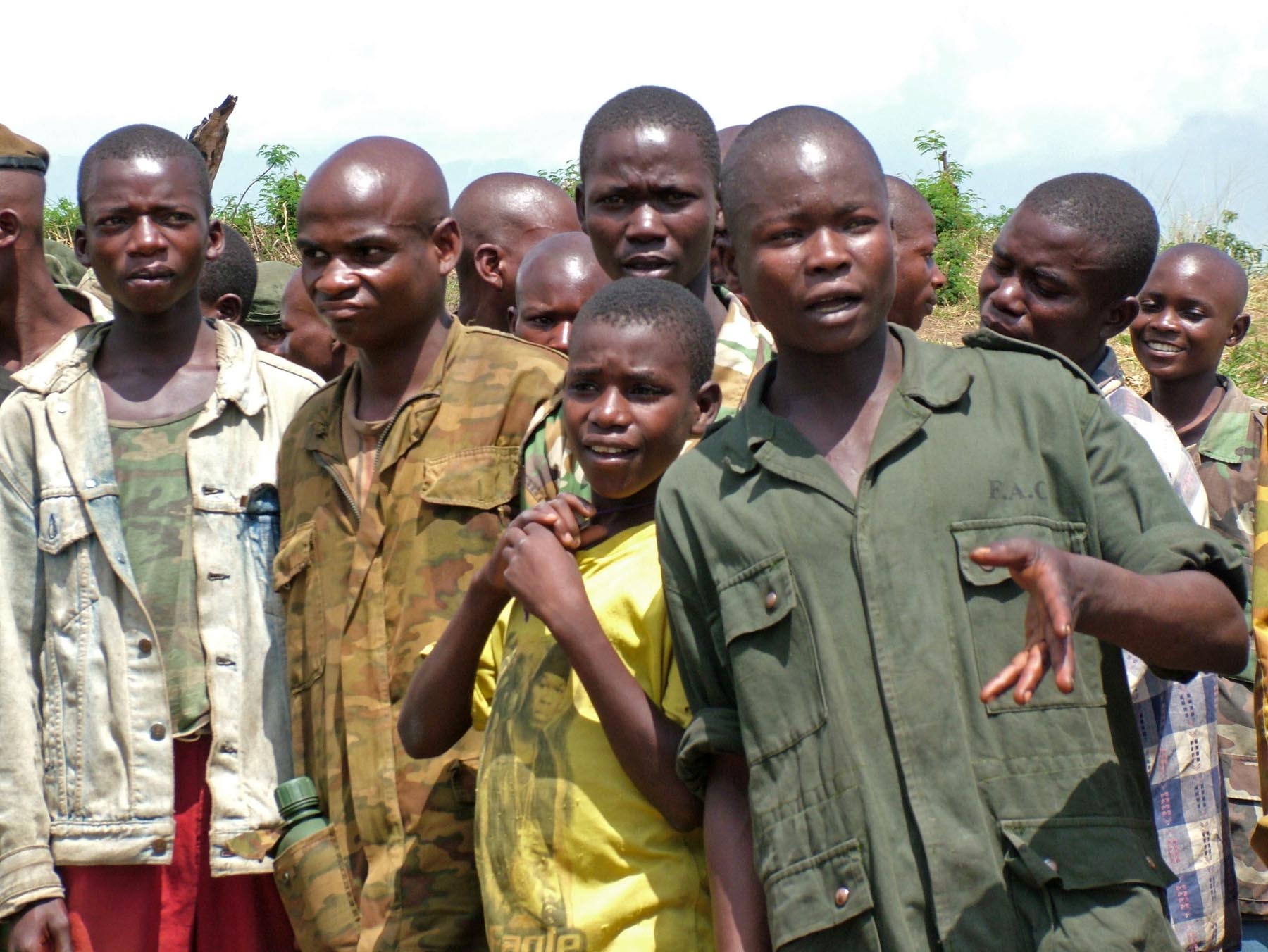
Former child soldiers in DRC (c) L Rose

Next month, Charles Taylor is due to find out whether he is guilty of the charges brought against him. Taylor's case has been heard at the Special Court for Sierra Leone (SCSL) in The Hague. Like cases held at the ICC, this case has taken place in a geographical space far removed from the sphere where crimes were carried out, and where the victims continue to live.

I was in Sierra Leone when Taylor was first arrested and transferred to Freetown. I have also attended and reported on one of the trials (Sam Hinga Norman) held at SCSL. My own perspective is that at the local level, justice meted out in this way does not work.

Many in Freetown expressed their public support for Norman. Despite the fact that there is a strong relationship, and a lot of goodwill, between Sierra Leone and the UK, even though the UK was instrumental in pursuing charges against all accused of war crimes, people argued that Norman was a hero.

For them, still shell-shocked at the brutalities waged during the previous decade, he had helped save (the soul of) Sierra Leone. In other words, they believed that Norman was a bringer of justice. That Western powers prosecuted him only divided the notions of Western and African justice.

The Foundation for Law, Justice and Society produced a series of essays on international justice and Africa written between 2008-2010. In his essay, 'International Criminal Justice and Non-Western Cultures', Tim Kelsall alerts us to the following anthropological quirks:
...It is difficult for most of us to imagine how unnerving international trials must be for many African witnesses, who find themselves miles from home, in a courtroom of extraordinary grandeur, confronted with robed judges and lawyers who speak a foreign language, and who subject them to highly unusual communicative practices including frequently hostile cross-examination. It is no wonder that getting clear testimony in such circumstances has often proved difficult (Cryer 2007), a problem compounded in contexts, not uncommon in Africa, where secrecy is prized as a high social ideal...

A project of the Open Society Justice Initiative, The Trial of Charles Taylor defendant offers further evidence of the problems that the international justice system faces, judging by the comments in several recent posts:
What do these ppl care about SL ppl anyways? Look at the volume of ignorance they’ve shown for human rights in other countries! (TJ, 09/03/2012) 
We were told Iraq had WEAPON OF MASS DESTRUCTION……who has been brought to JUSTICE for such MASS KILLINGS??? (Noko4, 10/03/2012)
It is regrettable to be aware of the fact that Mr Taylor was charge for the Sierra Leon civil war that kill thousands and cause thousands to lost body parts that was carry out by the sierra Leoners themselves and Mr Taylor was never charge for the brutal killing of Liberians and the destruction that were carry out by Mr Taylor and his forces in Liberia...Liberia need justice we do not want Taylor back in Liberia. (Samuel King, 03/03/2012)

The final comment reveals a paradox. On the one hand, the site is supposed to engage and include Sierra Leoneans in a discussion of the war as another means of achieving justice, yet it is Liberian voices that dominate, lamenting their own lack of access to international justice.

Add to that, the fact that the vast majority of Sierra Leoneans do not have access to the web, and those that do receive a cumbersome service, and it is not a surprise that many of those posting comments seem to live elsewhere (mainly the U.S.A.).

A daily news chalkboard in Liberia (c) Lt. Col. Terry VandenDolder
Although attempts have been made to reach out to those most affected, the international justice system still relies too heavily on Westernised ideas. In his analysis of the success and failures of the SCSL, Alpha Seesay recognises that Sierra Leonean victims were too far removed from the process; as well as bring geographically distant, the court had problems streaming the trial and it made no funds available for an outreach programme.

The ICC has been criticised as imperialist by various African governments. Several comments on The Trial of Charles Taylor defendant also refer to the iniquitous manner in which indictments and prosecutions only seem applicable to African leaders.

Whilst some locals may see the the ICC, and the reasons behind it, as a force for good, they are also frustrated at a lack of transparency as to whose justice is sought and why it does not include everyone. In places like Liberia, where traditional media outlets reach more people in more meaningful ways than the internet, potentially, this can do serious damage to an international justice system regardless of any outreach programme.

The U.S.A., the world's foremost human rights advocate, is not a member of the ICC. Most significantly, it threatens military action against the ICC if any of its citizens are brought before the court. This incompatible approach to human rights undermines the international criminal justice system.

Just as Okechukwu Oko posits in 'The Limits of Prosecutions', I believe that whilst prosecuting some African leaders might bring about some accountability, any form of international justice system needs to take into account the social, political and cultural norms that prevail across Africa. This should apply equally to leaders from the Americas, Asia or Eastern Europe.

Without doing so, the current international criminal justice system will fail to deliver justice to those affected by war crimes and crimes against humanity. 


Thursday, 8 March 2012

Justice for victims of conflict-related sexual violence?


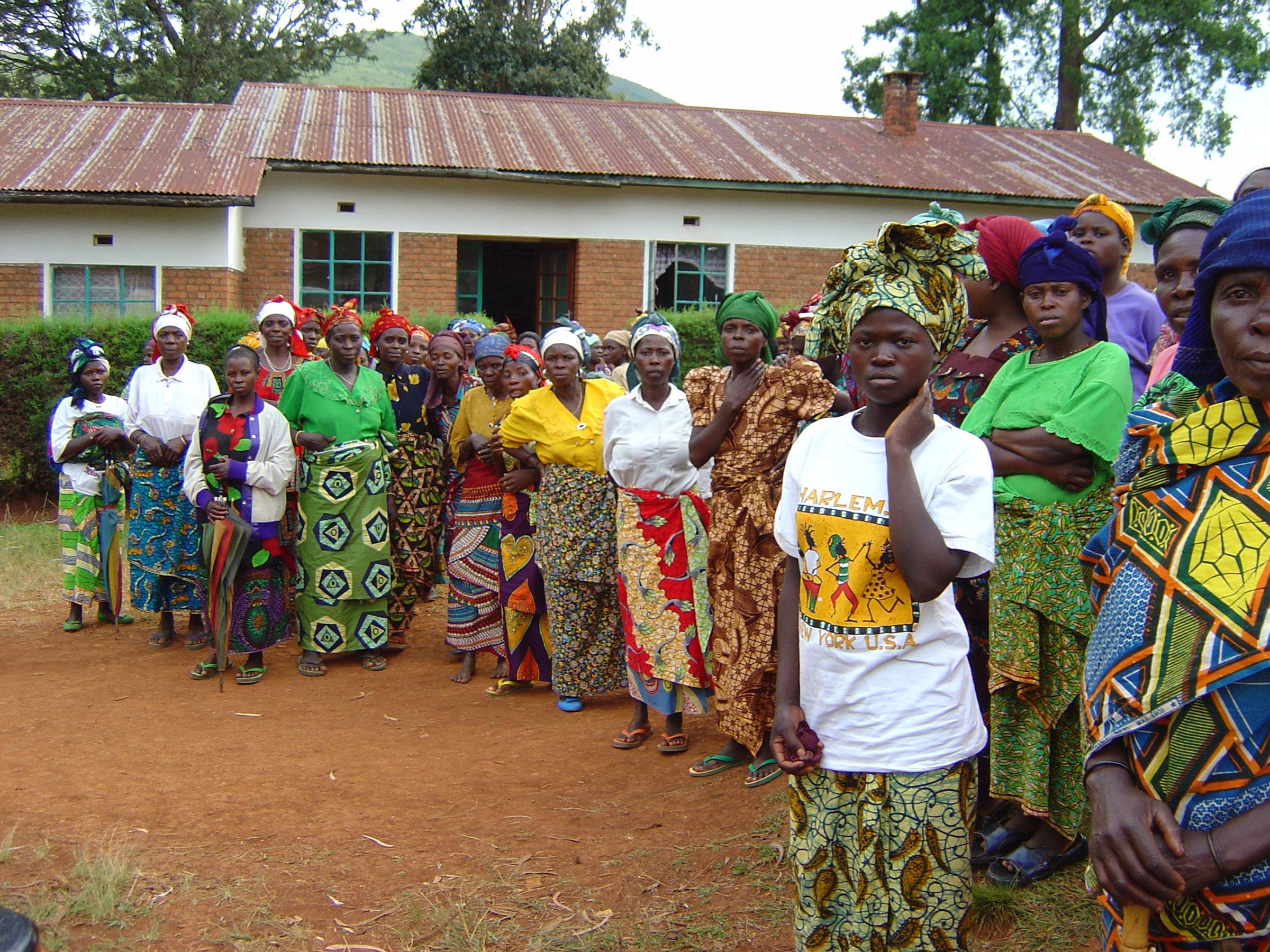
Meeting for rape victims in the DRC (c) L Werchick/USAID
It feels a little discomforting to be writing this on International Women's Day. It should be a day to celebrate. The fact that we have a specific day to 'celebrate' women acknowledges an international failing; women are not treated equally.

Women and girls are predominantly the victims of sexual abuse – although men and boys are also victims.

A couple of weeks ago, the UN produced its annual report on conflict-related sexual violence. According to the report:
Conflict-related sexual violence refers to incidents or patterns (for the purposes of listing in accordance with Security Council resolution 1960 (2010)) of sexual violence, that is rape, sexual slavery, forced prostitution, forced pregnancy, enforced sterilization or any other form of sexual violence of comparable gravity against women, men or children.

The report covers the period from December 2010 to November 2011, and details the abuses suffered at the hands of government and militia groups in conflict zones including Colombia, Democratic Republic of Congo (DRC) and Libya to name a few. It documents the (mass) rapes suffered by women, girls and boys, and refers to practices used by these armies including forced pregnancies.

Because of the social stigma attached to rape in many societies around the world, women and girls have little choice but to stay with their abusers. To return to their communities, which often does not support the armies that abused these victims, is not a viable alternative, as they are shunned by family, friends and neighbours. More so, when they are expecting a rapist's child.

In most cases, the UN is seeking judicial redress for the victims. It has had some success at the local levels, notably in courts such as the International Criminal Tribunal for Rwanda (ICTR) that paved the way for defining rape as an act of genocide, following the case of Akeyesu.

Nevertheless, on a personal level, studies have highlighted the powerlessness that local victims have felt in shaping and sharing their testimonies. On a social level, many do not want testify for fear of having to identify themselves as rape victims, which their family, friends and neighbours may have hitherto been unaware of.

The International Criminal Court (ICC) also offers victims the chance for justice beyond the local level. Although castigated at first for not pursuing sexual violence charges in the case of Thomas Lubanga, supporters of the ICC claim that it has made strides following charges of rape as a war crime, and as a crime against humanity, that it brought against Jean-Pierre Bemba.

But this is just the tip of the iceberg. The Institute for War and Peace Reporting write that prosecutors struggle to obtain the evidence that they need for a court of law to secure a conviction. 
In a recent cross-examination by the defence in the Bemba case, a rape victim was asked why she had no medical certificate confirming that she had been raped.
In our country if you want to see a Doctor at hospital you always need money. When I was raped I had no money. I couldn't go see a Doctor”, she replied.

This is a significant problem. In countries where females have less financial power, they are further dis-empowered by a judicial system that wants them to prove their abuse.

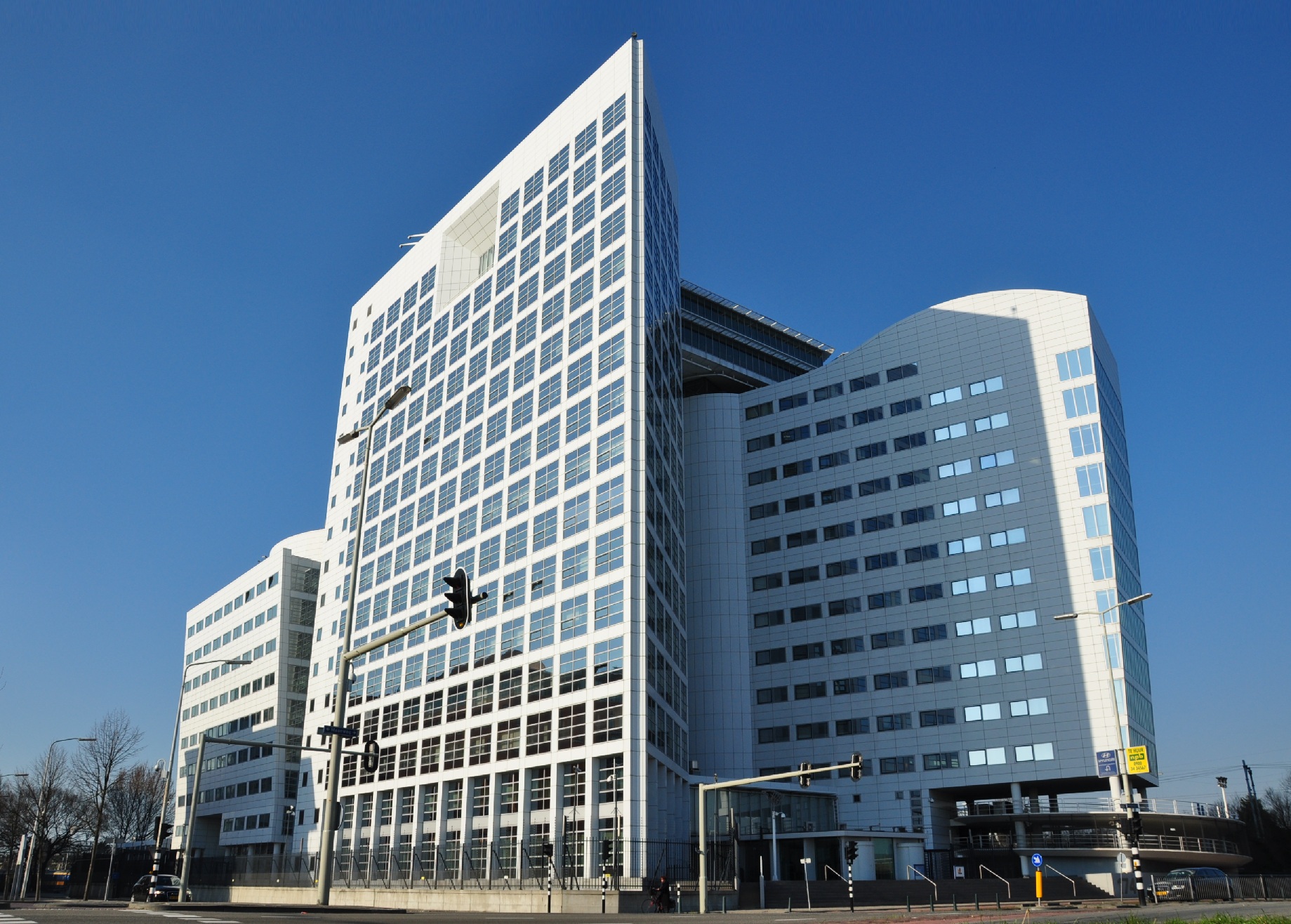
The International Criminal Court, The Hague (c) Vincent van Zeijst
Equally significant is the fact the ICC have not acted to bring any criminal charges against UN peacekeepers who have been accused of sexual violence. The ICC is supposed to operate independently of the UN. Therefore, it should have the means to investigate and prosecute those UN soldiers guilty of these war crimes, but there is little to suggest why it has not done/can not do so.

The UN's strategy for dealing with these soldiers is based around prevention, enforcement and remedial action. The statistics might well indicate that the message is getting through to UN peacekeepers, but this is difficult to verify causally.

It could just as easily be explained by women choosing not to step forward to report cases of sexual violence since they know that peacekeepers will not be brought to justice locally or internationally.

This impunity damages the credibility of the ICC, and that of their other locally established forms of criminal justice.

The UN also state:
...“The general breakdown in law and order, the absence of justice, continuing conflict, entrenched discriminatory attitudes and practices and the prevailing culture of impunity in these situations allowed for these crimes to be committed not only with appalling consequences for the victims, but with a force that destroys the fabric of society as a whole”.
In all these situations, cases of conflict-related sexual violence remain largely unreported owing to several factors, such as social stigma, fear of reprisals, insecurity, a lack of available response services and the perceived futility of reporting as a result of weak administration of justice, apathy and political pressure”...

Both this quotation, and my discussion above, indicate that the problems are cultural and institutional. Both within the geo-spatial boundaries where the acts take place, and within the spaces that are supposed to protect the victims.

The UN propose the following initiatives to address conflict-related sexual violence:
  • Training on conflict-related sexual violence
  • Development of early warning indicators
  • Addressing conflict-related sexual violence in ceasefire and peace agreements
  • Comprehensive strategies to combat sexual violence
  • Programmatic and funding challenges and opportunities

All well and fine, but there is little substance to these proposals. Nothing that might serve to suggest that the UN are seeking to uproot the “entrenched discriminatory attitudes”, which is key to altering normative views of rape. Especially if the legal process is only going to be accessed by the few who can, and want, to use it.

Education (not the top-down approach) is going to be vital to altering social norms of sexual violence. To educate, we need to hear more from the victims and more from the rapists; because it is they that transgress the laws whilst operating within their gendered norms.

Nor am I confining this to the international conflict-related zones discussed here. Because in the West, we have constructed sexual violence in a certain way with regards to domestic conflict-related spaces, and realised justice through criminal mechanisms that operate with a similar impunity. 


Enhanced by Zemanta

Thursday, 28 July 2011

Hadzic in the dock

Goran Hadzic 1992 (c) Christian Marechal
Many of you will have seen that Serbia extradited Goran Hadzic to The Hague last week. As the last of the ethnic Serbs wanted for war crimes by the U.N., what does his trial represent in terms of justice for those in the former Yugoslavia?

Reuters reported:
"Hadzic is charged with instigating the torture and murder of hundreds of Croat and non-Serb civilians, including 264 hospital patients in Vukovar in 1991, as well as mass detentions, forced labour and driving thousands from their homes.”
In the last couple of days, the BBC inform us that Hadzic has not entered a plea. Both the Reuters and BBC stories remark on Serbia’s quest for candidate status for membership of the European Union (EU) and its need to comply with the conditions for approval. Website crimesofwar.org commented thus on Radovan Karadzic’s extradition almost 3 years ago:
“Nevertheless opinion polls have shown consistently over the last few years, that while most Serbs do not regard Mr Karadzic or General Mladic as guilty, or at least any more guilty than any leading wartime figure amongst Croats, Bosniaks and Kosovo Albanians, they also do not have a passionate objection to their transfer to The Hague. There is a clear understanding that Serbia’s European future and hence their own, is directly related to the fates of these men. Serbs only have to look over the border, or go on holiday in Croatia, to see and understand that once it had in 2005 delivered its last indictee, General Ante Gotovina, a huge hurdle on the road to EU integration was removed. As a consequence Croatia is years ahead of Serbia now on the road to Brussels and, in part as a consequence of that, its people are also several times more prosperous than those of Serbia.”
This might explain why few Serbs are protesting at Hadzic’s departure, unlike the removal of Karadzic. However, it does not represent a victory for justice or ICTY. Rather than any sense of legal justice being seen to be done in its own right, the Serb people appear focused on ideas of economic integration and the benefits that might bring. Consequently, ICTY has failed to establish its independent juridical credentials.

Created hurriedly following the U.N.’s poor response to the atrocities being committed in the former Yugoslavia, the U.N. Security Council established ICTY in May 1993. Resolution 827 sets out its mandate, and refers to ‘the restoration and maintenance of peace’. From its annual report in 1994:
“The role of the Tribunal cannot be overemphasized. Far from being a vehicle for revenge, it is a tool for promoting reconciliation and restoring true peace."
In the absence of any Truth and Reconciliation Commission for the former Yugoslavia, ICTY has to demonstrate justice for its victims to the highest level for any idea of reconciliation to work.

Memorial at the Vukovar hospital (c) Modzzak

In their report of 2010, the International Center for Transnational Justice examined local perceptions of ICTY in Bosnia. Although their interviewees wished to make it clear that they did not see the creation of ICTY as ill-advised, they considered that it had failed to deliver justice as they had originally perceived. Among the disappointments noted in this report were sentencing patterns (some war criminals were sentenced to 2 years imprisonment), guilty pleas (where the accused who pleaded guilty got a reduced sentence), and the length and complexity of proceedings.

In their study of witness testimony during the Krstic trial at ICTY, Dembour and Haslam (2004) found that victim-witnesses were effectively silenced in the pursuit of pertinent legal “facts”. Rather than being able to describe the acts that for them were essential to reconciliation, they were subject to those who have the power to question them.

In March 2005, the War Crimes Chamber (WCC) was established within the State Court of Bosnia and Herzegovina (Garbett, 2010). The WCC is both a national and international court that prosecutes persons responsible for committing war crimes, crimes against humanity and genocide. For the victims, this hybrid court represents a local, transparent and more accessible means of achieving justice. Unlike ICTY, where there have been concerns regarding the way it goes about prosecuting charges of sexual violence, the WCC has prosecuted a high number of these cases.

In terms of Vukovar, it is worth noting the work of Hagan and Ivkovic (2006). From a sample of 282 people surveyed, they found that 52.1% of Croats in Vukovar believe that persons accused of war crimes committed in the territory of the former Yugoslavia should be tried in local courts where the crime was committed. Only 25.9% of 143 ethnic Serbs living in Vukovar believe the same. Support for ICTY dispensed justice was 28% amongst Croats and 47.6% amongst Serbs. Therefore, the majority of Croats would prefer to see justice dished out locally, rather than in The Hague. Along with the other evidence, this has implications for justice in the Hadzic trial

So whilst the U.N. celebrates the forthcoming prosecution of its last indictee, it has struggled to effect international justice for its victims at ICTY.  It may be the flagship PR model for an international justice system as evinced by the west, but on the local grounds where these tragedies occur, it is seen as imperialist and a disappointment. If the international community want justice, then local concerns have to be addressed. 

References

Dembour, M-B and Haslam, E. (2004), Silencing Hearings? Victim-Witnesses at War Crimes Trials, European Journal of International Law, Vol. 15 No. 1, 151–177

Garbett, C. (2010), Localising Criminal Justice: An Overview of National Prosecutions at the War Crimes Chamber of the Court of Bosnia and Herzegovina, Human Rights Law Review, Vol. 10:3, 558-568

Hagan, J. and Ivkovic, S.K. (2006), War Crimes, Democracy, and the Rule of Law in Belgrade, the Former Yugoslavia and Beyond, Annals of the American Academy of Political and Social Science, Vol. 605Democracy, Crime and Justice (May, 2006), 130-151
Enhanced by Zemanta

Monday, 30 May 2011

Justice for Mladic?

This is a short post on the arrest of Ratko Mladic, mainly because it has been covered by the mainstream media in great detail over the last few days. If you want an alternative take on the arrest, I suggest that you read this.

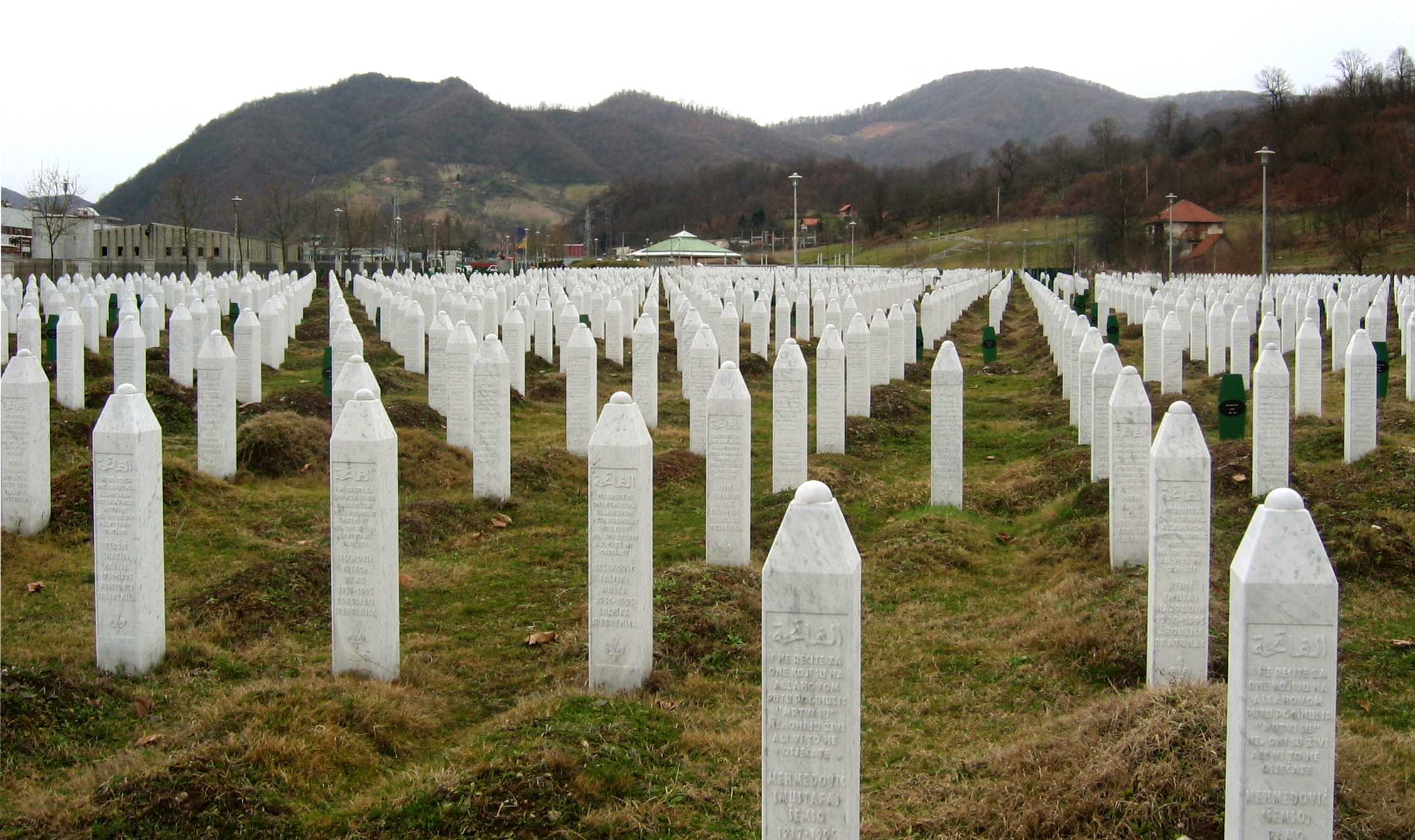
Srebrenica massacre memorial gravestones © Michael Büker 
Obviously, this is a significant event with massive political ramifications, locally, in Serbia, and globally, for the International Criminal Court (ICC). If the ICC is to be seen as a legitimate and influential court of human rights, then not only does it have to take the Mladic case seriously, but it has to look at prosecuting cases of war crimes committed by the more powerful nations.
Enhanced by Zemanta

Friday, 6 May 2011

Obama and bin-Laden: in whose name do you wish justice to be done?


The following article has been republished in full from The Pryer as the original has been archived on an old server and is no longer available. 


President Obama speaking at Camp Lejeune (c) Lance Cpl. Michael J. Ayotte
Following the death of Osama bin Laden, President Barack Obama proclaimed that “justice had been done”. Whilst many have good reason to celebrate the death of this mass murderer, Obama’s references to notions of justice raises questions about the type of justice he is referring to, and whose justice he is talking about. These different ideas of justice are at the heart of the issues that originally led to 9/11.
Reading through Obama’s statement, it seems that Obama discusses justice (i.e. bin Laden’s death) in terms of it being a fair outcome for the crimes that he committed. Justice is uttered several times towards the end of his statement, and always towards the end of each paragraph, emphasising ideas of a sense of closure. Justice is also articulated through western notions of security and risk.
However, Obama uses contradictory repertoires to explain how Western justice has been served. In terms of justice for the families of those killed on 9/11, he states “We will be true to the values that make us who we are”. Obama later asserts that the USA is, “one nation, under God, indivisible, with liberty and justice for all”. Yet, many have been detained at Guantanamo Bay without trial. 


Recent wikileaks files reveal that about 20% of those detained at Guantanamo Bay were innocent. Regardless of this, human rights are not the sole preserve of the innocent or the good. All detainees were actively denied their liberties during their renditions, their incarcerations and their treatment, without recourse to a legal-political form of justice. This contradiction undermines western concepts of justice, and ultimately harms ideas of democracy and the USA’s standing as its moral authority.
Obama’s statement should also be read in conjunction with his statement on Srebrenica. In it, he demanded that those who perpetrated the massacre be arrested and prosecuted, including the man thought to be responsible for the killings, Ratko Mladic. Whilst bin Laden was supposedly killed in a gunfight, it was always clear that the USA government wanted him dead or alive. Why advocate a different form of justice for another mass murderer?
Stencil of bin Laden, Bucharest, Romania (c) bixentro
Initial delight and rejoicing at bin Laden's death has since been replaced by fear. Justice in its retributive legal form seeks to punish the criminal in a proportionate manner. In national cases involving mass murderers, as effected through western penal systems, being found guilty means either life imprisonment, or in some USA states , death. Families and friends of victims feel secure knowing that the perpetrator won’t harm them again. 


In contrast, the death of bin Laden has heightened security concerns in the UK and USA. The 'truth' surrounding his alleged burial at sea has been challenged and the religious manner of his burial has stoked further controversy. Bin Laden was merely a figurehead for his movement, and although he helped perpetrate atrocities, he has followers who may harm those same families and friends of victims again. The international justice enacted on bin Laden may have immediately sated its diners, but it is the (just) desserts of fear and insecurity that we need to consume to  feel truly content. 
Nobel prize-winning economist and philosopher, Amartya Sen, contends that there is no single, concrete and definitive justice; we each have our own philosophy of justice. Sen argues for a ‘global justice’, in which we understand that we have a sense of duty to each other as human beings at all times, no matter the circumstances . He advances a global human rights agenda to resolve injustices, rather than an international justice system, such as the International Criminal Court (ICC); the USA has never ratified the Rome statute of the ICC, and does not intend to. Any notion of justice requires dialogue between an ‘us’ and ‘them’. We need to understand the reasons for such attacks, and we need to respect and address these issues in order to make our own lives safer and more secure. 
Whilst such ideas sound fanciful and utopian in the current climate, it is a better option than foresaking values of democracy and freedom and living in fear of a terrorist attack.