Justitia, Old Bridge of Heidelberg

Justitia, Old Bridge of Heidelberg
Justitia, Old Bridge of Heidelberg © Gernot Keller, 2007
Blinkered Justice articles also appear on CrimeTalk and Government In The Lab
Showing posts with label Equality and Human Rights Commission. Show all posts

Wednesday, 11 April 2012

Here we are now, integrate us: England's integration strategy


Currently on a short break. I will return in full next week, but will try and tweet in the next few days. Found this little piece which I had prepared a few weeks ago hidden under the cyber carpet. Hope you all well.
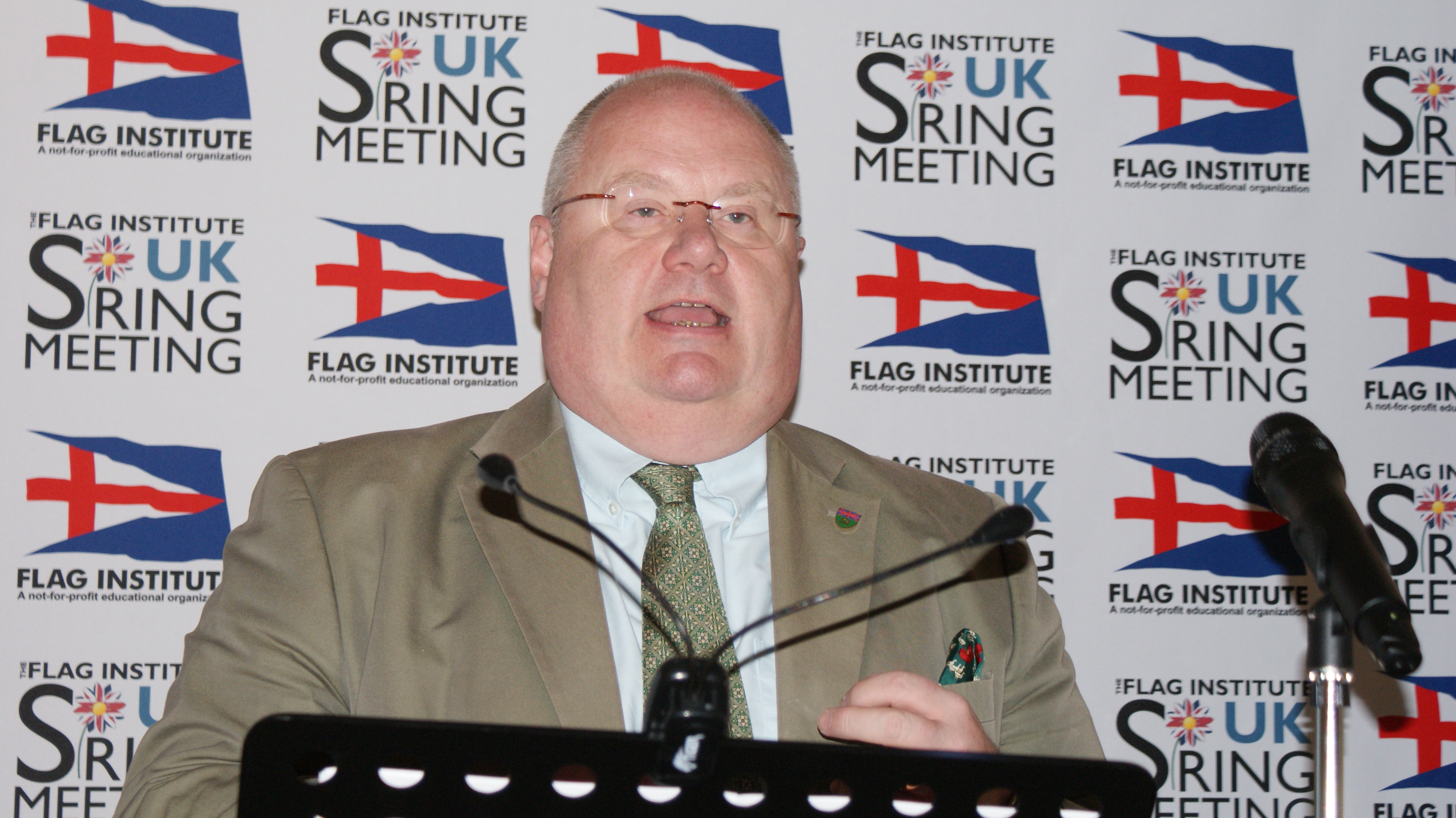
Eric Pickles delivering keynote address at Flag Institute 2011
(c) Charles Ashburner [CC-BY-SA-3.0]
A few weeks ago, Eric Pickles, the Minister for the Department for Communities and Local Government (DCLG) unveiled the government's integration strategy, which plan to help create an harmonious England, free of discord and hatred.

The idea is that in an integrated society, everyone can play a full part in the every day workings of life nationally and locally. The UK government believes that there are 5 key themes on which an integrated society can be built: social mobility, participation, responsibility, common ground, and tackling extremism and intolerance.

Despite using several of these same themes, multiculturalism is seen to have failed, with the sense that we now live in a more divided society. The 2011 summer riots, and the perceived threat from Islamic extremists inform this strategy, with risk, fear and security pervading its discourse. As such, the government considers that something needs be done:
We should be robustly promoting British values such as democracy, rule of law, equality of opportunity and treatment, freedom of speech and the rights of all men and women to live free from persecution of any kind. It is these values which make it possible for people to live and work together, to bridge boundaries between communities and to play a full role in society. When this is underpinned both by opportunities to succeed, and a strong sense of personal and social responsibility to the society which has made success possible, the result is a strong society.
The use of “British values” in this context is used to represent a nation that is civilised, Christian and white. The same values that informed a colonial Empire, raiding Africa and Asia for her resources. Why is it that “British values” are different to, or better than, other nation's values?

The strategy is predominantly aimed at a young, male, disadvantaged Muslim/White audience. In a society that has “welcomed” migrants from all over the world, English identity, and values, may well have changed, through personal and professional partnerships, and through other cultural influences, such as music, film and food.

Disability protest poster (c) Byzantine_K
As evidence that their targeted audience is the right one, DCLG refer to their own, commissioned reports, and the Equality and Human Rights Commission's Triennual Review (2010). “How fair is Britain” notes that women and the disabled experience social exclusion, certainly in the guise of a lack of being able to participate and intolerance. Yet, there is nothing for them in this integration strategy.

Is this because the UK government considers that both groups have integrated? If so, why would the government consider that its key factors might work for its target audience, when women and the disabled still feel excluded?

It is in the shift from 'the national' to 'the local', that the government believes that cultural nirvana can be attained. DCLG notes that local communities have long come together to address civil problems, and it is drawing on this social capital to resolve our divided society. However, it accepts that it has to provide a national framework to make it work, utilising the production of civic leadership on integration, with locally-led partnerships driving it forward thanks to cross-Whitehall liaison and assistance.

Even in this basic approach, there are anomalies. For example, whilst the government talk of civic leadership and creating “the space for an open and honest debate”, it recently closed the door to a number of health-industry leaders' involvement in discussions on the localisation of health services. This undermines participation.

Although each of the 5 factors mentioned above appear distinct from each other, they overlap and intertwine, just as ideas of the local and national do.

DCLG propose encouraging young people to develop their sense of responsibility and self-management, through volunteering and a National Citizens Service. Deemed to be participating in their local communities, DCLG will ensure that “people can trust public bodies”, such as those who can enable them to find work locally. Yet when these public bodies face charges of fraud and corruption, it is difficult to see how this might work. More so, when the state fails to rescind its central contract.

In terms of localities leading the way in economic regeneration, and thereby creating social mobility and tackling extremism, DCLG have failed to explain how this might come about. Whilst speaking English is assumed to enable social mobility and a sense of common ground, it ignores those migrant businesses, such as Chinese restaurants, that use the same language and cultural references. Their chefs may not speak English, and depending on your understanding of local, few would argue they have not integrated into their local areas.

Chinatown, London - local integrated community? (c) Aurelien Guichard
The additional language requirement for people to be able to speak English before they settle here is surely a bid to appease a supposed silent majority who baulk at immigrants not speaking English. In any case, it is difficult to see how this might happen, given that the rules for entry into England also concern the rest of the UK.

So how does 'local' England integrate with their (inter)national partners overseas? Within the EU, and the UK, it has not adopted the Euro, and it has not come on board with Schengen. We veto EU moves to regulate the financial markets that helped cause the recent crises. Cynics might argue that the UK has sought to take without giving, seeing its own rights and responsibilities in an international arena quite differently to how it views its “problem people” acting out theirs.

To close, DCLG make the following point in their strategy:
People come together through day-to-day activities, not 'integration projects' which too often feel irrelevant and prove unsustainable.
Quite.

Monday, 27 June 2011

Pensions and pensioners: when I'm 67...70...73


The following article has been republished in full from The Pryer as the original has been archived on an old server and is no longer available. This article was originally published in June 2011. 

(c) Roger Griffith
In the second of my series of articles looking at pensions, retirement and beyond, this post will look at issues relating to the care of pensioners.  Care can take place at home or in a care home, and affects pensioners who are fit and well and those suffering from age associated conditions. Caring for the elderly affects the person being cared for, carers, family, businesses, regulators and the state. With reports of the recent scandal at Winterbourne, the financial crisis at Southern Cross and stories of abuse elsewhere, “care” is big news.

The NHS reform bill deals with reforming social care services in the UK, as well as restructuring the NHS more generally. As well as setting out organisational changes to the health care system, the bulk of the bill deals with the “economic regulation of health and adult social care services”. Issues such as competition, licensing and pricing are at the heart of these reforms. 


I am aware that the bill has been sent back to MPs to scrutinise, but I find it faintly disturbing that ideas of public well-being and care appear virtually redundant. Given that many of us need and use the NHS, at least those without access to private healthcare, why does a focus on public well-being and care appear less relevant than competition, licensing and pricing?

Ministers claim that the NHS needs to be more accountable to the public. I do not subscribe to this view. NHS stands for National Health Service; therefore, the NHS needs to be public welfare-centric. It is the government that needs to be more accountable to the public. The government has “responsibilised” all of us over the last couple of decades, so that we now spend our own money helping the state finance practices that it used to manage. 


Perhaps it is now time for the government to “responsibilise” itself, and let us know in detail exactly how much of each of our taxes and national insurance is spent on the public services we finance.

The leading age-related charity, Age UK,  have responded to the proposed health reforms on their website thus:
“We welcome the current pause in the Health Bill’s progress through Parliament as we want to ensure that the needs of older people will be better met under any new framework than they are at the moment. 
Older people are by far the biggest users of the NHS, yet they often experience a second rate service which does not meet their needs. We are working with the Government to try and change that in future.”
This statement re-focuses the debate; pensioners are the biggest users of the NHS and they often receive a second-rate service.  This is further exacerbated by a recent inquiry into home care of older people by the Equality and Human Rights Commission (EHRC).  A full report by the EHRC is due out in November. The main findings of this inquiry reveal that:
·        home care visits are often limited to just 15 minutes;
·        pensioners have little to no time over controlling when homecare visits take place;
·        inadequate homecare is being provided;
·        lack of staff training and awareness;
·        high homecare staff turnover;
·        lack of complaints and low expectations.


Many of these businesses have their own agendas. Based on the EHRC inquiry, it is obviously not the care of their patients, or customers/consumers/clients, that top their agendas. For pensioners, homecare is supposed to promote independence and dignity, yet the service that they are receiving is seriously undermining these notions. They do not know who to complain to if they receive bad service, and/or they fear repercussions if they make a complaint. 


It is widely acknowledged that pensioners are already amongst the more vulnerable groups in society. So whilst the government makes a significant saving outsourcing this service to profiteering providers, they do so, harming those whose interests the NHS is supposed to protect. This is inexcusable behaviour on the part of the government and its partners in crime.

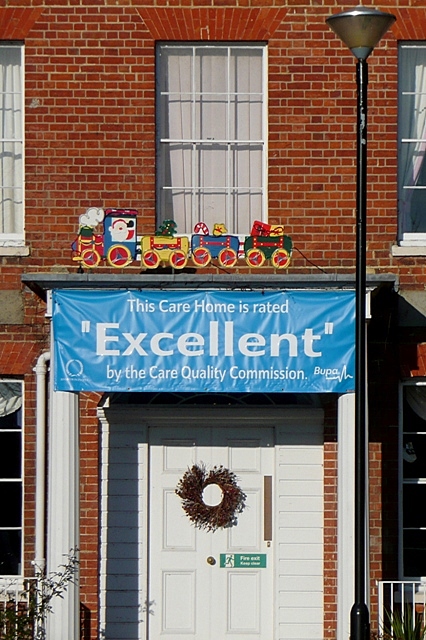
Excellent care home (c) Graham Horn [CC-BY-SA-2.0]
The EHRC report also makes it clear that care staff lack support. A high turnover in staff indicates an unhappy workforce. The evidence suggests that care staff are subject to a form of corporate abuse; they lack sufficient training to carry out their role properly, and are asked to deal with their patients in the shortest time possible. 


So whilst media reports, such as those linked above, rightly make a noise about the abuse that carers dish out, equally we should be informed of the difficulties that care staff endure. I am not condoning what has happened recently, but I am suggesting that this kind of behaviour is embedded in the culture of businesses whose concern is for profit, rather than care.

The Telegraph recently reported that the Care Quality Commission (CQC), who regulate the care services, rate more privately owned care homes as poor/adequate than those run by non-profit organisations or local authorities.


According to The Telegraph and the BBC, the CQC, funded by the Department of Health, are operating within financial constraints imposed by the government last year. Ostensibly, the problems appear to be that there are too few inspectors to ensure that care homes are meeting the required standards. Consequently, fewer inspections are taking place. One inspector who spoke to The Telegraph anonymously said:
“Fundamentally, it’s now got to a point of being dangerous (for residents) – and it’s going to get worse,” (…) “If I had a relative who needed to go to a care service, I’d be concerned.
Inspectors at the CQC and the Department of Health appear to disagree as to who is to blame for the recent care home abuses. Whilst they scrap over responsibility, care homes are being closed down. This further destabilises the lives of the elderly. Not only have they been subject to harm on a personal level, they are now having to endure further injury at an structural level. This is governmental and commercial negligence.

Unfortunately, I have omitted other forms of care in this article, such as that provided by family members looking after loved ones at home (sorry mum). Whilst adult social care services patently need amending, there is little evidence that proposed NHS reforms will address any of the problems inherent in the current system. 


The vast majority of the cabinet (18 millionaires?), as well as those with significant means of their own, will not likely use or need the NHS in their dotage. Luckily for them, they will not have to suffer the injustices meted out by individuals, business or the state.