Justitia, Old Bridge of Heidelberg

Justitia, Old Bridge of Heidelberg
Justitia, Old Bridge of Heidelberg © Gernot Keller, 2007
Blinkered Justice articles also appear on CrimeTalk and Government In The Lab
Showing posts with label inequality. Show all posts

Tuesday, 20 March 2012

Plan B - ill manors music video: a criminological review


Plan B - ill Manors. from Rokkit on Vimeo.

A couple of days ago, The Guardian reported on Plan B's TEDx speech and how the UK state has failed to look after its children from deprived backgrounds. Based on his own experiences, he recounts the problems with society at large as he sees it. 


He talks of a "folk deviling" of young men and women from deprived areas, and the derogatory association with the word "chav". For him, this word is akin to a racist or homphobic slur, but the media and the public at large use it to categorise these young men and women often and openly.  Often depicted in the media as benefits claimants, unemployed, and petty criminals, this term only marginalises these young people more. 


Plan B seeks to highlight deprivation and disadvantage as issues that led to the UK riots in 2011. They are not inborn, and are not characteristics specific to a person. They stem from state indifference to the social and economic inequalities that exist in different areas. Especially in a society such as the UK, which champions consumerism over its people.


Plan B's lyrics, delivered with passion and fire, highlight many of these issues. He concludes: 
We’ve had it with you politicians 
you bloody rich kids never listen  
There’s no such thing as broken Britain 
we’re just bloody broke in Britain 
What needs fixing is the system 
not shop windows down in Brixton 
Riots on the television 
you can’t put us all in prison! 
The video commences by showing Plan B as a Conductor, lording it over a seemingly burning, riot-torn, London. This depicts a shift in power from those that have to those that have not. Stereotypically, the act of conducting, and by association, classical music, is seen  as something that is the preserve of the more wealthy. See also A Clockwork Orange.


Artistic Urban Graffiti under the A73 (c) Robert Murray 
However, the main focus of the video is on the disenfranchised. What do we see? They wear hoodies, they cover their faces, they smash windows, they loot. In other words, all the stereotypes that they are associated with. 
Think you know how life on a council estate is
from everything you’ve ever read about it or heard 
Well it’s all true, so stay where you’re safest 
there’s no need to step foot out the ‘burbs 
Truth is here, we’re all disturbed 
we cheat and lie its so absurd 
Feed the fear that’s what we’ve learned 
Fuel the fire 
Let it burn. 
These images may well have been there to reinforce these lyrics. Indeed, there is another part of the video that covers violence; it shows a symmetry between some "hoodies" kicking someone laid on the floor whilst a girl films it before joining in, and John Prescott and a policeman punching members of  the public, also caught on film.


However, I feel that the video has missed an opportunity. It could have captured the disadvantage that people living in these areas face. Equally, it could have told a different story about the challenges that young people in these areas face, being that they are the predominant victims of violent crime.  


Besides, violence is not all that there is in these communities. There is family, there is art (see above), there is laughter. Whilst I understand the need to frame the video within ideas of anger and alienation, the representations are too one-dimensional and not as human as they might have been. 


It is not me that the video has to convince of the issues that the more excluded face. It is the people who read, listen and watch the mainstream media which already portrays them in a negative light, that I am afraid will pick up on this video as evidence of who "chavs" are and what they do. 


It's criminal (sorry) that this was an opportunity missed. 


Friday, 16 December 2011

Margaret Moran & the face of crime

Margaret Moran MP (c) Richard Lea Hair

Yesterday, The Guardian reported that former Labour M.P. Margaret Moran, accused of falsely claiming £80,000 in expenses, and her legal team would be making an application for a “nolle” to the attorney general. This would allow the case against her to be discontinued on exceptional grounds.

If granted, Moran would not stand trial. Instead, a jury would assess the merits of the case in her absence at a trial of issue. Jim Sturman, her Q.C., stated:
"These proceedings are a continual threat to her life, not just to her liberty, and the experts agree that she is unfit to plead."
Three pyschiatric experts have evaluated Moran and all come to the conclusion that she is unfit to plead. Sturman himself talks of his only meeting with Moran, in which she cried during the whole conference, and refers to a previous hearing at Westminster magistrates court, in which she sobbed uncontrollably in the dock.

I understand that it is considered more beneficial for defendants to attend their trial so that they can defend themselves more adequately. However, with the team that she has on board, the public display of her illness, and people's general disdain for M.P.'s expenses abuse, I wondered whether her absence would harm her case.

If not, do others with less (financial/political?) clout have access to the same recourse?

Kelly (2000), amongst others, has conducted research into links between inequality and crime. The Ministry of Justice report on the UK riots reveal the depth of the links between social exclusion, inequality, poverty and transgressions of the law.
  • 35% of adult rioters were claiming out of work benefit, almost three times the national average (12%)
  • 64% of child rioters lived in the country's most social excluded areas
  • 66% of child rioters were classified as having special education needs, again three times the national average (22%)

Social exclusion, inequality and poverty are also linked to mental health problems. Therefore, if we accept that the majority of those passing through our criminal justice system are from poorer socio-economic backgrounds, then we also have to accept that many will pass through the system with similar issues to those of Margaret Moran.

Moran is using a Q.C. Q.C.s cost a lot more than less qualified barristers. By using a more prominent, and presumably, more knowledgeable barrister, this will have enabled Moran to pursue this course of action.

Furthermore, Moran was examined by three psychiatrists over a period of two years. Again, this will have cost a lot of money. All this will be quite different to the legal (aid?) access that those living in poverty will have recourse to.

Looted Sainsburys local, Chalk Farm (c) hughepaul
Looking back at Sturman's statement regarding his client, it is difficult to find any reason why Moran should receive better treatment than the children who have been criminalised as a result of their wrongdoings during the summer riots. There is a large gulf between the alleged crimes of Moran and child rioters.

Not only will these children have had emotional needs, not dissimilar to Moran's, but arguably this is a greater threat to their life, because their criminalisation threatens their life chances; unemployment, poorer physical health, further mental health problems, and an earlier death.

Due to her influence, Moran will be able to distance, and anonymise herself, by her absence at her trial, yet children have lost their right to anonymity in the UK criminal justice system. Those in power want us to remember who 'criminals' are, regardless of their age and the protection that we should afford them.

I am minded of Reiman's 'pyrrhic defeat theory'. This maintains that the way in which the criminal justice system, and criminal justice policy, works is to perpetuate the myth that 'criminal activities' are solely associated 'with the dangerous acts of the poor' (Reiman, 1998).

In other words, a burgeoning prison population, peopled by those from poorer socio-economic backgrounds, is a loss leader for governments, because it diverts the public's attention away from crimes committed by the powerful.

This case is just another example of what the face of crime looks like. 

Friday, 24 June 2011

Pensions and pensioners: when I’m 64…65…66…


The following article has been republished in full from The Pryer as the original has been archived on an old server and is no longer available. This article was originally published in June 2011. 

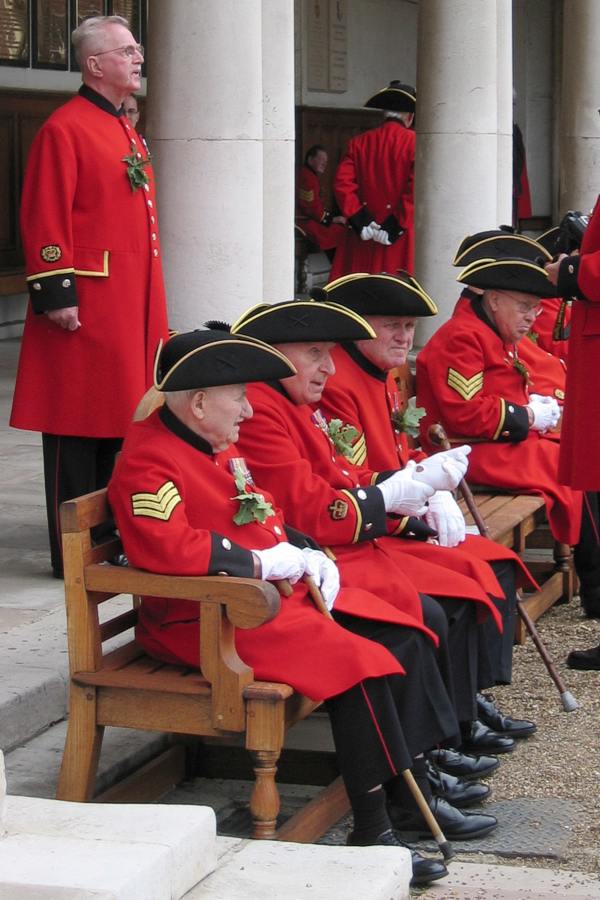
Chelsea pensioners
As the person most likely to reach this age the soonest on The Pryer team, I bestowed it upon myself to write a series of articles on pensions, retirement and beyond. This first article will focus on the government’s recent announcement on proposed changes to the pensions system, and its advice to take out some form of pension provision to cover the costs of retirement.
First off, I would like to point out that the government is still conducting a review into the proposed changes to the pension scheme. But only for a couple more days, so get your ideas and comments in now. This is your future.
The main issues with the current state pension are alleged to be:
§         The complexity and uncertainty of outcomes in the state pension – makes it difficult for people to know what they will get when they retire, meaning it is more difficult to plan and save for retirement.
§          High levels of means testing – can deter people from saving as the incentives are not sufficiently clear and too many pensioners are forced to rely on Pension Credit to top up their income. Around a third of pensioners do not claim the Pension Credit they are entitled to.
§          Significant inequality remains in the system – groups such as women, the low paid and the self-employed tend to have lower state pensions.

In the foreword, Steve Webb, Minister of State for Pensions writes:
“The complexity of the current state pension is a major barrier to saving. It means that few people have a clear idea of what their state pension will be worth when they retire. Not only that, the current system actually discourages saving, because the extent of reliance on means testing means that people cannot be sure they will benefit from the savings they put aside”.
On page 20, there are four quotations, two of which are not referenced, that speak of a pensions system that is “complicated” and “confusing”. No mention is made of savings. I wonder how many of you have considered not saving, purely because you were unclear about the pensions system. Did the complexity of the system discourage you from putting money into a saving account? Or, once you have found employment, are you trying to make ends meet, paying tuition fees, mortgage/rent, council tax, utilities, public transport costs etc.?
In terms of reform for a future state pensions system, the Government has four guiding principles including personal responsibility, fairness, simplicity, affordability and sustainability. I am going to focus on the principle of fairness, described as follows:
§          fairness – ensuring an adequate level of support for the most vulnerable, ensuring everyone with a full contribution record should be entitled to a state pension above the standard level of means tested support, and ensuring all groups are treated fairly.

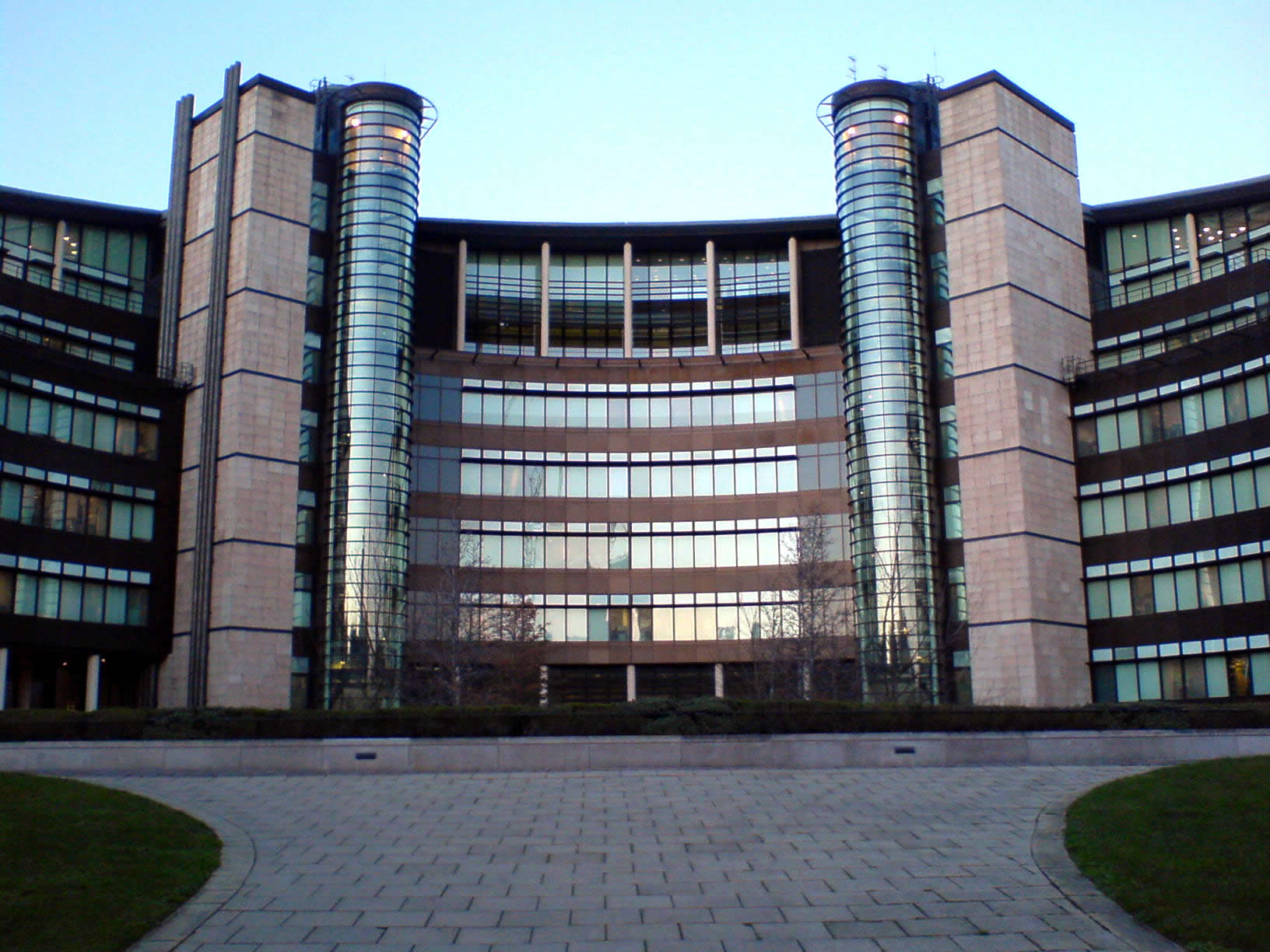
Scottish Widows HQ (c) Qualit-E
Two weeks ago, The Guardian,  referred to a Scottish Widows report that states that half of the UK population are not putting sufficient funds aside for their retirement. According to this report, someone saving adequately for their retirement needs to put aside 12% of their salary.  On a salary of £20,000 per year, this equates to saving £2,400 of that annual salary (£200 per calendar month). Those earning between £30,000 and £50,000 are said to be preparing best for retirement, whilst high-income groups (above £50,000) are less focused. 


Although it is not clear why, I am assuming that higher earners have their funds invested elsewhere (e.g. property, ISAs). True, an assumption only, but if you had a significant amount of cash put to one side for your retirement, would you invest it in a company run by Lloyds Banking Group? For that matter, would you invest in any pensions company, given the Equitable Life debacle and concerns with defined benefit pension schemes? What this indicates is that those who are better off are more able to afford a private pension, or use other means of saving for their retirements. Does this subscribe to the guiding principle of fairness?
A key part of future pension schemes is the implementation of automatic enrolment and the National Employment Savings Trust (NEST). Those who earn between £10,001 and £30,000 a year, and whose employer has fewer than 25 staff, are a key target group for NEST, with only 11% expected to opt out of this scheme. The 21% who remain undecided, and the 68% who are currently sure, may yet change their minds if government cuts bite deeper still, and they can not afford substantial monthly payments. By targeting those who earn less, the government are failing to tackle issues of unfairness.
I note that the Scottish Widows conducted their research through YouGov. In other words, their respondents need access to the internet, which itself, is linked to socio-economic and demographic determinants including age, disability and location. Many government services are now only available online; this consultation process relies heavily on the citizen accessing this information online. In the UK, over 8.7 million adults have never used the internet, with the disabled populace accounting for almost half of that figure. In terms of the pensions discourse, is it fair to further exclude those who are already marginalised?
Returning to the Department of Works and Pensions report, increased life expectancy is cited as being a major contributory factor in the state’s inability to provide adequate pension cover.  However, whilst the government quotes life expectancy rates as rising, life expectancy hits different groups differentially; the better off you are, the more like you are to live longer and vice-versa. Those earning less have less time to “enjoy” their retirement. Fair?
The state pensions options considered in this report have their pros and cons according to its authors. There are alternatives to these options, such as those founded on ideas of social capital, which, given the Conservative party’s manifesto, I am surprised they have not made more use of. Meanwhile, the Liberal Democrat party’s manifesto talked of reducing public spending to the tune of £100 billion by not replacing the Trident nuclear weapons system. Surely that would be a saving that we could all afford; as terrorism is classed as the most significant security threat, and that terrorist cells operate in the UK, I would hope that we would not consider nuking ourselves.
Recent news reports on the changes to women's pensions further highlight the unfairness of the proposed state pension system. This article demonstrates how this new system is founded upon the same injustices and how it will replicate them. Therefore, it fails to meet the government's stated guiding principle of fairness.