
 |
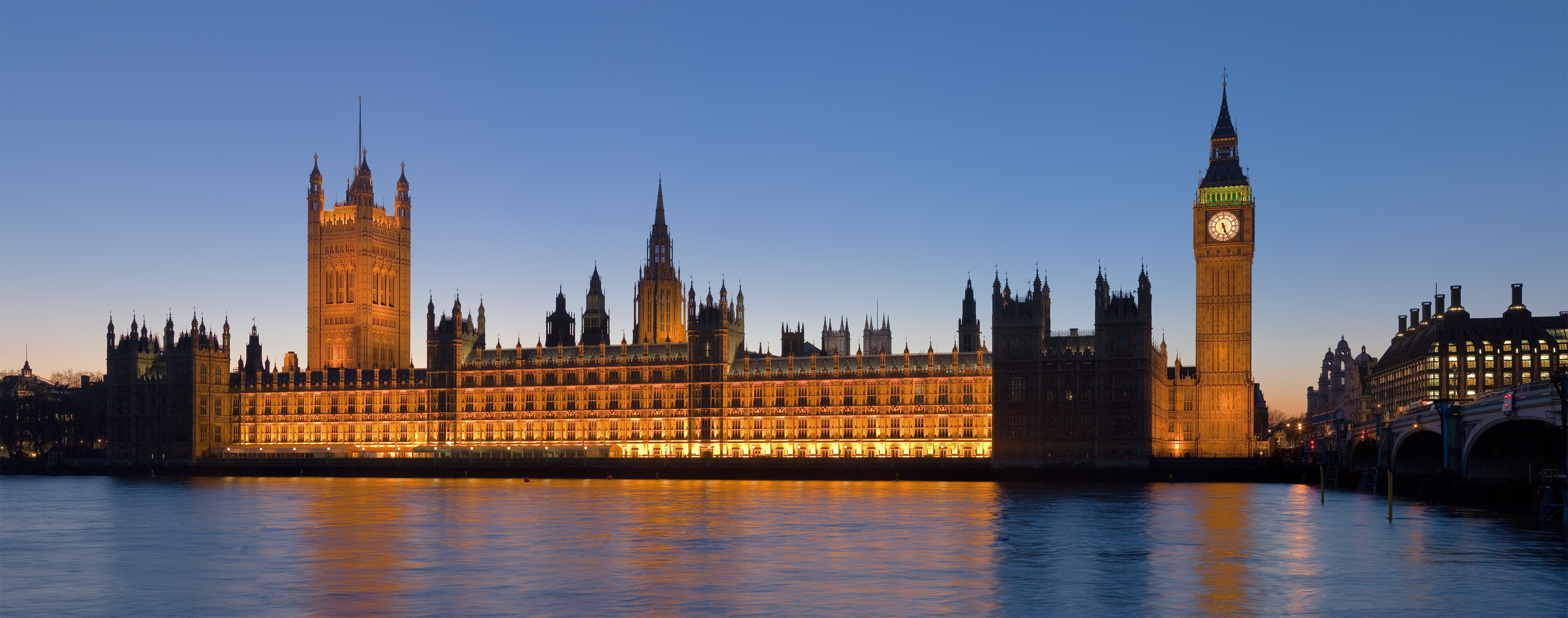
| Palace of Westminster at night (c) David Iliff |
A
cumbersome title, but by no means a cumbersome subject. I attended
this
debate yesterday to ascertain how the Foreign and Commonwealth
Office (FCO) are promoting human rights across the world, and to see
what concerns the Foreign Affairs Committee (FAC) have with their
work.
What
follows below will more or less be a straight report of the
proceedings, littered, here and there, with my initial thoughts and
observations. I will provide a more thorough analysis of this debate,
and the FAC's
report on the FCO's human rights work and the FCO's
response to it, in due course.
To
understand this debate, one needs to know that the term 'debate' does
not adequately express what took place. There was no to-ing and
fro-ing between the FAC and FCO; it was basically one long FAC
question session, answered by an FCO minister, Alistair Burt, at the
end.
The
various cross-parliamentary FAC members raised their concerns, one by
one, which Alistair Burt then answered in part via a written FCO
statement, before replying orally to some of the concerns raised in
the final few minutes. For those concerns that he could not answer,
he will seek a written response from the Foreign Secretary.
Although
allegedly annual, this was the first debate to take place on the
FCO's human rights work in over 3 years. Some FAC members lamented
the setting, and posited that it should have taken place in the House
of Commons. Moreover, each of the FAC members expressed their
displeasure that they had been allotted a total of 90 minutes only to
debate this issue, in contrast to previous debates that had lasted
180 minutes.
Human
rights records in Bahrain, Libya, Burma, Iran, China, Russia, Saudi
Arabia, Nigeria, Syria, Israel, Pakistan, Colombia and Sri Lanka were
all discussed in relation to the UK's diplomatic relationship with
them. Oddly, nobody debated the UK's relationship with the USA
(Guantanamo, state-sponsored drone assassinations, the death penalty
etc.)
Rather
than go through each of the members concerns, I will set out the main
concerns below.
Arms
- Why did the UK government sell arms to a number of regimes that, although were not using them against their own people at the time of sale, later went on to do so?
- How did the UK government fail to consider the impact of these sales, and the potential human rights abuses, given the autocratic regimes (e.g. Bahrain) that they were selling to?
- How could the UK government sanction an international arms fair at which (banned) cluster bombs were being exhibited?
 |
| Stop cluster bombs march (c) pxkls |
Business
- How does the UK use its burgeoning commercial relationship to engage China on human rights issues?
- How does the Foreign Secretary “see trade and promotion of human rights as mutually reinforcing?” (quote taken from letter said to have been sent from Foreign Secretary to FAC Chair 25/01/2012)
- How did the FCO omit Bahrain from their list of states that they had concerns over?
European
Court of Human Rights (ECHR)
- Although in need of modernisation, why is the UK's rhetoric on the ECHR so openly dismissive?
- Given this, how will the UK be able to do more than not downplay human rights issues in its discussions with other nations?
Other
FAC members called for the FCO to press Russia on Khodorkovsky
and Magnitsky,
China on its arrests
of pro-democracy demonstrators, and Sri Lanka to hold an independent tribunal looking at war
crimes committed during the civil war.
Amongst
other points, Alistair Burt's response pointed to the help that the
FCO had provided in reforming China's criminal justice system, the
flexible approach the FCO had taken to revoking arms licenses during
the Arab spring, and the human rights projects that the FCO continued
to fund across the globe. The FCO has also recently produced these
guidelines for overseas security and justice assistance.
Before
I offer a short critique on this debate, it is important to note that
many other citizens are not afforded the opportunity to see how their
government works. In this respect, we are lucky to live in the UK.
Equally, the role of the FAC, and other committees, institutions and
organisations, inside and outside, of parliament, demonstrate the
democratic freedoms that we have.
However,
these things on their own do not mean that all is well. The time
afforded this debate and the lack of one in the preceding 3 years
illustrate a lack of concern for international human rights.
 |
| Alistair Burt (c) Sam Friedrich |
Business-like
in his performance, Alistair Burt offered little detail in his
responses to the concerns that the FAC raised. It may be that the FCO
has done sterling human rights work on the Chinese criminal justice
system, but that does not address why it imprisons its political
critics.
Whilst
arms licences may have been revoked during the Arab spring, no
explanation was offered as to why we armed dubious regimes prior to
these demonstrations. The likes of Bahrain
and Saudi
Arabia are not recognised as bastions of human rights. Just who
would we not sell arms to?
My
over-riding impression, which may admittedly be tainted by my own
experiences of the FCO, was that this was a tick-box exercise. The
FCO provided generalised responses to show that it cares (to some
degree) about international human rights issues, without addressing
core concerns or the inherent contradictions and dichotomies of its
actions.
If
the FCO are to promote an UK vision of what constitutes human rights
today, it needs to take a long hard look at what it, and other
government departments (e.g. UKTI) do, and change. We can not
possibly expect other nations to take us seriously on human rights,
when we are only too willing to eschew them in return for financial
gain.


