Justitia, Old Bridge of Heidelberg

Justitia, Old Bridge of Heidelberg
Justitia, Old Bridge of Heidelberg © Gernot Keller, 2007
Blinkered Justice articles also appear on CrimeTalk and Government In The Lab

Wednesday, 29 February 2012

The Wednesday ? - “Failed state”


A quick introduction into the Wednesday ?

I propose using the Wednesday ? on a trial basis over the next few weeks. The purpose of it, unlike Questioning The Headlines, is to look at specific words and/or phrases that are used, mainly by those in power, as a means of short-cutting any criticism or independent thought.

I want to highlight these words and phrases, and promote public debate. This is where you come in. It would be fantastic if you could post your own thoughts, so that we can de-construct some of the (inherent?) assumptions contained within them.

“Failed state”

Last week's meeting on Somalia looked at the options available to the international community, in their endeavours to help the people of this conflict-ridden nation. Somalia has been described as the “world's most failed state”.

The Fund For Peace (FFP) produces an annual index that ranks states in terms of their “failures”. FFP do not provide a definition of what constitutes a “failed state”, but list 12 indicators that they believe make up state failure.

A “failed state” is thought of one that has lost control of their geo-political sphere, unable to provide its citizens with the security (welfare, and law and order) that they need nationally and internationally.

Assumptions of the “failed state”

A “failed state” does not necessarily imply that it was once successful. The FFP index demonstrates that failure is relative to other states. The assumption here is that a state, much like an individual, is responsible for its plight. Is it?

Little is made of any outside influence that may have contributed to a state's ability to provide for its citizens. Outside influences may be other nation states meddling in the socio-political dynamic, or multi-national corporations using their economic resources to profit from the political status quo.

According to the FFP index, 14/20 of the most failing states are African. Many are former colonies, whose borders were (re)-drawn prior to independence by their former masters, who failed to take into adequate account the ethnic and tribal fissures that were already present. Consequently, localism has to rule in some areas, as the state can not.

Failed States Index 2005-2010
“Failed state”?

Whilst the FFP index ranks 177 countries in terms of their relative failures, at what point, and who decides, which nation is officially a failed state? For instance, North Korea is ranked as the 22nd most “failed state”. Given that North Korea requires food aid to feed to chronically under-nourished, is it a “failed state”?

Geo-politically linked to Somalia, Kenya and Ethiopia are rated as being more of a “failed state” than North Korea. Equally they are seen as not having failed enough, as both nations contribute to the Amisom forces fighting to oust al-Shabab from Somalia.

I am not disputing the fact that many states, like Somalia, need help. I commend the FFP's reasons for creating this list, but it is unclear as to who chose the factors that influence “failed states”, and how, or why, these particular factors were chosen? Were others available but not used?

For example, the UK government produced its integration strategy last week deferring power, and control, to 'local' experts as a means of strengthening law and order amongst the people it considered “troublesome”. Does this move away from state control to localism indicate that the UK state is moving closer to “failing”?

Around the same time, The Children's Society reported that asylum-seeking and migrant children are left homeless, hungry and destitute. The UK has a duty to protect these children regardless of their immigration status. Is African displacement and famine that far removed from British homelessness and hunger?

When a state does nothing to protect the most vulnerable residing within its borders, despite having the framework and capacity in place to help, is this not a key indicator of state failure? If not, why not? Because that for me is an essence of a “failed state”.

Over to you.

Enhanced by Zemanta

Wednesday, 22 February 2012

The Wednesday ? - British values of tolerance


A quick introduction into the Wednesday ?

I propose using the Wednesday ? on a trial basis over the next few weeks. The purpose of it, unlike Questioning The Headlines (which I will do again shortly), is to look at specific words and/or phrases that are used, mainly by those in power, as a means of short-cutting any criticism or independent thought.

I want to highlight these words and phrases, and promote public debate. This is where you come in. It would be fantastic if you could post your own thoughts to add to the discourse. By doing so, hopefully, we can build on a cultural understanding of these terms, and de-construct some of the (inherent?) assumptions contained within them.

British values of tolerance”

The Telegraph reported yesterday that the coalition government would be publishing their new integration strategy for immigrants coming to make the UK their home. The article continued:
The integration strategy will state: “We believe in certain values and will actively promote them: freedom of speech; freedom of worship; democracy and the rule of law. Long-standing British values of tolerance are the bedrock of our society. We will champion a united British identity, across class, colour and creed.”
I could have added the term “long-standing”, but this will be discussed as part of my critique. Equally, I could have covered “British values” as a stand-alone subject, but I want to keep this post shorter than my other analyses, and I would like you to stay awake.

Assumptions of the “British values of tolerance”

In terms of what is being promoted, I would hazard a guess that this phrase is being used to summon up that fuzzy feeling of “being proud to be British”; we are a civilised people, who have welcomed peoples of different race, creed, and religion to the UK. It assumes that we do not just “put up with” people from different backgrounds, but that we were the first nation to promote a “tolerance” that advocates equal rights.

The idea that it is traditionally British, embeds these values with being white, middle/upper class, able-bodied, and more than likely, male.

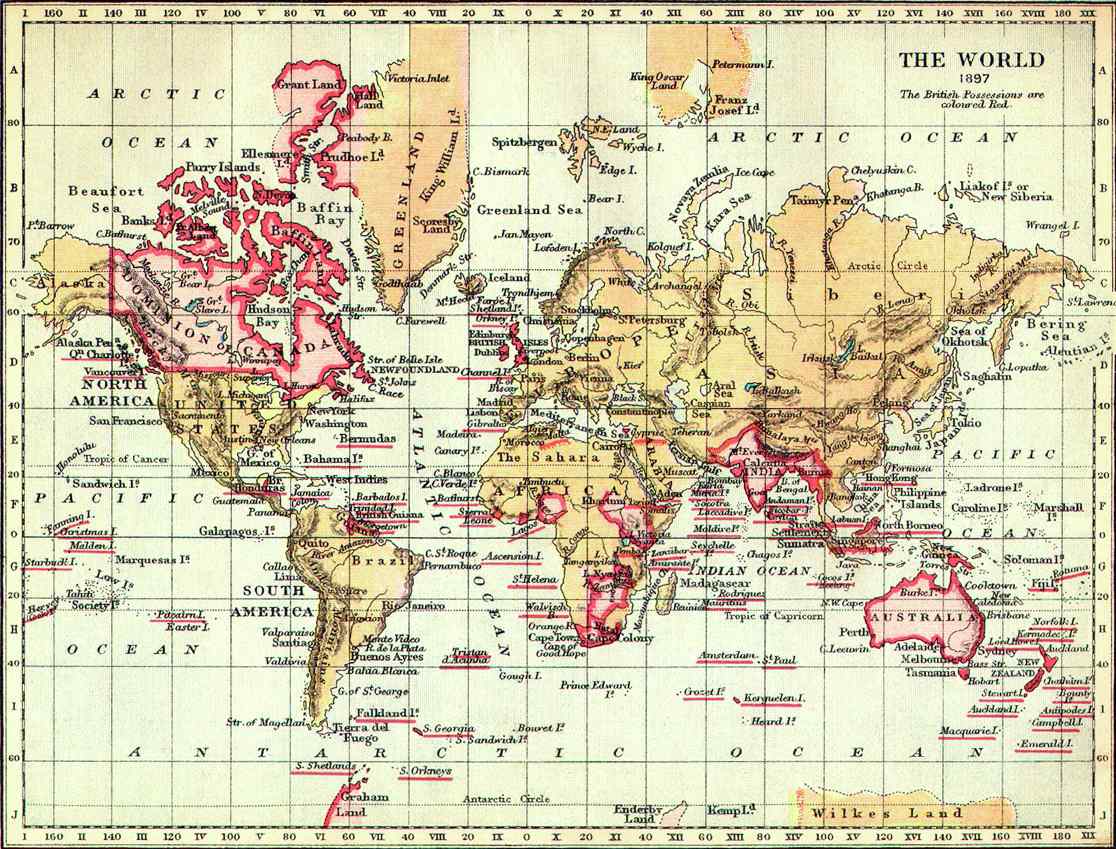
The world in 1897 - British possessions coloured red
British values of tolerance”?

Beyond the rampant theft of resources in Africa and Asia as the British Empire extended its power, another part of its expansion was evangelical, which saw us trying to “civilise” other nations. This was not a tolerance, this was an imposition of our behaviour onto those who lived in different parts of the world.

Since the turn of the 20th Century, whilst the British have allowed peoples from other cultures to settle in the UK, it has come with ever increasing legislation and consternation.

The Aliens Act of 1905 was the first act to introduce immigration controls for the UK; it was designed to stop an increasing number of Jewish immigrants entering the UK. Ever since, the British have legislated for other people to join them as a means to fill gaps in the labour market (British Nationalist Act 1948), and then have passed acts to stop them entering the UK (Commonwealth Immigrants Act 1962) as a result of a public backlash.

Racially motivated riots over the last 60 years or so do not indicate that we live/have lived in a society that has promoted tolerance in the way that the phrase indicates. Clearly, we welcome people into the UK when it fulfils British economic needs, but that we “put up” with them living here. The notion that this British value of tolerance is “long-standing” is faulty.

Although the term implies an equality of residential rights in the UK, it rests on the idea that immigrants are/were “lucky” to have come here. It does not take into account whether people were well-educated in their country of birth, nor that they took menial work and wage in the UK, let alone whether they have been driven out of their homes because of war. Including those that Britain engages in.

There is also a denial of other nation's values of tolerance in this term. Societies around parts of Asia and Africa regularly welcome foreigners, and strangers, into their homes, and treat them as family members or long-standing friends. Why is their value of tolerance supposedly not as good as ours?

Supposedly, this integration strategy also promotes ideas of tolerance to hate groups in the UK. My fear is that this strategy only promotes the kind of toleration discussed above, and that we are pandering to an outdated idea.

After a century of official multi-cultural living in the UK, it would be interesting to know what today's “British values of tolerance” mean now. Over to you.

Friday, 17 February 2012

London 2012: BP - sustainable partner?

Deepwater Horizon drilling unit on fire
Further to my posts on London 2012, in particular this one about Locog's choice of sustainability partners, I am pleased to see that this open letter, by the the UK Tar Sands Network, has received national media coverage in today's GuardianBlinkered Justice is happy to have played some small role in helping bring this issue to a wider audience. 


If you wish to get involved in this campaign, please contact the UK Tar Sands Network at info@no-tar-sands.org.