Justitia, Old Bridge of Heidelberg

Justitia, Old Bridge of Heidelberg
Justitia, Old Bridge of Heidelberg © Gernot Keller, 2007
Blinkered Justice articles also appear on CrimeTalk and Government In The Lab

Thursday, 31 May 2012

Umbro's (ab)use of Paul Gascoigne


Has anyone seen this Umbro advertisement featuring Paul Gascoigne? Published on YouTube, it is called 'Gazza: Pride and Passion from one of the Faces of England'.

From a footballing perspective, I can understand why Umbro selected Gascoigne to launch their campaign. A gifted footballer, who, in my opinion, was the star of Italia '90, Gascoigne is a sporting icon who personified passion and pride in an England shirt.

Yet from a human perspective, Umbro's use of Gascoigne is less understandable. Italia '90 also illustrated his personal frailties. His reaction to the booking that meant that he would have missed the World Cup Final is there for all to see (below). Understandable in the circumstances?...Maybe.

Add in Gary Lineker's appreciation of Gascoigne's mental fragility at that moment – Lineker says that Gascoigne had “basically lost the plot” - presumably borne of personal experience, and we have a vulnerable human being.


At the time, Gascoigne was synonymous with being the happy go-lucky, cheeky chappy. He was 'Gazza'. He gurned for the cameras. He wore fake breasts. His public identity was borne out of football, manufactured by the media and loved by the public.

Whilst George Best had to contend with similar issues in the public spotlight, the advent of SkySports and 24/7 media coverage meant that Gascoigne was the first modern-day 'celebrity' footballer. With a lack of people around him to provide him with adequate emotional support, it seems that Gascoigne became addicted to 'Gazzamania'.

We know of Gascoigne's difficulties since. His long-term addictions to drink and drugs and his battles with mental illnesses reveal Gascoigne to be in constant need of something to make his life meaningful and worthwhile.

And the something that went a long way to making Gascoigne's life fulfilled is football. It is football that is his biggest addiction; not just the physical act of playing, but what playing meant for his identity and self-esteem that is equally, if not more, important.

As Euro 2012 approaches, Umbro want as many England football fans to go out and buy their new top. Pride and passion, the epitome of Gascoigne in an England shirt is supposed to attract fans, who themselves identify with those traits, into buying the product.

But the 30-second video above is a manipulated edit of a 5-minute “interview” Gascoigne did with Umbro (see below). In this video, Gascoigne laments what he sees as a lack of pride in some of today's England team.


Hold on Umbro, I thought that this was THE selling-point, yet your 'Face' suggests that some England players lack this quality. If pride is something that Gascoigne had but other current England players do not, then why should we then buy into this idea and buy a new England shirt?

So how are Umbro really marketing the new England top?

The evidence suggests that Umbro are selling us 'Gazza'. The advertisement refers to Gascoigne as 'Gazza'. 'Gazza' models the new Umbro top, tongue out for added cheekiness as per his playing days.

In his 5-minute interview with Umbro, Gascoigne talks of his love of learning to play football as a child in a park. After telling us that he drives by this park occasionally, he says “God, I'm going to start crying”, before continuing briefly, and with more tears welling in his eyes, he feels that he has to apologise.

This is the 'Gazza' of Italia '90 all over again. His love of, and need for, football and what it means to Gascoigne and his identity is so deeply ingrained, that his hurt is palpable.

We, the public are partly responsible for wanting to see the 'Gazza' that we helped create. But we need more of 'Gazza' the footballer, whereas 'Gazza' the identity needs us. Gascoigne tried to kick 'Gazza' a few years ago when reinventing himself as G8, but there is little to suggest that he, or we, really took this on board.

Umbro's use of 'Gazza' is that of a dealer providing a fix for a client's addiction. Their advertisement preys upon this addiction by marketing their product through his fragility and vulnerability. I would urge England fans to buy their tops from other manufacturers until such time as Umbro withdraw their 'Gazza' advertisements.

Additionally, according to Rule 4.4 of the Advertising Codes:

Advertisements must not include material that is likely to condone or encourage behaviour that prejudices health and safety.

In my opinion, this advertisement condones exploitative marketing by encouraging Gascoigne's addiction to football and 'Gazza'. If you feel that Umbro's advertisement exploits Gascoigne, you can complain to the Advertising Standards Agency here.

Regardless of how much Umbro paid Gascoigne, given his well-known history of addiction and mental health issues, Umbro have a responsibility to the man, not a right. In this regard, they have failed.

Enhanced by Zemanta

Monday, 28 May 2012

Murdoch and NewsCorp support an uncapped immigration policy for the UK


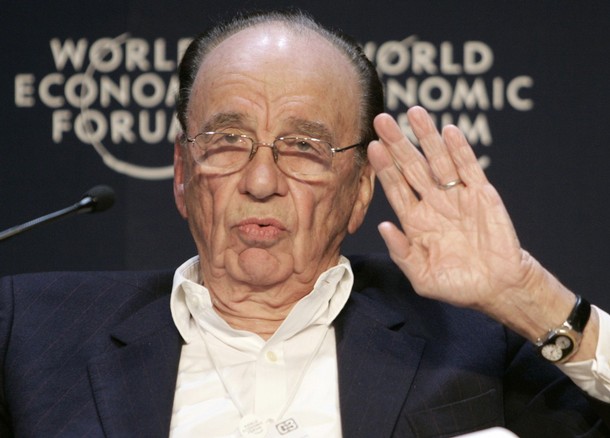
Rupert Murdoch (c) World Economic Forum
….as long as it suits them of course. But still.

Researching emails between Fred Michel and Jeremy Hunt's office for my earlier post, I came across the following correspondence entitled 'Immigration cap - meeting' between Michel and Giles Wilkes, special adviser to business secretary, Vince Cable. On 10th October 2010, Michel wrote to Wilkes:

...”I am writing to see if we could meet up to discuss the reform plans on the immigration cap. As you can imagine, it is a policy area which will have a major impact on News Corporation”.

Wilkes responded sympathetically to this request, given the “major impact this might have on News International”. He added that the Department for Business, Innovation and Skills (BIS) were trying to get views on this matter from businesses across the board, so that they could feed them into government policy.

On 12th October, Wilkes told Michel that he could not meet him later that week, but that he was interested in finding out News Internationals thoughts on an immigration cap. Michel responds:

...”I will send you our first thoughts and hope we can be helpful on this debate. We are looking at it from a mobility viewpoint but also ability to hire talents for a global company etc. We also have some relevant expertise in-house on this”.

Correspondence between the pair is rejoined on 21st October, when Michel gave Wilkes a heads-up of the speech that Rupert Murdoch was giving on global mobility at the inaugaral Margaret Thatcher lecture later that night. And then it all went a little off piste, after Wilkes asked Michel, “Out of interest, are his editors in the audience as a rule”? “Cheeky!”, retorted Michel.

Cheeky (c) Johan Larsson
Wilkes apologised, stating that he had no intention of being cheeky, and explained:

“But as I am sure you are aware, there is a strong anti-immigration feeling in the UK, and this is seen in some quarters as coming from the popular press. It would be interesting if the same sentiments that RM is expressing in the speech were to be amplified in your highly respected newspapers”.

Fair point, Mr Wilkes. In his speech, Murdoch states:

“In short, Britain needs companies robust enough to compete in this global market – whether in finance or pharmaceuticals, transport or telecommunications, retail or entertainment. And we need to attract the brightest talent, regardless of background and ethnicity.

In other words, Britain should be a magnet for the best students and best workers from around the world”.

Was it reported in Murdoch's media? Nothing appears online, so it would appear that Murdoch and NewsCorp preferred to keep this quiet in the UK. Strange. Or is it?

Over the last couple of years, the Murdochs have expanded their operations in India. NewsCorp operate through Star India Pvt Ltd, and they own stakes in a number of other industries in India, including the Tata Group and Harper Collins. For the Murdochs, India represents the future, and the future looks promising.

Coincidentally, Indian citizens need visas to work and study in the UK. Will NewsCorp be sponsoring student applications from their commercial partners to oil the wheels of commerce? Are NewsCorp already thinking ahead in terms of their future workforce – will they insource their future employees? Pure speculation on my part, but NewsCorp is a business that plans ahead strategically when it comes to expansion.

The government is already struggling to curb abuse of student visas. It would seem quite disingenuous then for the UK government to consider what might be best for the likes of NewsCorp.

But there again, who really holds the power when it comes to shaping public opinion and policy? It will be interesting to see what steps the government takes towards meeting their commitment of reducing net immigration.

One last thing. Feel free to circulate this piece more widely so that NewsCorp subscribers (including readers of The Sun, Times etc.) and shareholders are aware of NewsCorp's liberal immigration stance. 

Enhanced by Zemanta

Leveson Inquiry: Jeremy Hunt's impartiality and NewsCorp's BSkyB bid


Jeremy Hunt (c) Surian Soosay
Following Adam Smith's and Fred Michel's statements at the Leveson Inquiry on Thursday and Friday, media speculation has focused on the impartiality of the culture secretary, Jeremy Hunt - I will do my best not to do a Naughtie.

Prior to his quasi-judicial appointment on 22nd December 2010, the media, including the BBC, refer to a memo that Hunt sent to the Prime Minister, David Cameron on 19 November 2010. Hunt was concerned that the UK media “would suffer for years” if the BSKyB deal failed to go through.

Yetthe media have missed other equally telling comments from this memo:

James Murdoch is pretty furious at Vince's referral to Ofcom. He doesn't think that he will get a fair hearing from Ofcom. I am privately concerned about this because NewsCorp are very litigious and we couldend up in the wrong place in terms of media policy”.

Just why would Murdoch not think that he will get a fair hearing from Ofcom? Evidence suggests that he did, and that the deal would have gone through. That Hunt was “privately concerned” about this referral suggests that he shared Murdoch's disquiet. Impartial?

Interestingly, the above is an edited version of an earlier round-up which argues NewsCorp's case as follows:

Those people who are arguing that the Murdochs will have too much influence are in my view confusing the revenues Sky gets (around £8 bn) which are much higher than – say – the BBC's £4 bn with the influence Sky has editorially which is much less because a) most of the channels watched on Sky belong to other people over which it exerts no editorial control; and b) where it does (e.g. Sky news), it has less than 5% market share and is bound by strict rules over political impartiality. (stress as per original draft)

Whilst Hunt decided to omit this information from his final memo, it alerts us to the information that he/his office had to hand. Evidence for the BSkyB bid.

Evidence which came directly from Fred Michel. On 7thOctober 2010, texts between Michel and Hunt reveal that Hunt was happy to receive NewsCorp's briefing on plurality from Michel, which he then emailed to AdamSmith, then Hunt's special adviser.

The Three Amigos/Parties to Unite over BSkyB Bid Call (c) Surian Soosay
Returning from the weekend, Smith emailed Michel with Hunt's view of the arguments for the BskyB takeover, "Jeremy's response to this - “persuasive”. Impartial?

Counsel to the Inquiry, Robert Jay QC, put this to Smith:

...”But aren't these pretty clear indicators of what Mr Hunt's view was, at least on the materials which were being provided as to the quality of the bid, and its desirability”?

To which, Smith replied:

“Well, I think it chimes with what he said about he didn't think there was a particular problem, but he wouldn't second guess the regulators. I don't think that is any different meaning”.

Let us remember at this point that Hunt and his department had nothing to do with this particular decision. This still lay with then business secretary, Vince Cable, who was later removed for declaring war on Murdoch.

Why were Hunt, and his office, even in receipt of these particular NewsCorp briefings, let alone reading and commenting on it? Leveson queried Smith on this issue:

“What has this got to do with you? I mean, I'm just intrigued to know why you should be involved in this material. This was being dealt with by another department. I can't believe you didn't have more than enough to do. So what has this to do with you”?

Smith replied:

“Well, it was a big issue in the media sector and I think Mr Michel had offered to send something through to me and I would always receive anything that anybody wanted to send through to me”.

For Leveson, who failed to follow this up any further, Hunt, and his office, just wanted to know where people stood. Yet this completely neglects the amount of work, as Leveson mentions, that Hunt and his team were putting in to a bid that had nothing to do with them.Especially at a time when Hunt would have been busy reorganising his department following the comprehensive spending review. Is Smith's explanation credibile?

On 16thNovember 2010, Michel texted Hunt, “Thanks for the call with James today. Greatly appreciated. Will work with Adam to make sure we can send you helpful arguments”...

Helpful arguments? For whom? About what?

“The helpful arguments are relating to the BSkyB bid, aren't they”,asked Robert Jay QC of Fred Michel, who responded, “I don't know. I can't remember.”

Son of a Murdoch (c) Surian Soosay
Anything else it might have been for? Unlikely, given that we know that just a couple of days later Hunt was telling Cameron that Murdoch was furious about Cable referring the bid to Ofcom.

Neither Leveson nor Jay questioned Smith about these “helpful arguments”, despite (Adam) Smith's name appearing in the text. Why not?

What went on before Hunt was appointed quasi-judge and jury illustrates an unhealthily close relationship with NewsCorp. More investigative questioning may have revealed further details, but it may be that Hunt will face more searching questions on Thursday.

Just as importantly, let us not forget that it was Cameron who appointed Hunt. His choices of personnel and champions, from AndyCoulson to EmmaHarrison, have been ill-advised.

Cameron knew that Hunt held meetings with NewsCorp in the U.S. in August 2009. Speculation has mounted that talks of the BSkyB bid first emerged during this trip, but Hunt claims that no such discussions took place“to the best of his recognition” - is that a bit of legalese? Either way, within a week of this visit, The Sun (one of Murdoch's newspapers) had declared its support for Cameron for the 2010 election.

Cameron also knew from Hunt's memo to him of 19th November that he was worried about the prospect of a failed BSkyBbid. Just what questions did Cameron ask of Hunt and his connections, and contact, with NewsCorp before appointing him?

In fact, was it even in Cameron's interests to ask?

Enhanced by Zemanta